सहायक वस्तु · Small Leather
Cufflinks
Cufflinks fasten a double or French cuff, which has no buttons, and for most men they are the only jewellery they own.
Cufflinks fasten a double (French) cuff, which has no buttons. The main types are the double-panel link with a chain or bar, the swivel-back bullet, and the silk knot. Evening dress convention prefers something restrained: mother of pearl, onyx or plain metal.
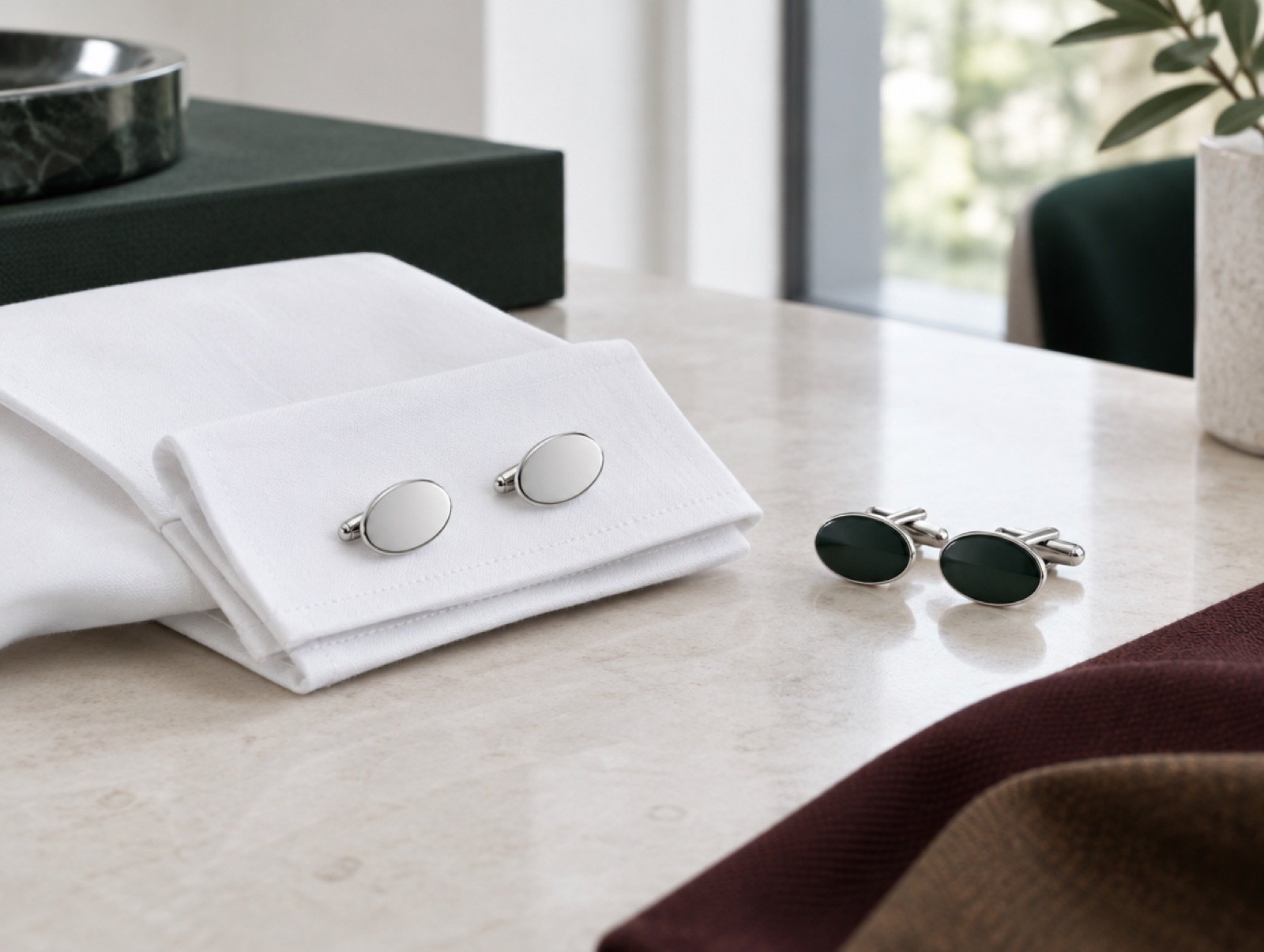
Types
| Type | Character |
|---|---|
| Double-panel with chain | Two decorative faces joined by a chain; sits loosest, the traditional form |
| Bullet / swivel back | Hinged bar that turns to lock; the most practical |
| Whale back | Larger flip-out bar; secure, bulkier |
| Silk knot | Two woven silk knots on a cord; cheap, light, informal, and very hard to dislike |
| Stud | Separate post-and-back; used on stiff-fronted evening shirts, not cuffs |
Wearing them
A double cuff folds back on itself and the two folded edges are held together (kissing, so both outer faces meet) rather than overlapped. Overlapping the cuff like a button cuff is the commonest mistake and makes the link sit at an angle.
The cuff should show about a centimetre below the jacket sleeve, which is what the link is effectively there to display.
What to own
One restrained pair covers almost everything: plain metal, mother of pearl or onyx, in a shape that does not demand attention. Novelty links are the accessory most likely to be regretted.
For evening dress a matching set of studs and links in mother of pearl or onyx is the convention, and studs are needed for a stiff-fronted shirt, which has no buttons.
चित्र
लाइसेंसिंग →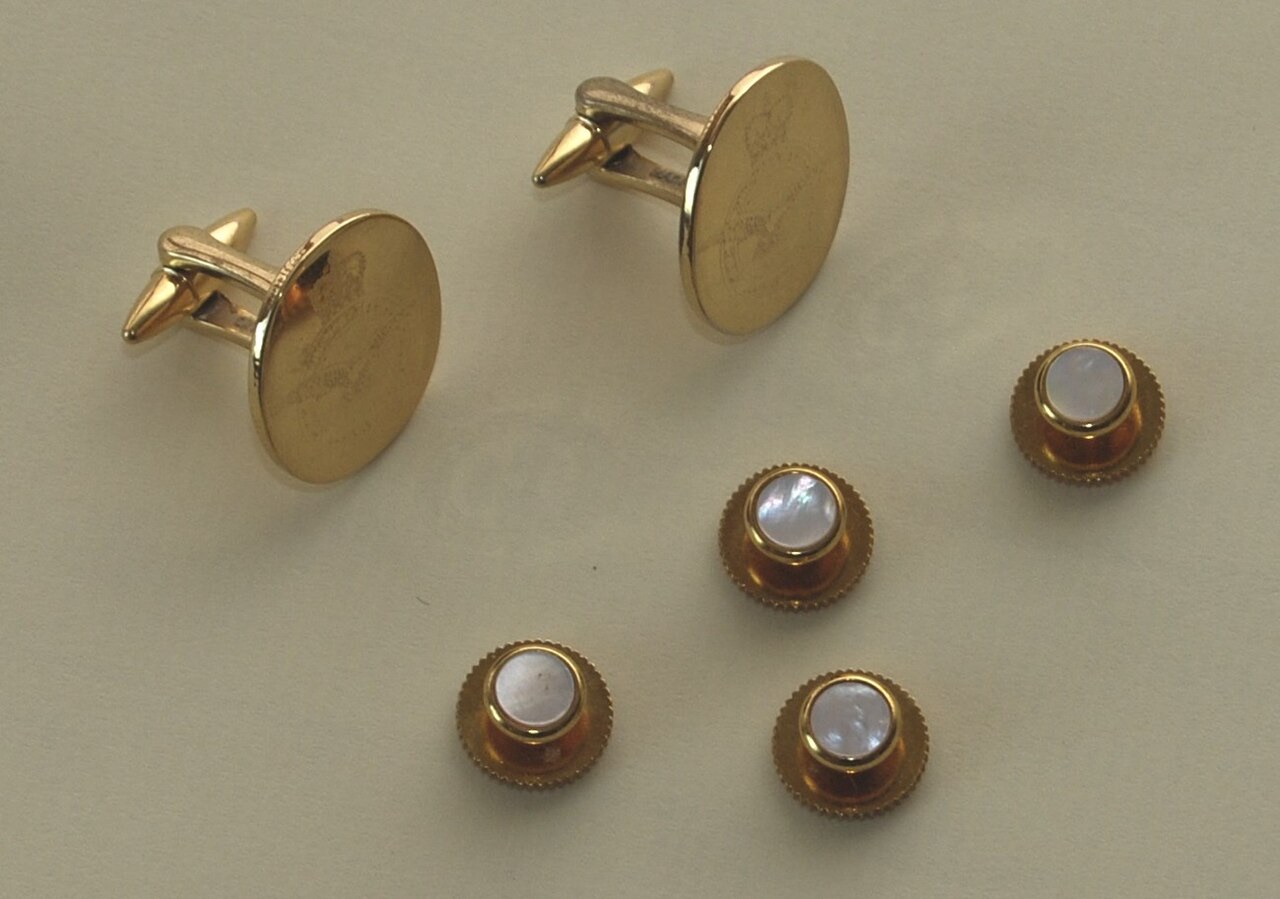
एक नज़र में
चित्र श्रेय 2
- Silver cufflinks on a double cuff: Original art · Il Sartoriale · Il Sartoriale · Il Sartoriale original art
- Gold Royal Air Force cuff links and dress shirt studs: Photograph · Greenshed · Wikimedia Commons · CC0