Accesorio · Care
Caring for tailoring
A wool suit stays clean with regular brushing and airing, and dry cleaning it only rarely keeps its natural oils and helps it last far longer.
Wool is self-cleaning to a remarkable degree: airing and brushing remove most of what accumulates. Dry cleaning strips the natural oils from the fibre and stresses the construction, and a suit cleaned every wear will wear out several times faster than one cleaned twice a year.
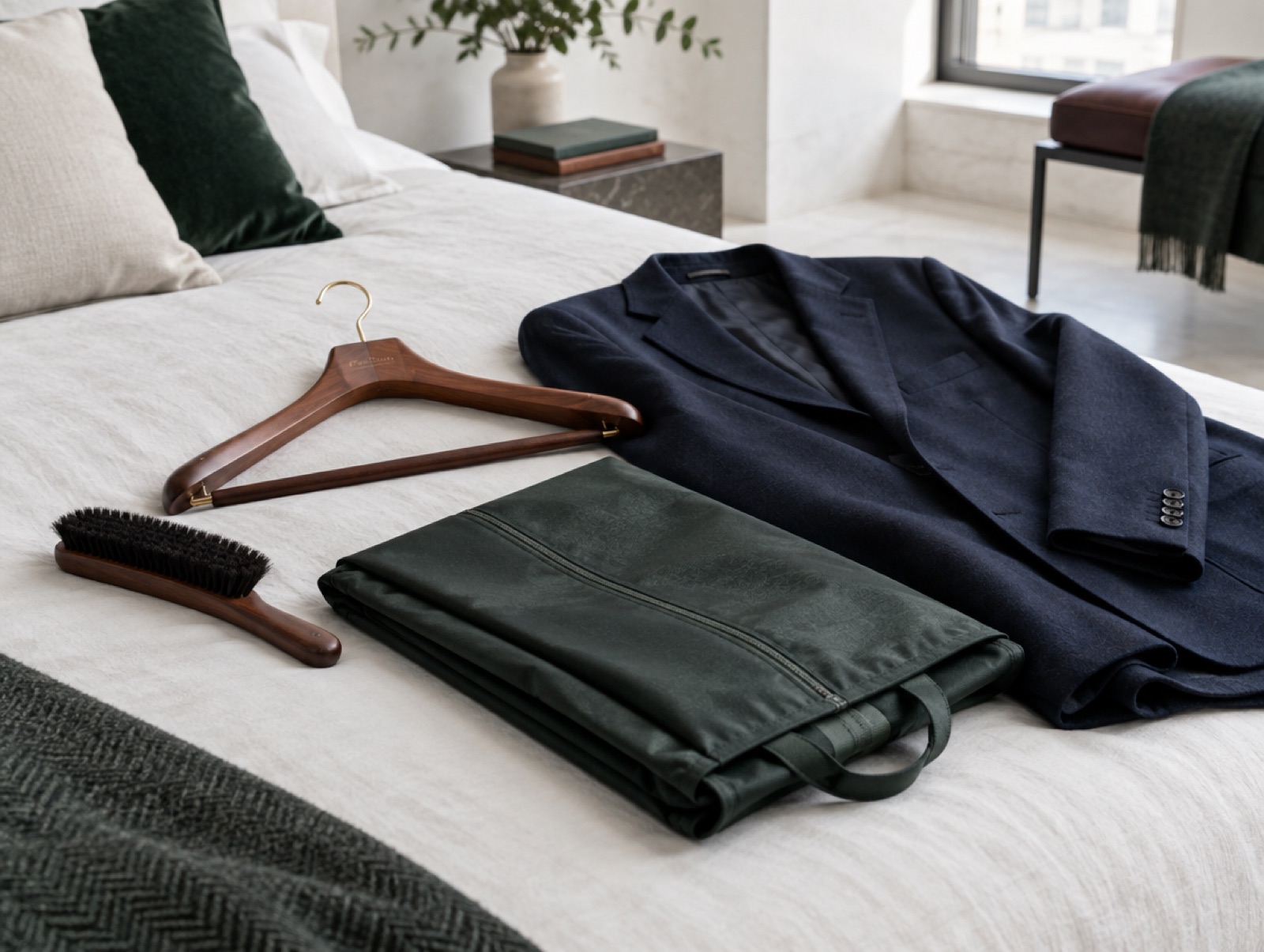
The routine
- Brush after each wearing with a soft clothes brush, downwards, to lift out dust. Dust is abrasive and is what actually wears cloth.
- Hang on a broad, shaped wooden hanger that supports the shoulder. A wire hanger deforms the shoulder permanently.
- Rest at least a day, ideally two, so the wool can recover its shape and any moisture can leave.
- Steam rather than press for creases: a bathroom with a hot shower running does most of it.
- Dry clean twice a year at most for a regularly worn suit, and only when it genuinely needs it.
Why dry cleaning is harsher than it sounds
The solvent strips lanolin and the natural oils that keep wool fibres flexible, and the pressing that follows flattens the hand-shaped structures inside a good jacket. Repeated cleaning makes cloth dry, shiny and brittle, and it can distort the canvas.
Spot-clean marks, air the garment, and take it to a cleaner when it is genuinely soiled. A good tailor will sponge and press a suit (a much gentler process than solvent cleaning) and this is worth asking for.
Storage and moths
Moths eat keratin, so they attack wool, cashmere and silk, and they are attracted to soiling. Store clean garments, in breathable cotton bags rather than plastic, with cedar or lavender as a deterrent; neither kills moths, but both discourage them.
The most effective protection is disturbance: clothes worn and moved regularly are rarely attacked. It is the back of the wardrobe that gets eaten.
De un vistazo
Créditos fotográficos 1
- A clothes brush, cedar hanger and garment bag: Original art · Il Sartoriale · Il Sartoriale · Il Sartoriale original art