Accessoire · Neckwear
The necktie
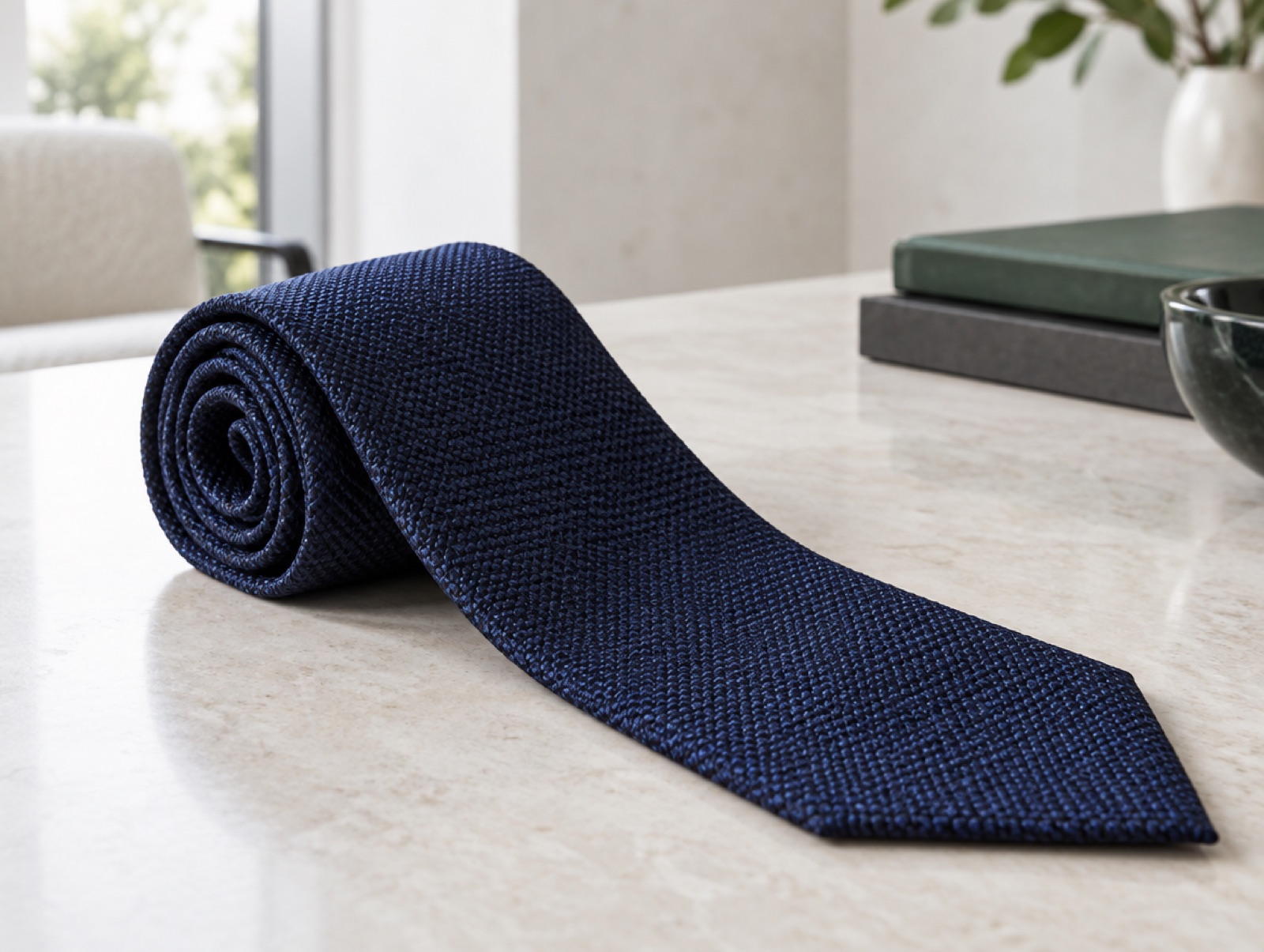
A good tie is cut diagonally across the silk and folded around a wool lining, which helps it knot cleanly and hang straight without twisting.
A tie is cut on the bias (diagonally across the cloth), folded around a wool interlining and closed with a single slip stitch running its length. That construction is what lets it knot cleanly, spring back, and hang straight. A tie cut on the straight grain will twist, and no amount of silk quality fixes it.
Why the bias
Cloth cut diagonally across the weave stretches and recovers in a way cloth cut straight does not. A bias-cut tie can be pulled into a knot, released, and return to shape; it also hangs straight rather than twisting to one side. This is the single most important thing about a tie's construction, and it is checkable: look at the pattern on the blade against the seam running up the back. On a bias-cut tie the stripes run at roughly 45 degrees to the length.
The interlining and the slip stitch
Inside a good tie is a wool interlining giving it body, and the whole thing is closed with a single loose thread (the slip stitch) running the length of the back. Pull the tie gently lengthways and you should feel it give and return; that is the slip stitch doing its job.
Cheap ties are fused or heavily stitched, cannot move, and eventually deform permanently. A tie described as three-fold, six-fold or seven-fold refers to how many times the silk is folded on itself; more folds mean less or no interlining and a heavier, softer tie. Seven-fold is not automatically better; it is a different construction with a different feel.
Cloth
Grenadine is an openwork leno-woven silk, made by a small number of weavers around Como, and the classic choice for a tie that is interesting without being patterned. Repp is a ribbed weave, the basis of striped club and regimental ties. Shantung has irregular slubs. Wool, cashmere and linen ties are less formal and knot with more texture.
Length and width should follow the wearer and the lapel. The tip should reach the waistband; the width should roughly match the lapel width. Both rules survive fashion cycles better than any specific measurement.
Auf einen Blick
Damit verbundene Hersteller
-
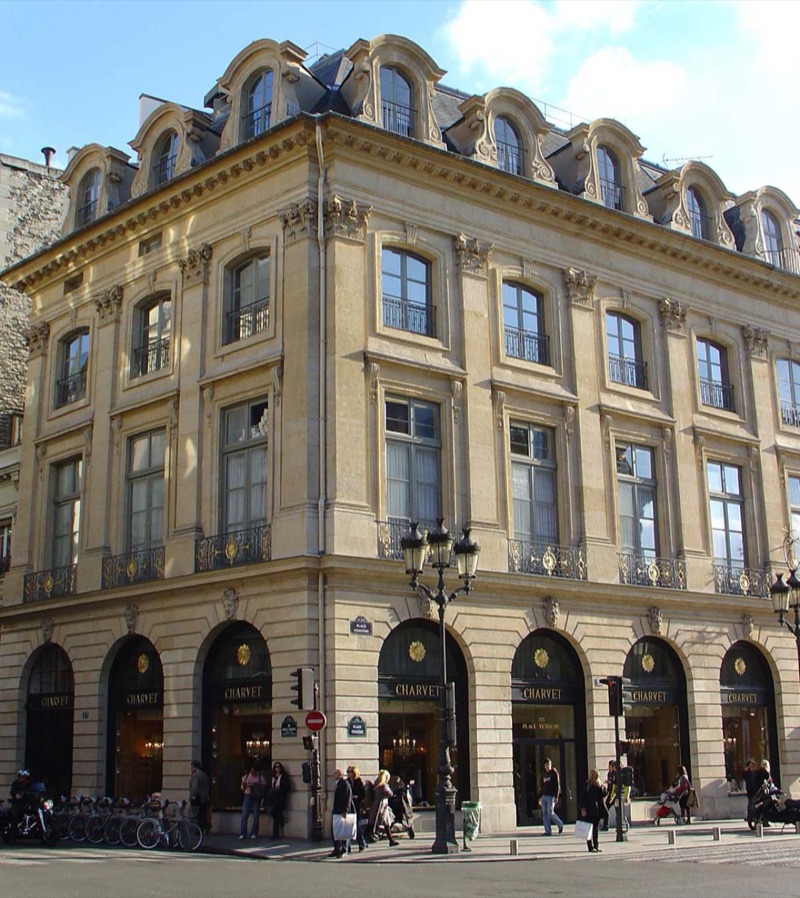 Charvet
Hemdenmacher · Paris · 1838
Charvet
Hemdenmacher · Paris · 1838The first shop in the world to make shirts to measure for whoever walked in, and still the reference.
-
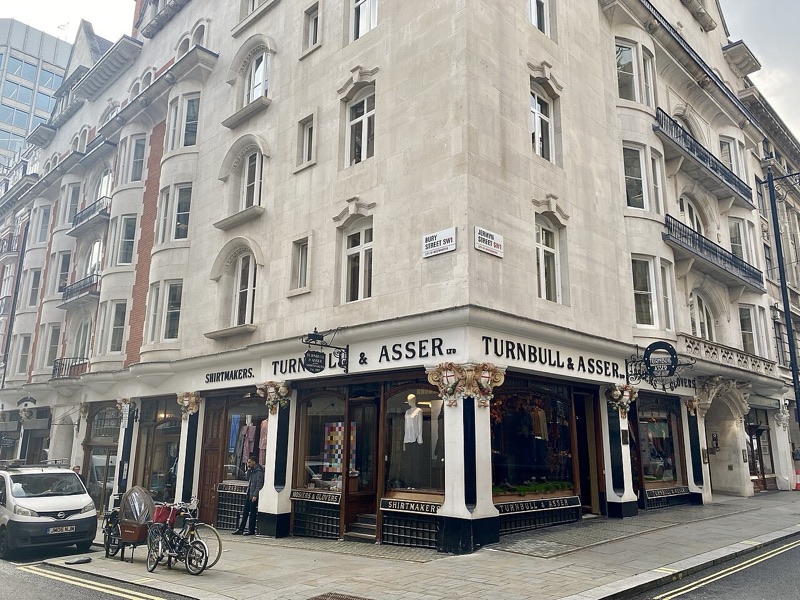 Turnbull & Asser
Hemdenmacher · London · 1885
Turnbull & Asser
Hemdenmacher · London · 1885Jermyn Street's best-known name, with a bespoke workroom behind the shop and a distinctive collar.
-
Drake's
Marke · London · 1977
Drake's is a London tie maker turned full menswear brand, known for relaxed, softly made clothes in English cloth with little shoulder padding.
Bildnachweise 3
- A grenadine silk tie, rolled and unrolled: Original art · Il Sartoriale · Il Sartoriale · Il Sartoriale original art
- Charvet store: Photograph · Racconish · Wikimedia Commons · CC BY-SA 3.0
- Turnbull & Asser, St James's, October 2021: Photograph · No Swan So Fine · Wikimedia Commons · CC BY-SA 4.0