Accessoire · Neckwear
The pocket square
A pocket square is decorative cloth for your breast pocket, and hand-rolled edges give it body to hold a fold instead of collapsing.
A pocket square is decorative cloth in the breast pocket. The quality marker is the edge: a hand-rolled hem produces a soft, slightly raised roll that gives the square body and helps it hold a fold. Machine-stitched edges are flat and the square collapses into the pocket.
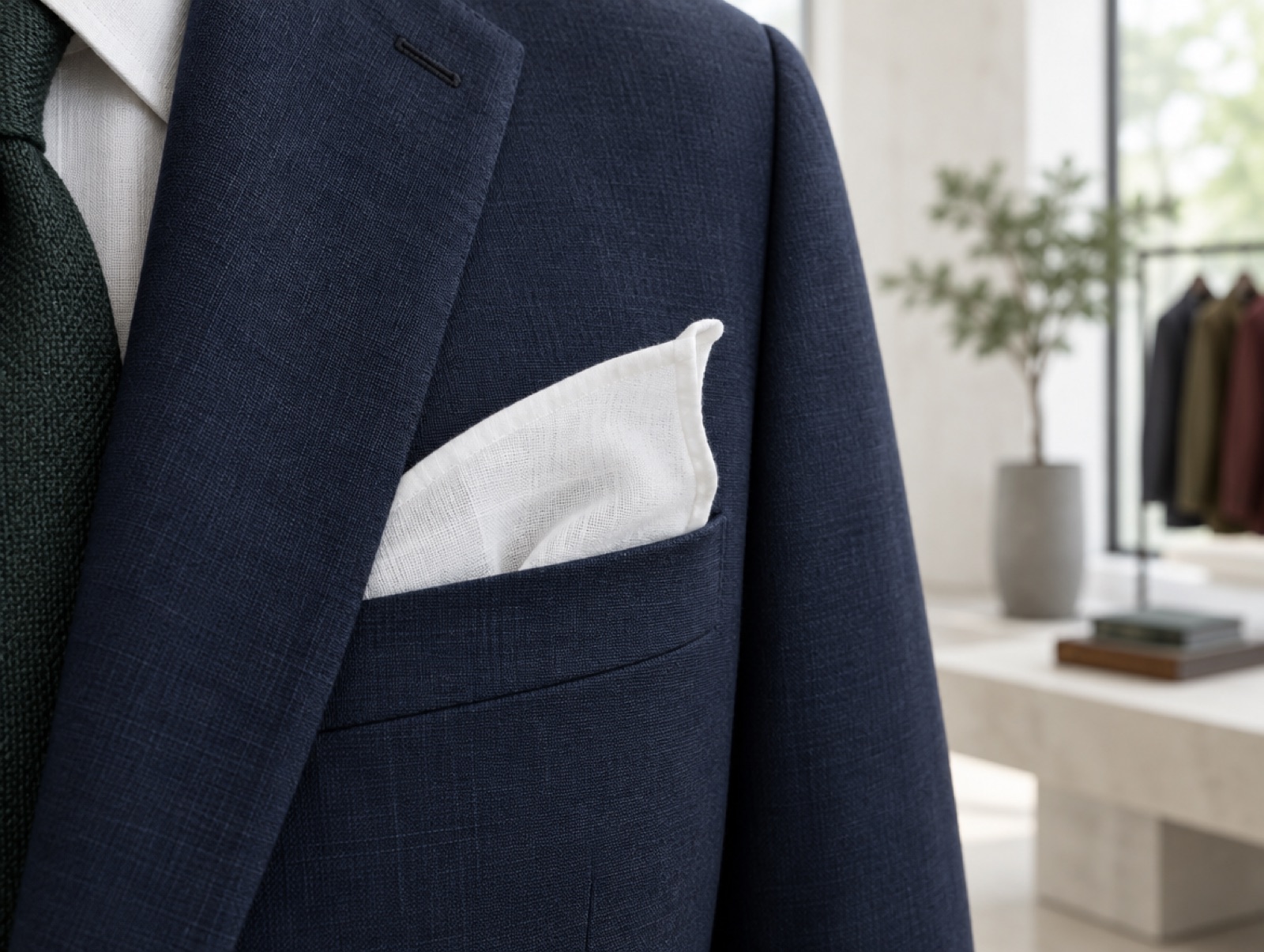
The hand-rolled edge
The hem is rolled between the fingers and secured with small stitches, producing a rounded edge rather than a flat pressed one. It takes time, it is visible from a metre away once you know to look, and it is the difference between a square that stands in the pocket and one that sinks.
It matters most in silk, which has no body of its own. A linen square works reasonably well either way.
The rules, such as they are
One: do not match the tie. A square cut from the same cloth as the tie reads as a set, which is what it is, and sets look bought rather than chosen. Pick up a colour from somewhere in the outfit instead, or ignore the outfit entirely and use white linen.
Two: white linen, folded flat with a straight edge showing, is correct with everything including black tie and morning dress, and it is the only fold worth learning first.
Folds
Three cover everything. The flat fold, a straight edge showing a centimetre above the pocket, is the formal one and the one to learn. The puff, gathered from the centre and pushed in points-down, is the informal default and takes three seconds. The points fold shows one to four peaks and is the fussiest.
Silk needs a puff, because a flat-folded silk square will slide into the pocket and disappear. Linen holds a flat fold on its own.
Images
Licences →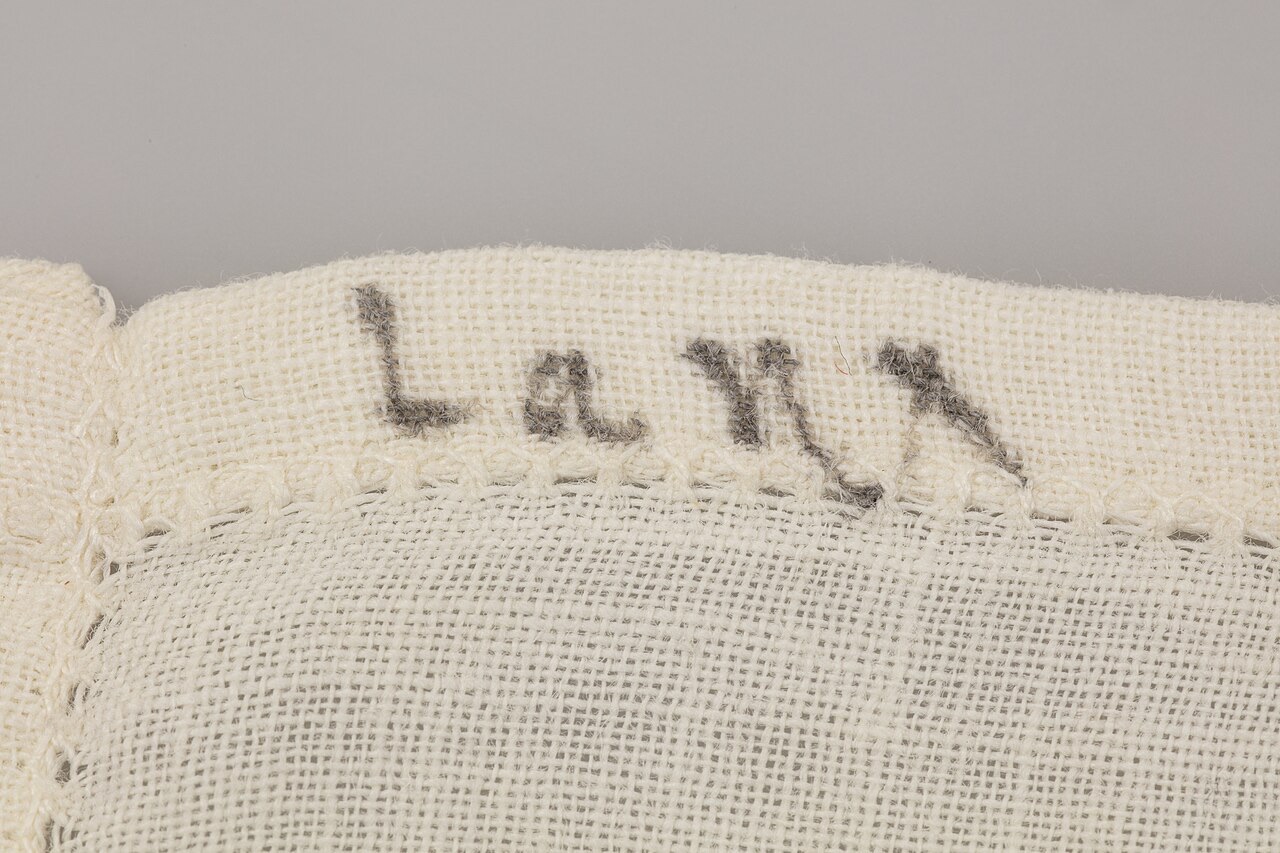
En un coup d'œil
Crédits photographiques 2
- A linen pocket square with a hand-rolled edge: Original art · Il Sartoriale · Il Sartoriale · Il Sartoriale original art
- Off-white Linen Handkerchief of Charles A. Lindbergh: Photograph · This file was contributed to Wikimedia Commons by Missouri Historical Society as part of a cooperation… · Wikimedia Commons · Public domain