Accessory · Small Leather
Side adjusters
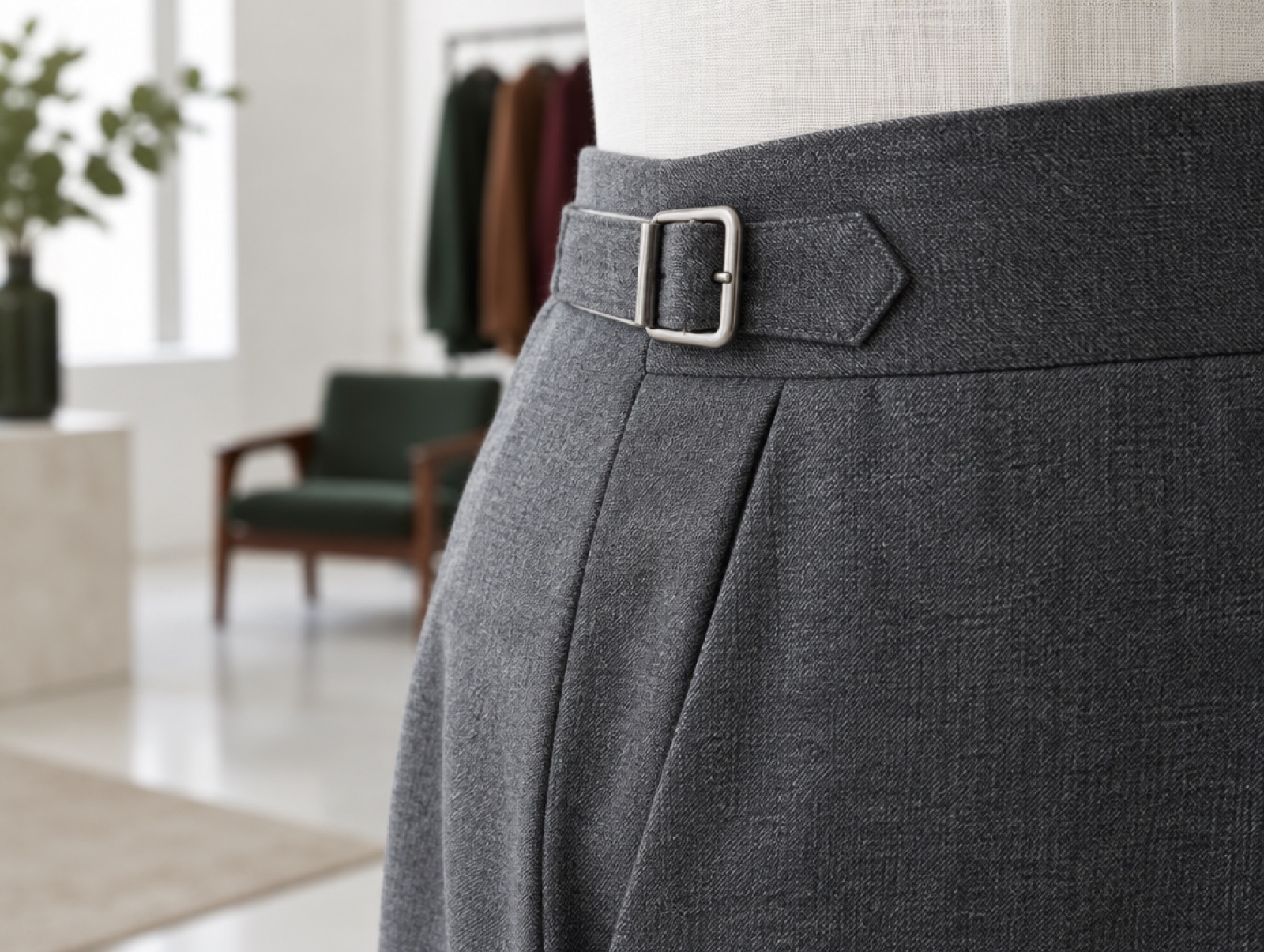
Side adjusters are small buckled or buttoned tabs at each hip that tighten trousers without a belt, keeping the waist smooth under a jacket.
Side adjusters are buckled or buttoned tabs at each hip that tighten the waistband. They hold a well-cut trouser without a belt, keeping the waistband smooth under a buttoned jacket. They are for fine adjustment, not for holding up a trouser that is too big.
What they can and cannot do
An adjuster takes up perhaps two or three centimetres either side. That is enough to accommodate a lunch, a season, or the difference between a shirt tucked and untucked. It is not enough to make a trouser two sizes too large fit, and using them that way produces gathers at the hip.
The most common form is the buckled tab; the button variant is older and cleaner. Both are usually attributed to the Daks trouser of the 1930s, which popularised self-supporting trousers.
The two forms
The buckled tab, a short strap through a small metal buckle, is the common version and adjusts steplessly. The button tab, with two or three positions, is older, flatter under a jacket and slightly less adjustable. Both are usually fitted at the hip, roughly over the front of the pocket. On a well-made trouser they are attached through the waistband rather than sewn to the surface, which is what stops them pulling loose.
Adding them
Whether adjusters can be retrofitted depends on the waistband construction: a properly built waistband with a curtain can usually take them, and a folded-and-stitched cheap one usually cannot.
For most people brace buttons are the easier and cheaper addition and do the job better. Adjusters are for someone who dislikes braces and wants the waist clean.
At a glance
How it is made
All techniques →-
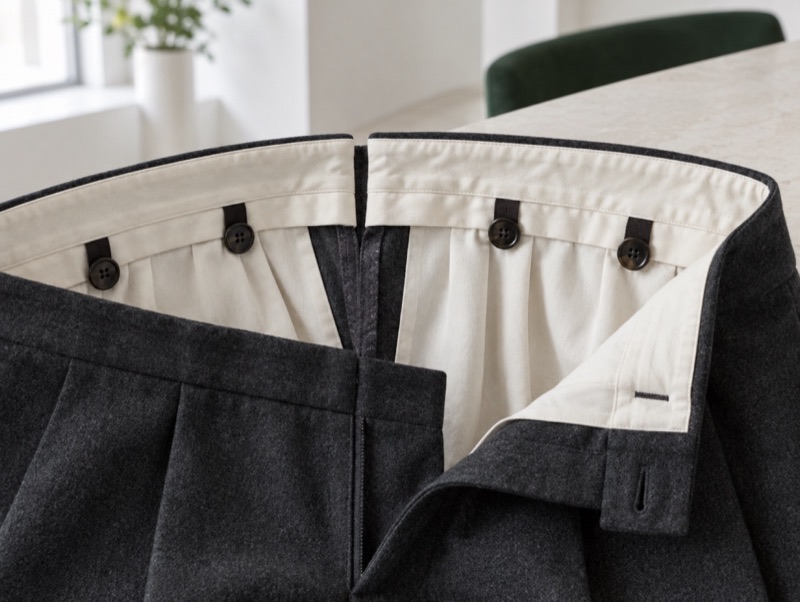 Trouser waistband construction
The least glamorous part of a suit, and the part that decides whether the trousers sit where you put them.
-
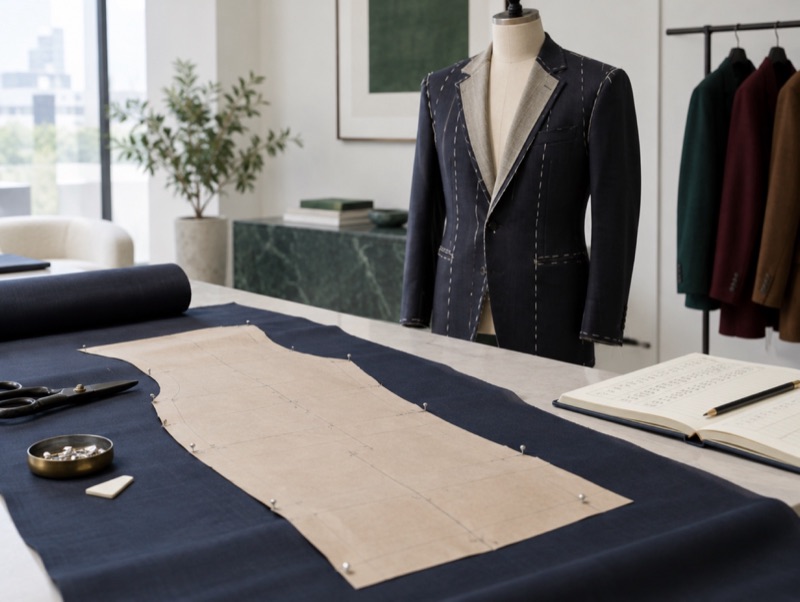 How a bespoke commission works
A bespoke commission takes four to six months of measuring, a pattern made just for you, and repeated fittings, which are what you are paying for.
Picture credits 3
- A trouser side adjuster, close up: Original art · Il Sartoriale · Il Sartoriale · Il Sartoriale original art
- The inside of a bespoke trouser waistband: Original art · Il Sartoriale · Il Sartoriale · Il Sartoriale original art
- A cutting room with pattern, basted jacket and ledger: Original art · Il Sartoriale · Il Sartoriale · Il Sartoriale original art