Accesorio · Small Leather
Socks
Over-the-calf socks stay up and cover your leg when you sit, unlike mid-calf ones, while cotton or merino wool keeps them comfortable.
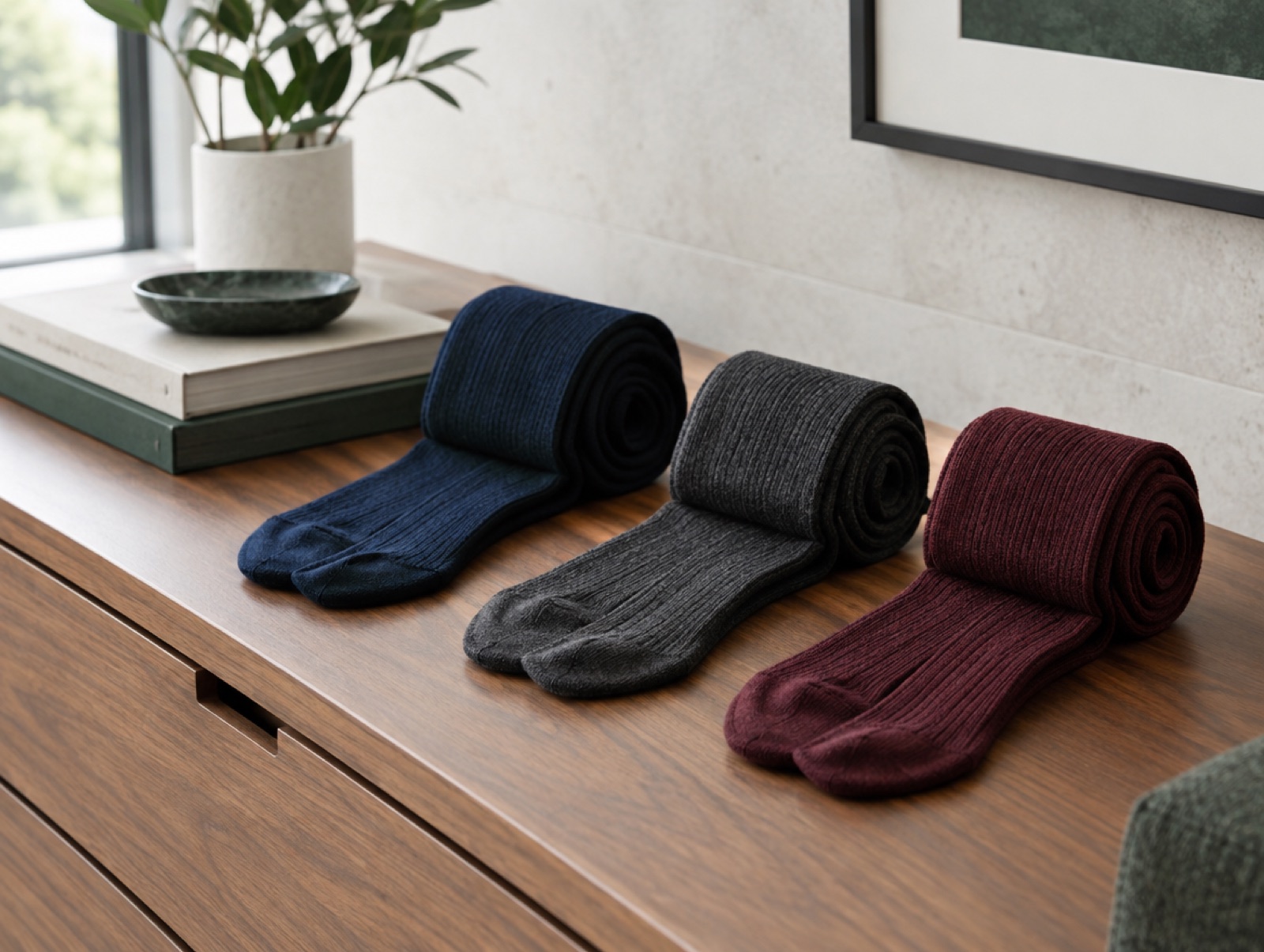
The only structural rule about socks is length: over-the-calf socks stay up and cover the leg when seated, and mid-calf ones do not. Beyond that, fibre determines comfort: cotton lisle and merino for most purposes, fine wool or silk for evening.
Length
A sock that ends below the calf muscle will slide down. Over-the-calf socks are held by the calf itself rather than by elastic, so they stay up all day and there is no gap when the wearer crosses his legs.
This is the single most consequential thing about socks and it is invisible until someone sits down opposite you.
Wear and repair
Socks wear at the heel and the ball, and a fine sock in pure wool or cotton will not last a year of weekly wear without some nylon in the blend. That is a sensible compromise rather than a corner cut.
Darning is a lost skill worth ten minutes of learning if the socks are good ones; a darned heel is invisible inside a shoe.
Fibre
Cotton lisle, a fine, tightly twisted, singed cotton, is the traditional dress sock: smooth, durable and cool. Merino regulates temperature better and resists odour. Silk is the evening convention and wears out quickly. A small percentage of nylon or elastane adds durability and shape retention, and is not a compromise.
Colour
The classical rule is that socks bridge the trouser and the shoe, which in practice means matching the trouser rather than the shoe: a navy sock with navy trousers continues the leg line and a brown sock breaks it in the middle.
The deliberate exception is the coloured or patterned sock, which is a choice rather than an accident and should look like one. With evening dress the sock is black and plain, without exception.
De un vistazo
Créditos fotográficos 1
- Over-the-calf socks, rolled: Original art · Il Sartoriale · Il Sartoriale · Il Sartoriale original art