Brand · United States
Brooks Brothers
Brooks Brothers is America's oldest clothing retailer, which popularised ready-made suits in standard sizes, the button-down collar and the American Ivy look.
Brooks Brothers opened in New York in 1818 and introduced or popularised a remarkable number of things now taken for granted: the ready-to-wear suit sold in graded sizes, the sack suit, the button-down collar, and the American understanding of Ivy dress. Its later history has been commercially turbulent.
What it introduced
- Ready-made suits in graded sizes, from the mid-nineteenth century, which changed how clothing was bought.
- The sack suit: undarted, natural-shouldered, three-roll-two: the American silhouette.
- The button-down collar, adapted, by the firm's account, from the collars English polo players pinned down to stop them flapping. Introduced around the turn of the twentieth century.
- The Ivy wardrobe, as a coherent commercial proposition.
The later history
The company passed through several owners in the late twentieth and early twenty-first centuries, filed for bankruptcy protection in 2020, and was acquired out of it. Product specification has varied considerably across that period, and the name is now a weaker guide to what is in a garment than it once was.
The historical contribution is not diminished by that. A great deal of what Americans consider ordinary menswear came out of this one shop.
The button-down collar
The house's account is that John Brooks saw English polo players with their collars buttoned down to stop them flapping and adapted the idea, introducing it around the turn of the twentieth century. It became the single most recognisable American shirt detail.
The original had a long collar with an unlined, soft construction, which is what produces the deep roll that collectors care about. Later versions shortened and stiffened it, and the roll went with them.
Judging the name today
The company filed for bankruptcy in 2020 and has changed hands since, which makes the usual shorthand, buying a garment on the strength of what the house introduced a century ago, unreliable. The historical contribution and the current product are separate questions and should be assessed separately. This is worth generalising beyond one company. A heritage name is a claim about the past; construction, cloth and making are claims about the object in front of you.
At a glance
What it costs
Prices across the site →These are not quotations. Prices below are the most recent figures we could attribute to a source, shown in the currency they were published in.
| What | Service | Price | Observed |
|---|---|---|---|
| Ready-to-wear suitAn indicative band, not a quotation. Bespoke entry prices normally exclude tax and cloth beyond the house bunch, and houses raise them without announcement. | Ready To Wear | $700–1,600 | September 2026 |
Picture credits 1
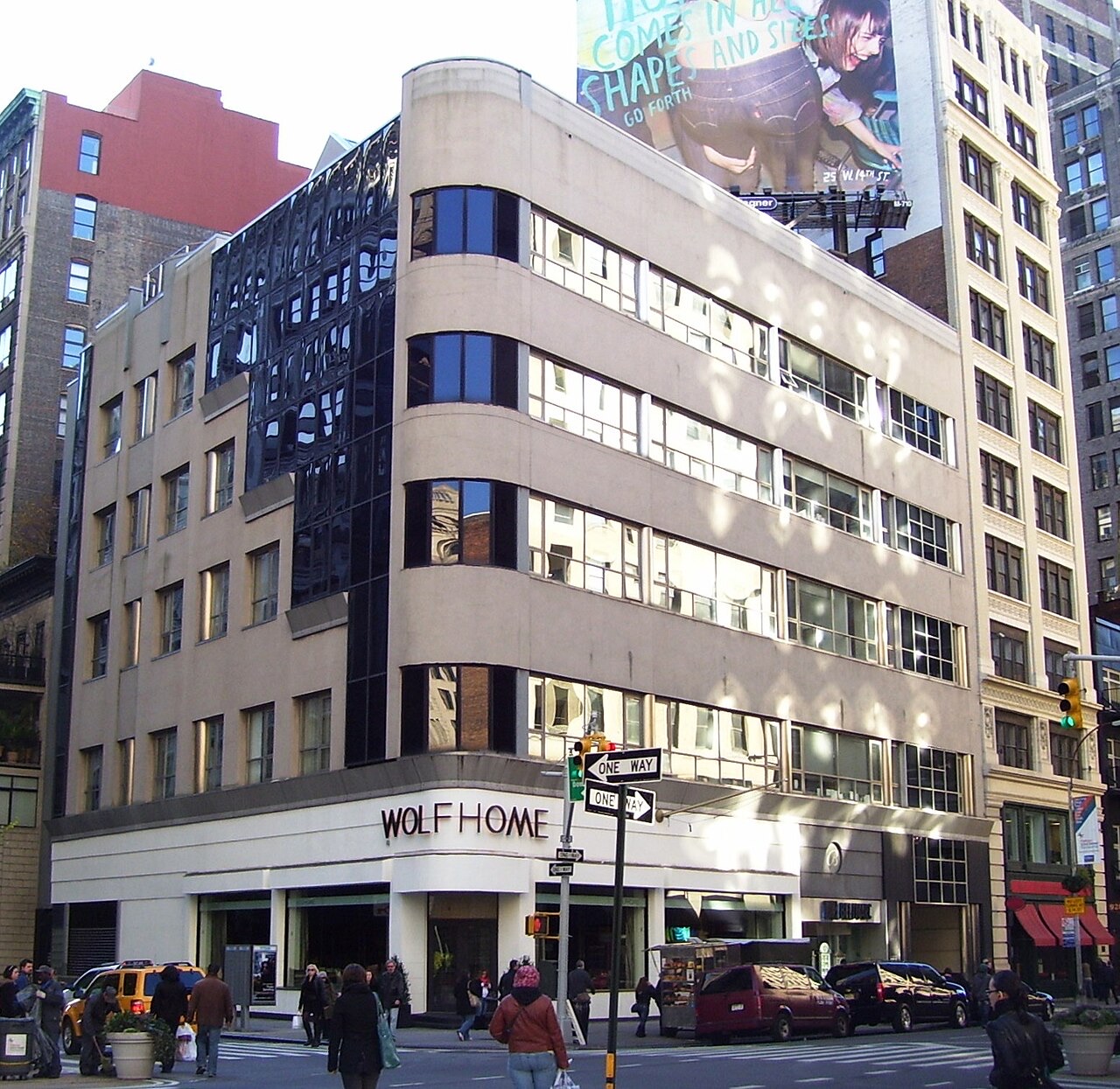
- Brooks Brothers 938 Broadway: Photograph · Beyond My Ken · Wikimedia Commons · CC BY-SA 4.0