Kota · Austria
Vienna
Wien
Vienna's small surviving tailoring trade makes jackets with high, built-up shoulders, a very close-fitting chest and unusually extensive hand sewing, with Knize its best-known house.
Habsburg Vienna supported an enormous tailoring trade. What survives is small but technically distinct: a high built shoulder, a very close chest and hand finishing carried further than almost anywhere. Knize, with its 1913 Adolf Loos shopfront, is the house most often named.
The Viennese method
The Viennese coat is built up rather than draped. The shoulder is high and defined, the chest is cut close, and the internal work (the amount of hand stitching that never shows) is carried to a degree that even other bespoke traditions find excessive.
Knize is the landmark, as much for its architecture as its cutting: Adolf Loos designed the Graben shopfront in 1913, and it is one of the few tailoring premises that is also a significant building.
Austria's influence on shoemaking may be larger than its influence on tailoring. The Austrian and Hungarian lasting and welting tradition runs through a great deal of contemporary bespoke shoemaking, including makers now working in Romania, Germany and Japan.
What survives
A handful of workshops, of which Knize is the best known, cutting in a tradition that once clothed an empire. The trade contracted with the Habsburgs and then with the twentieth century, and what remains is small.
The technical distinctiveness survives with it: a high built shoulder, a very close chest, and internal finishing carried further than almost any other tradition requires.
Adolf Loos and clothing
Loos designed the Knize shopfront in 1913 and wrote extensively about men's dress. His argument, that ornament in modern life is a failure of taste, and that English tailoring's restraint was the correct model, connects the architecture and the clothing directly.
It is one of the very few cases where a significant modernist theorist wrote seriously about tailoring, and the shop is the argument built.
Gambar
Penjahit-penjahit bespoke dalam Vienna
Semua penjahit-penjahit bespoke →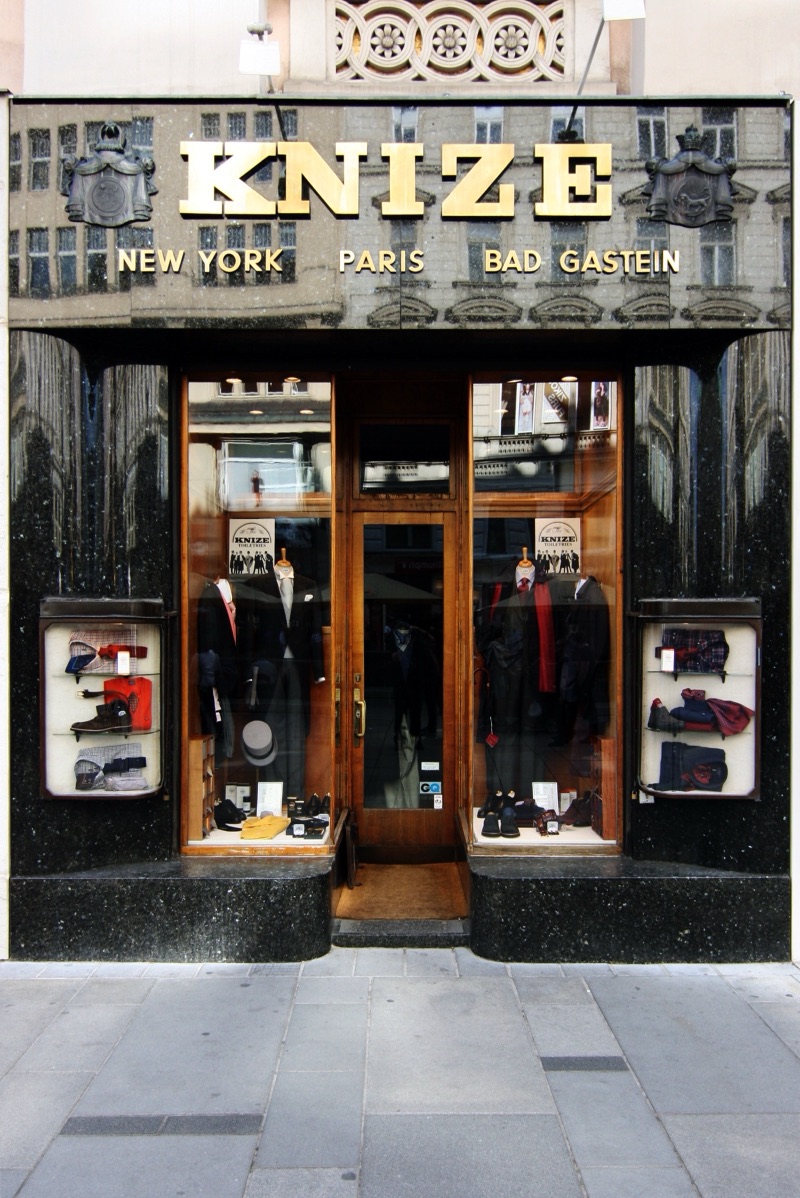
Pembuat sepatu dalam Vienna
Semua pembuat sepatu →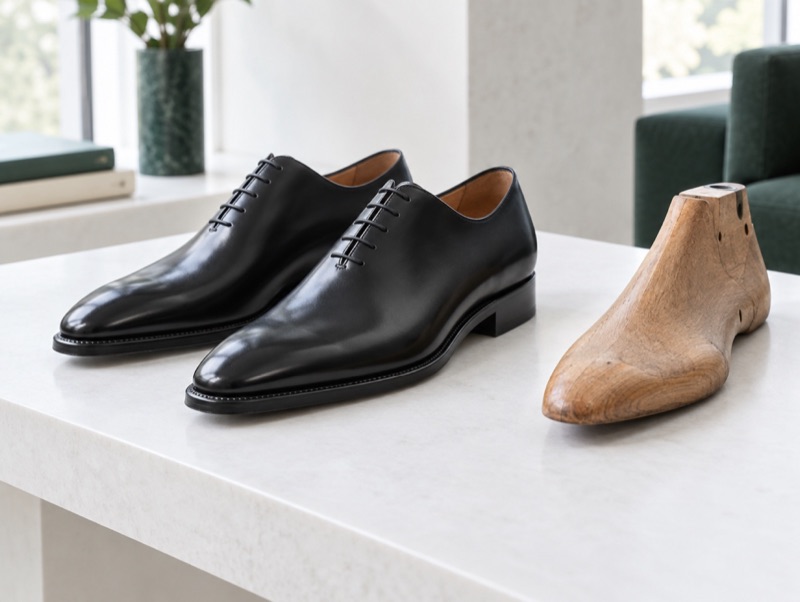
Catatan praktis
Kredit foto 5
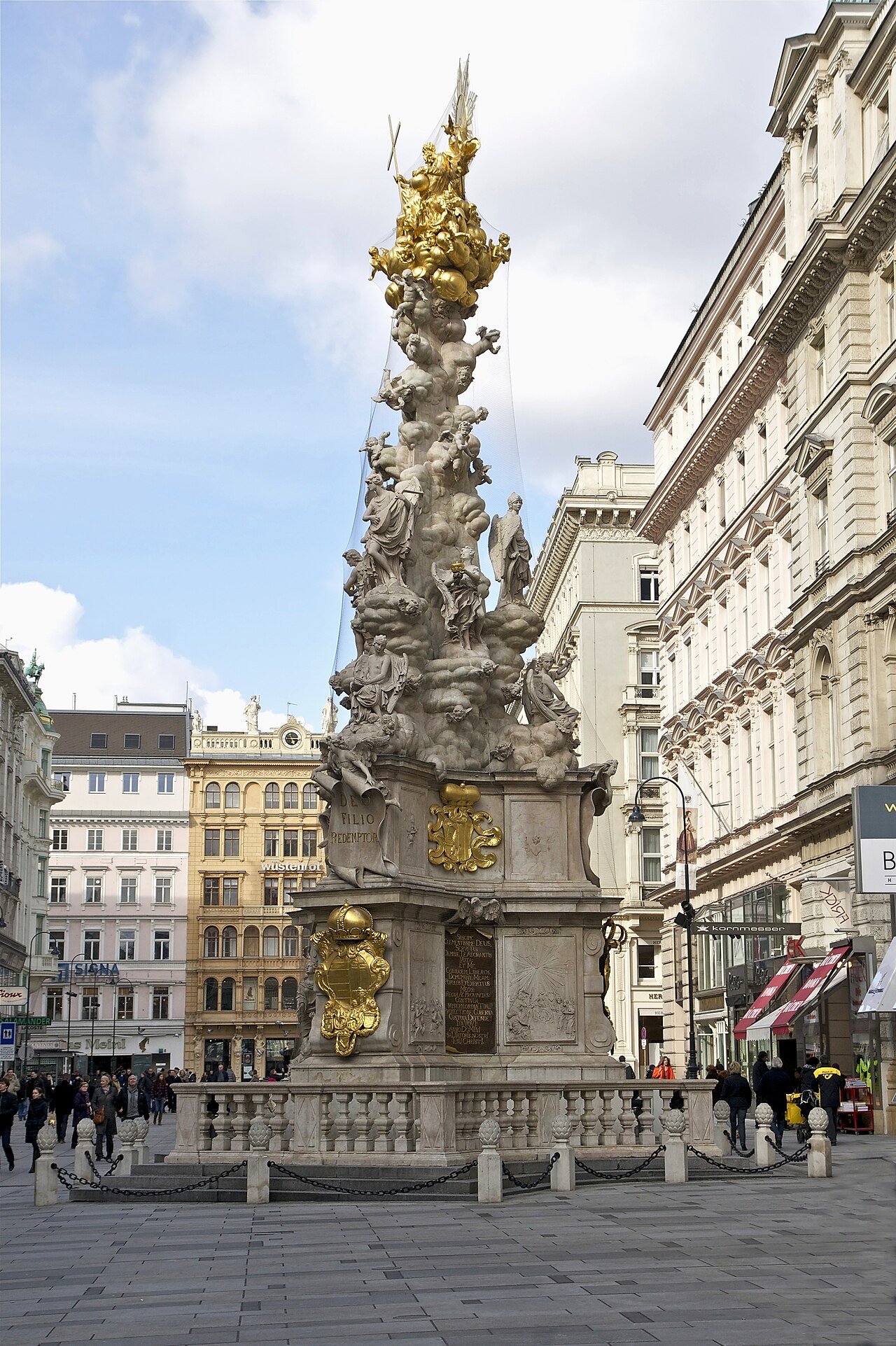
- Plague column pestsaüle Graben Wien Vienna Austria: Photograph · Jebulon · Wikimedia Commons · CC BY-SA 3.0
- Humanic Graben Vienna 20082: Photograph · Gryffindor · Wikimedia Commons · Public domain
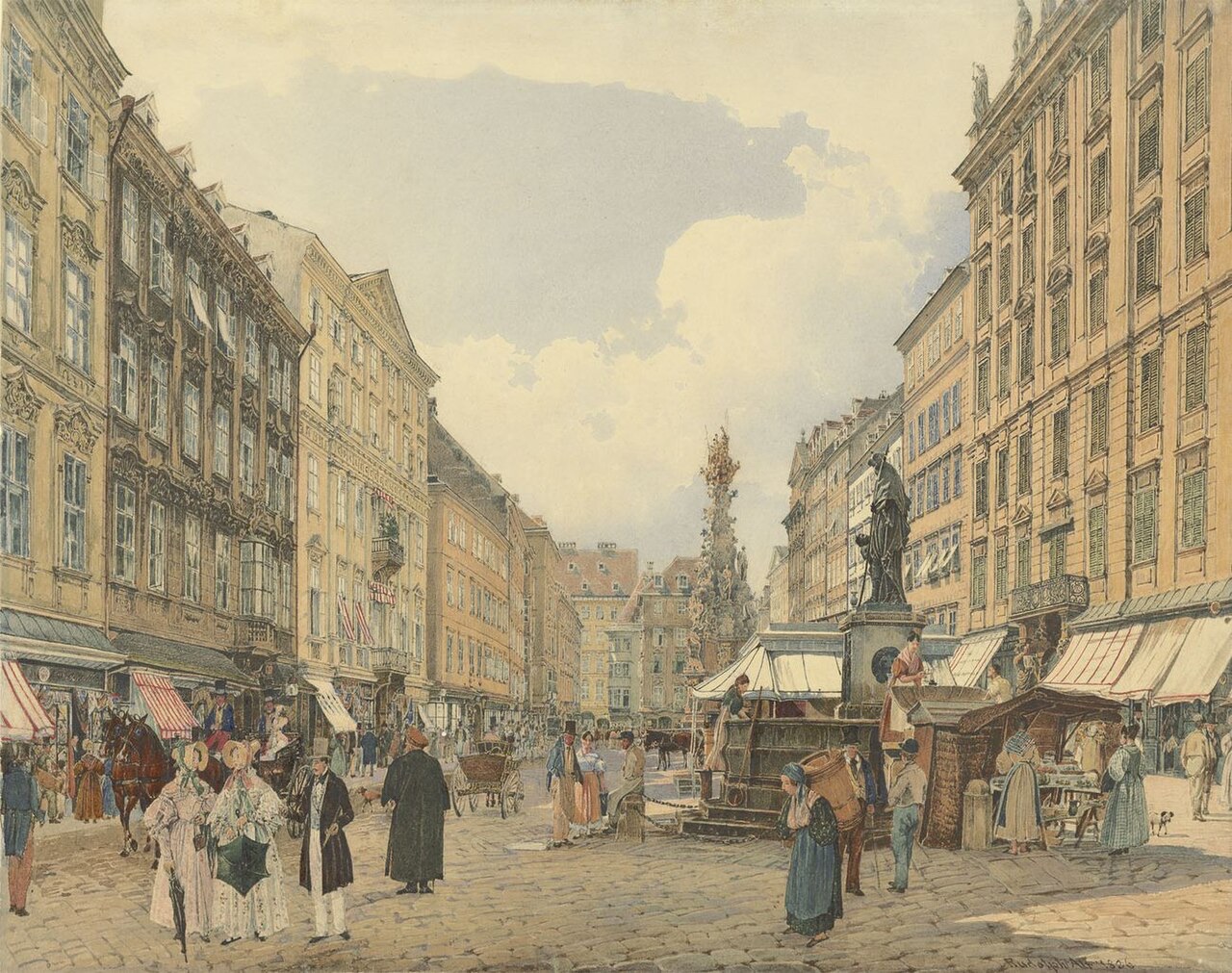
- Graben, Vienna label QS:Len,"Graben, Vienna ": Historical view · Rudolf von Alt · Wikimedia Commons · Public domain
- Knize cossa: Photograph · C. Cossa · Wikimedia Commons · CC BY-SA 3.0 at
- An illustration of a welted shoe of the kind the house makes. Not a photograph of the house's own work.: Original art · Il Sartoriale · Il Sartoriale · Il Sartoriale original art