Comparison
Cashmere vs vicuña
Both are fine animal down. One is farmed and available at every price; the other is shorn from wild animals under licence and is the most expensive cloth in the world.
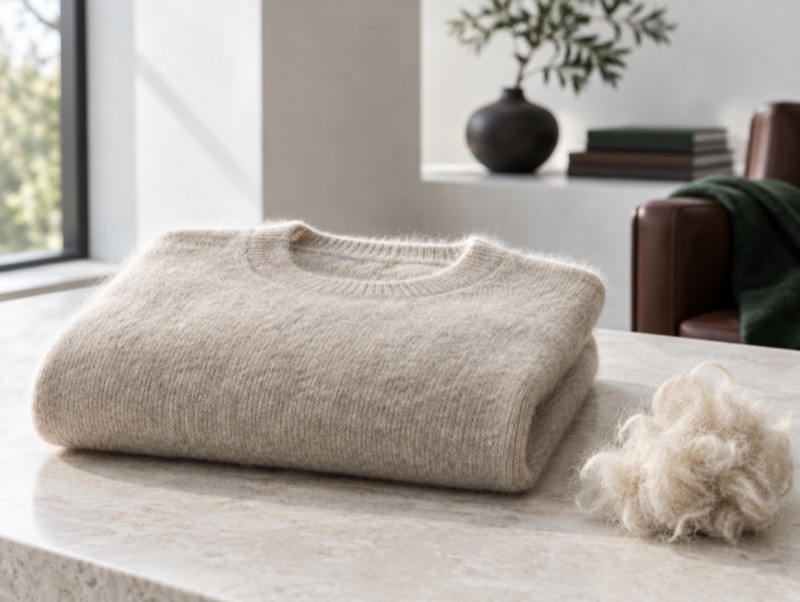
Cashmere
The undercoat of a goat that lives somewhere very cold, combed out by hand each spring.
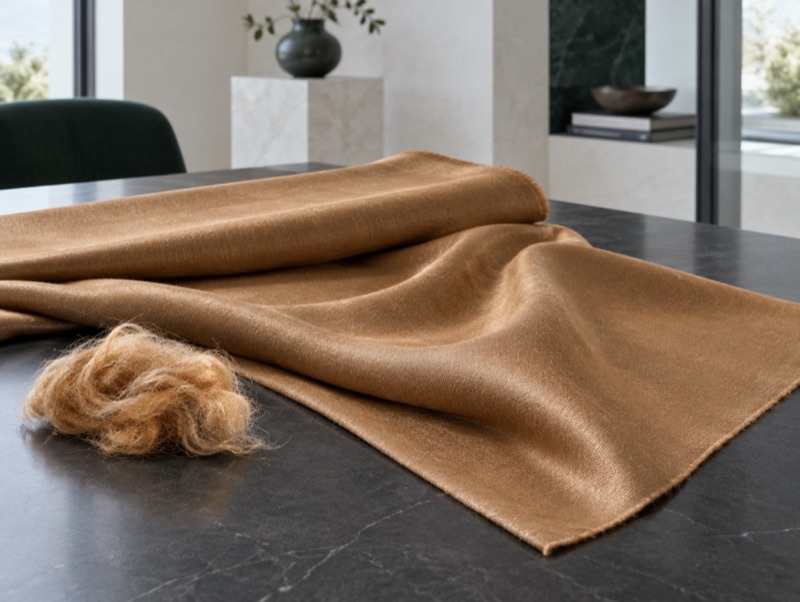
Vicuña
The finest animal fibre in commercial use, from a wild Andean camelid that was nearly hunted to extinction and is now shorn alive under licence.
The physical difference
Vicuña fibre is finer (around 12 to 13 microns against cashmere's 14 to 19) and hollow-cored, which makes it warmer for its weight and softer against the skin. Both are fine enough to feel quite unlike wool.
Vicuña is also shorter and more delicate. It is normally left undyed in its natural gold-brown because bleaching and dyeing damage so fine a fibre, and a vicuña garment is something to be looked after rather than worn hard.
The supply difference, which is the real one
A cashmere goat yields perhaps 150 to 200 grams a year and is farmed. A vicuña yields around 200 grams every two years, is wild, lives above 3,500 metres in the Andes, and is protected under CITES; trade is permitted only in fibre shorn from live animals under licence.
That is why cashmere is available at £60 and at £2,000 while vicuña has essentially one price, which is very high indeed. There is no cheap vicuña; if something is cheap and says vicuña, it is not vicuña.
What the price of cashmere actually buys
Not fineness; the micron range is fairly narrow. Fibre length. Long-fibre cashmere spins into a yarn whose ends stay in; short-fibre cashmere pills within a season because the ends work loose.
This is the single most useful thing to know about buying cashmere, and it is almost never published. A £400 sweater and a £60 one are frequently the same micron count and completely different objects.
Side by side
| Cashmere | Vicuña | |
|---|---|---|
| Fibre diameter | 14–19 µm | About 12–13 µm |
| Source | Farmed goats: Mongolia, China, Iran | Wild vicuña: the Andean altiplano |
| Yield | 150–200 g per animal per year | About 200 g per animal every two years |
| Regulation | None specific | CITES; licensed live shearing only |
| Usually dyed | Yes, any colour | No, left in natural gold-brown |
| Durability | Depends on fibre length, not fineness | Delicate |
| Price range | Very wide | Uniformly very high |
What each is better at
This section is editorial opinion, clearly separated from the record above. It follows our stated assessment method.
Other comparisons
All →Sources
Drawn from the sources listed on each page. Cashmere · Vicuña
- Cashmere and camel hair standards, Cashmere and Camel Hair Manufacturers Institute.
- Vicugna vicugna: appendices and trade regulation, CITES.
- Vicugna vicugna, IUCN Red List of Threatened Species.
Picture credits 2
- A folded cashmere sweater with a tuft of raw fibre: Original art · Il Sartoriale · Il Sartoriale · Il Sartoriale original art
- A length of vicuña cloth in its natural golden colour: Original art · Il Sartoriale · Il Sartoriale · Il Sartoriale original art