Comparison
Oxford vs derby
Closed lacing against open lacing. One construction detail decides both formality and how well the shoe will fit your foot.
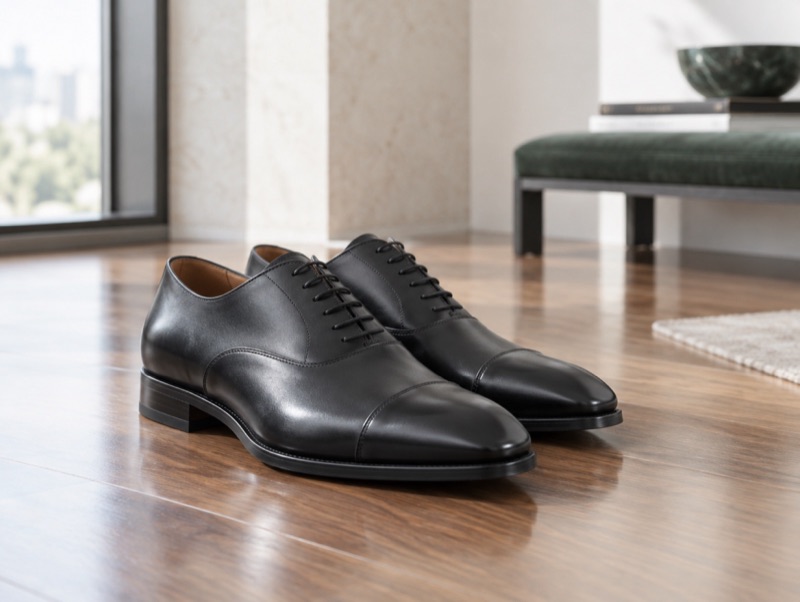
The oxford shoe
An oxford is a lace-up shoe whose eyelet flaps are stitched under the front, giving a clean V and making it more formal than a derby.
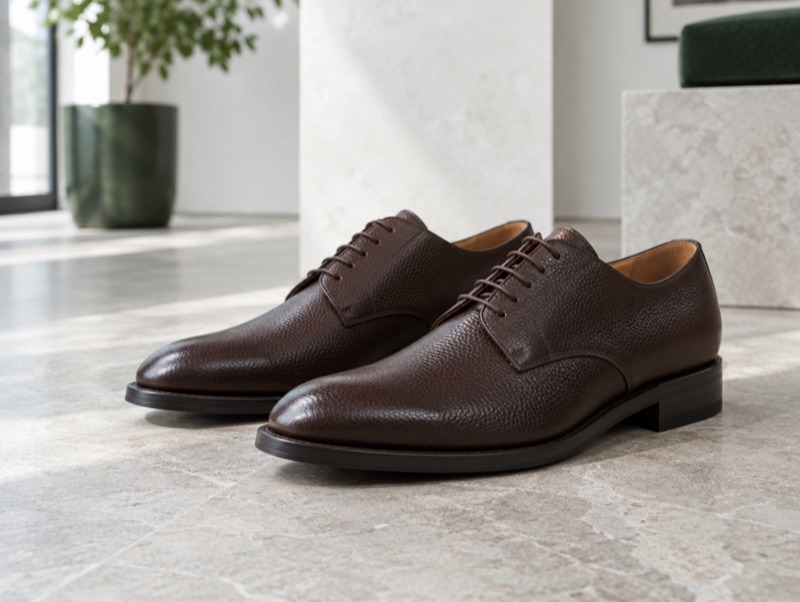
The derby shoe
A derby has its eyelet flaps sewn on top and open at the bottom, so it suits wide feet and high insteps better than an oxford.
The difference
On an oxford the eyelet tabs are stitched underneath the vamp, so the lacing closes flush to a clean V. On a derby they sit on top and open outward. That is the whole distinction and everything else follows from it.
Closed lacing looks cleaner and reads as more formal. Open lacing adjusts much further, which accommodates a high instep, a wide foot, or a foot that swells during the day.
Formality in practice
The traditional hierarchy runs: plain-toe black oxford, cap-toe black oxford, brogued oxford, derby, loafer. Colour moves the whole scale: a black shoe outranks the same shoe in brown.
In practice the distinction now registers only in genuinely conservative settings and with formal dress. For most modern occasions a well-made derby is entirely appropriate, and the fit advantage is worth more than the formality difference costs.
Which fits you
This is the part that actually matters and it is decided by your foot rather than by taste. If you have a high instep, an oxford's fixed lacing will press across the top of the foot however good the last is. If you have a low instep, an oxford closes cleanly and a derby may gape.
Try both in the same maker's lasts. The answer will be obvious within a minute of walking.
Side by side
| The oxford shoe | The derby shoe | |
|---|---|---|
| Lacing | Closed: tabs stitched under the vamp | Open: tabs on top of the vamp |
| Formality | Higher | Lower |
| Adjustment range | Limited | Wide |
| Suits | A lower instep, a narrower foot | A high instep, a wider foot, feet that swell |
| Heavier soles | Look inconsistent | Look correct |
| With formal dress | Correct | Not traditionally |
What each is better at
This section is editorial opinion, clearly separated from the record above. It follows our stated assessment method.
Other comparisons
All →Picture credits 2
- Black cap-toe oxford shoes: Original art · Il Sartoriale · Il Sartoriale · Il Sartoriale original art
- Brown derby shoes with open lacing: Original art · Il Sartoriale · Il Sartoriale · Il Sartoriale original art