Garment · Footwear
The derby shoe
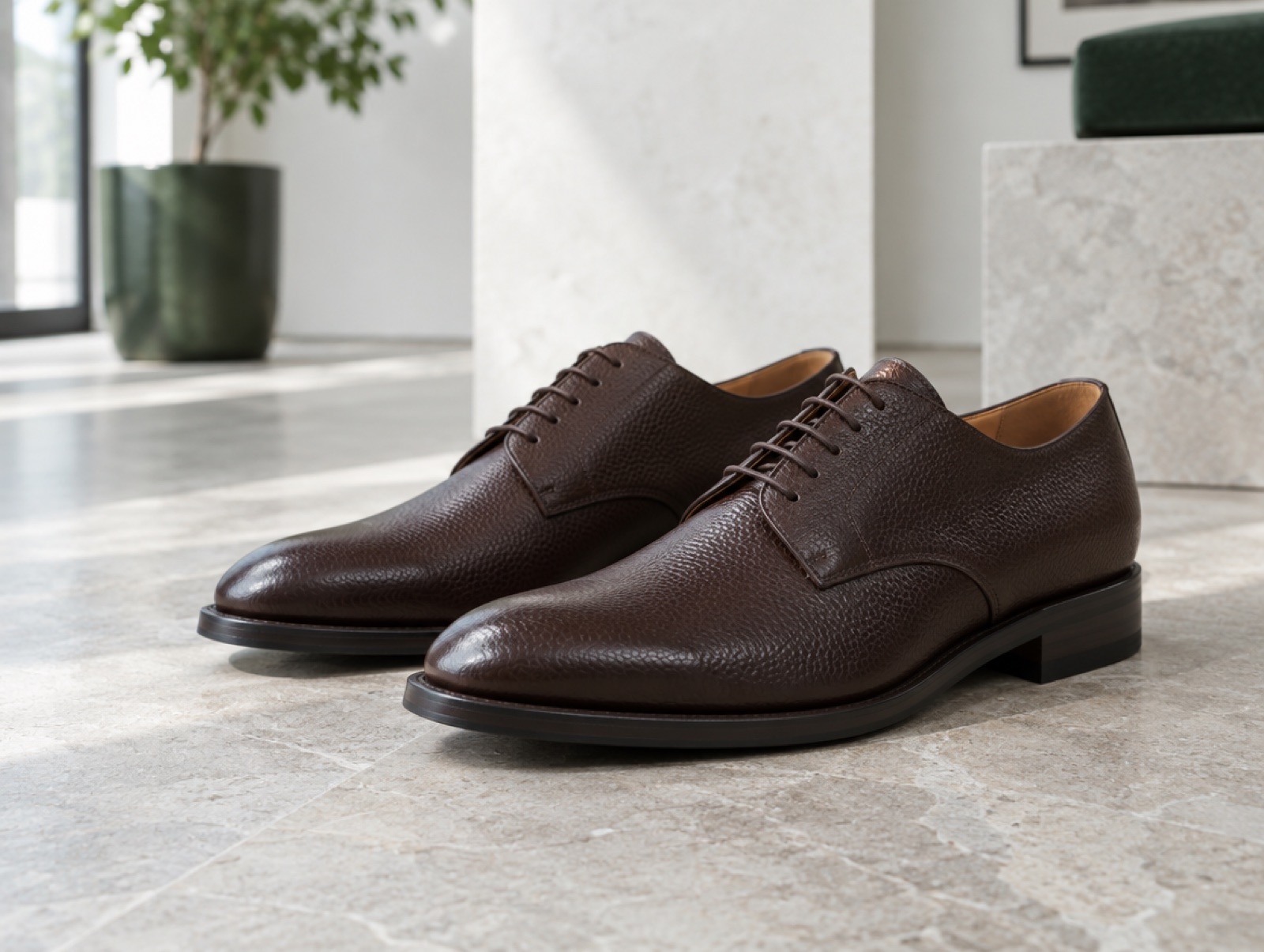
A derby has its eyelet flaps sewn on top and open at the bottom, so it suits wide feet and high insteps better than an oxford.
A derby has its eyelet tabs sewn on top of the vamp, open at the bottom, which lets the lacing adjust widely. It is less formal than an oxford and fits a high instep or a wide foot far better, which makes it the more practical shoe for most people.
Why it fits better
Because the throat opens. An oxford's lacing closes to a fixed point; a derby's can open as wide as the foot needs, which accommodates a high instep, a wide foot or a foot that swells during the day.
The trade-off is only in formality, and for most modern occasions that is a small price. A dark brown or black plain-toe derby is a genuinely versatile shoe.
Formality in practice
A dark brown or black plain-toe derby on a single leather sole is appropriate with everything short of formal dress, which covers the overwhelming majority of what most people actually wear.
With a suit in a conservative professional setting an oxford is still the safer choice. Everywhere else the distinction has faded to the point where only the trade notices.
Derby or blucher
Strictly, a blucher has two small tabs stitched onto the vamp, while a derby has larger quarters extending back to the heel. In practice the words are used interchangeably in Britain and America, and nobody will misunderstand you.
When a derby is the better choice
For anyone with a high instep, a wide foot, or a foot that swells during a long day, the derby is simply the more comfortable shoe and no amount of admiration for the oxford's line changes that.
It also carries a heavier sole better. A country derby on a double sole looks correct; a country oxford on the same sole looks confused, because the closed lacing says town and the sole says field.
At a glance
How it is made
All techniques →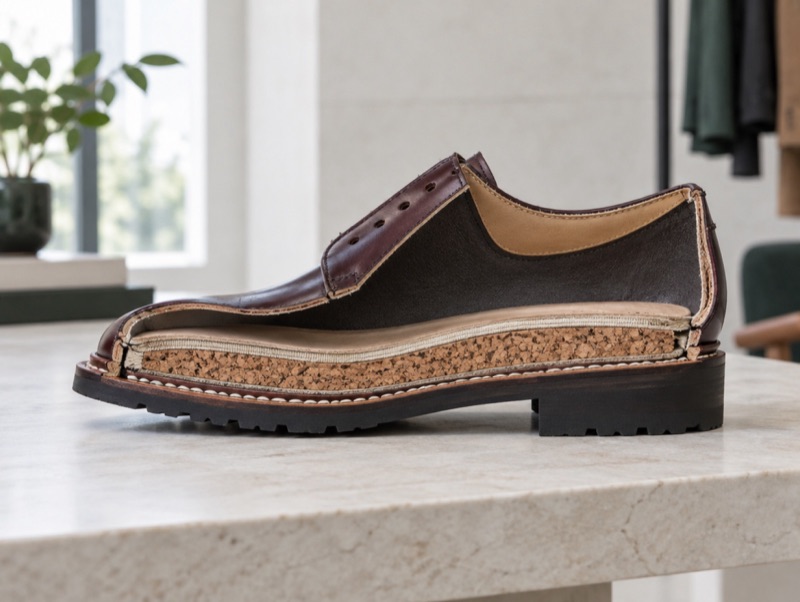
Compared with
All comparisons →Picture credits 2
- Brown derby shoes with open lacing: Original art · Il Sartoriale · Il Sartoriale · Il Sartoriale original art
- A welted shoe cut in cross-section: Original art · Il Sartoriale · Il Sartoriale · Il Sartoriale original art