Garment · Outerwear
The polo coat
The polo coat is a camel-coloured, double-breasted belted overcoat with pockets sewn on the outside, first worn by British polo players and popular on American campuses in the 1920s.
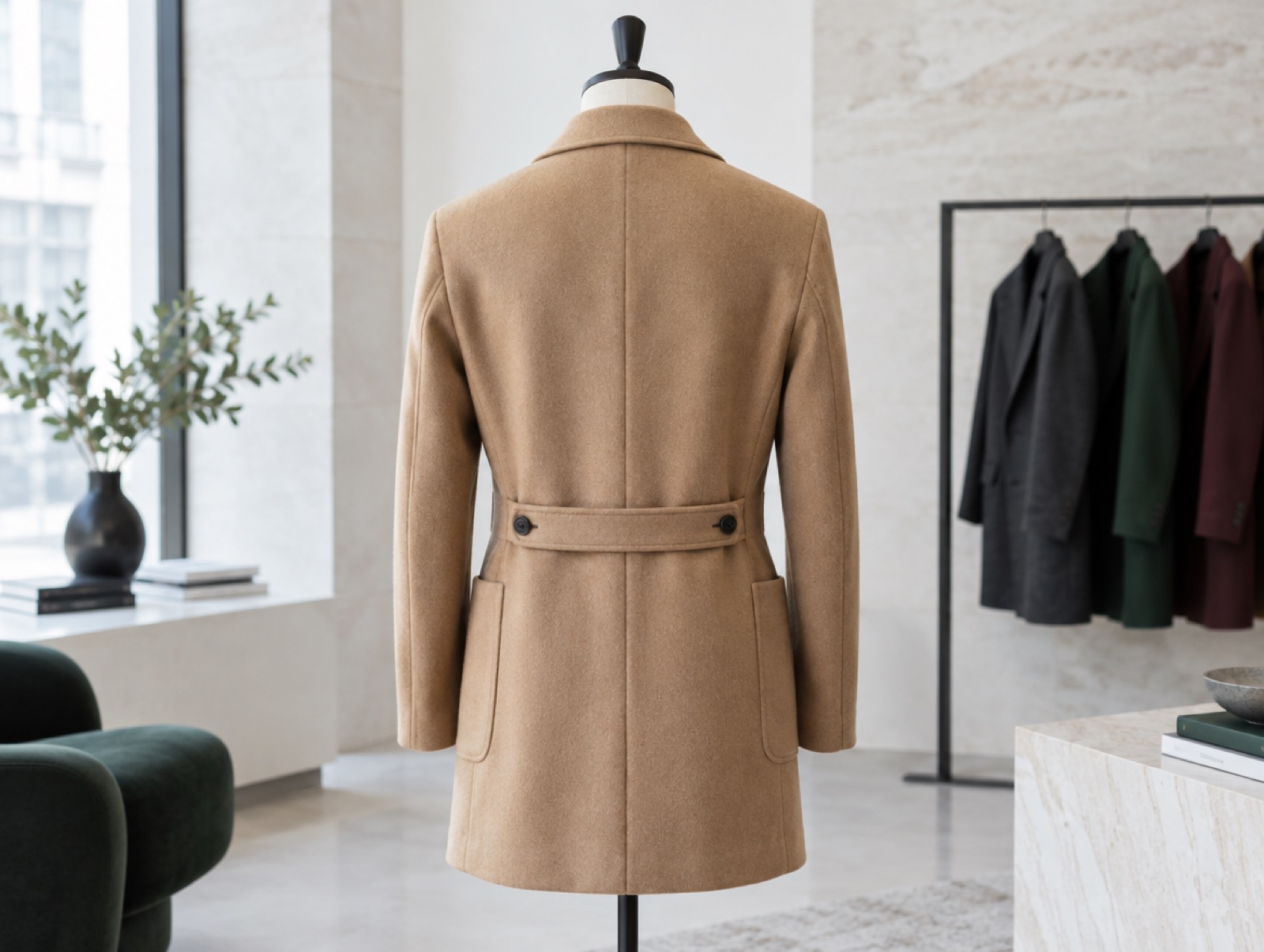
The polo coat is a double-breasted, belted overcoat in camel hair or a camel-coloured cloth, with patch pockets, a half or full belt and often a wide Ulster collar. It came from the wrap coats British polo players wore between periods of play, and became popular on American campuses in the 1920s.
From the sidelines
British polo players wore long camel-hair wrap coats between chukkas to stay warm; American college students later adopted them. By the late 1920s the belted, patch-pocketed version was an established garment on the eastern American campuses and has never entirely left.
The colour is the fibre's own (undyed camel down is a warm tan), which is why the coat and the colour share a name.
What makes one right
- Double breasted, six buttons, peak lapels, with a wide Ulster collar that can be turned up.
- Patch pockets, frequently with flaps.
- A half belt at the back or a full belt.
- Camel hair, or a camel-coloured wool or wool blend. A pure camel coat is soft and less durable.
- Length below the knee. A short polo coat loses the whole point of the silhouette.
Wearing it
It is a large, pale, double-breasted coat and it does not recede. Worn over a suit it works; worn over jeans it looks like fancy dress, because the proportions assume tailoring underneath.
Camel is also an unforgiving colour: it marks, it shows rain, and it needs cleaning more often than a dark coat, which, given the fibre, shortens its life. This is a coat for someone who owns more than one.
At a glance
Sources
- Brooks Brothers , Wikipedia. Consulted in the November 2026 fact-check.
Where a figure is disputed or a house has not published it, the page says so rather than choosing a number.
Picture credits 1
- A camel polo coat from the back: Original art · Il Sartoriale · Il Sartoriale · Il Sartoriale original art