의류 · Outerwear
The polo coat
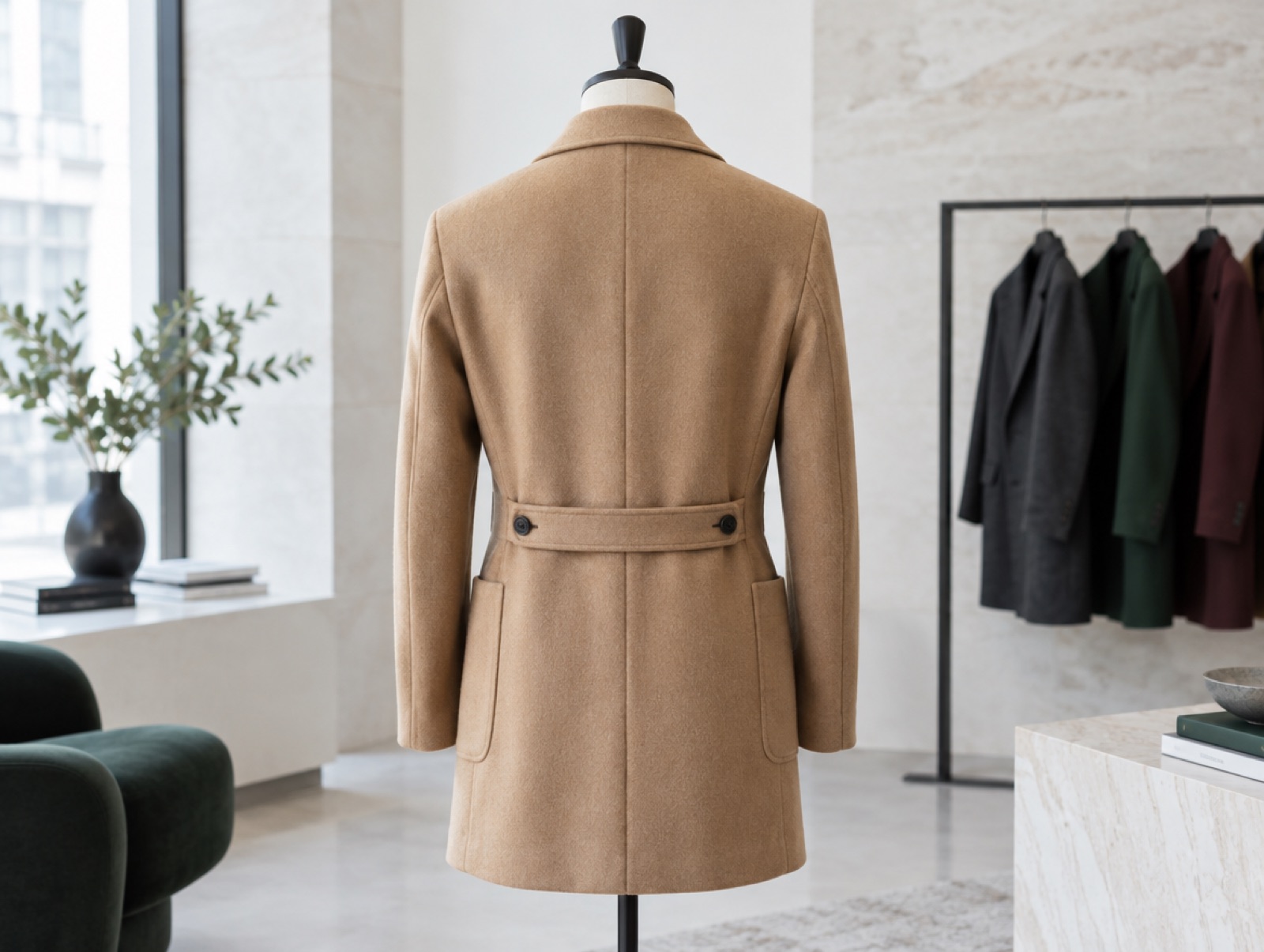
The polo coat is a camel-coloured, double-breasted belted overcoat with pockets sewn on the outside, first worn by polo players and spectators in the 1920s.
The polo coat is a double-breasted, belted overcoat in camel hair or a camel-coloured cloth, with patch pockets, a half or full belt and often a wide Ulster collar. It came from the wrap coats polo players and spectators wore between periods of play in the 1920s.
From the sidelines
Polo players wore long camel-hair wrap coats between chukkas to stay warm; spectators, and then American college students, adopted them. By the late 1920s the belted, patch-pocketed version was an established garment on the eastern American campuses and has never entirely left.
The colour is the fibre's own (undyed camel down is a warm tan), which is why the coat and the colour share a name.
What makes one right
- Double breasted, six buttons, peak lapels, with a wide Ulster collar that can be turned up.
- Patch pockets, frequently with flaps.
- A half belt at the back or a full belt; a full belt is the older form.
- Camel hair, or a camel-coloured wool or wool blend. A pure camel coat is soft and less durable.
- Length below the knee. A short polo coat loses the whole point of the silhouette.
Wearing it
It is a large, pale, double-breasted coat and it does not recede. Worn over a suit it works; worn over jeans it looks like fancy dress, because the proportions assume tailoring underneath.
Camel is also an unforgiving colour: it marks, it shows rain, and it needs cleaning more often than a dark coat, which, given the fibre, shortens its life. This is a coat for someone who owns more than one.
이미지
라이선스 →
한눈에 보기
사진 크레딧 3
- A camel polo coat from the back: Original art · Il Sartoriale · Il Sartoriale · Il Sartoriale original art
- Camel 20180816175536 02: Photograph · Shahzaib Damn Cruze · Wikimedia Commons · CC BY-SA 4.0
- Camel 20180816175536 03: Photograph · Shahzaib Damn Cruze · Wikimedia Commons · CC BY-SA 4.0