Prenda · Knitwear
Sweaters and knitwear
Sweaters are best judged by fibre and by whether they were knitted to shape piece by piece, which lasts longer than knitted fabric cut and sewn.
Knitwear is judged by fibre, by yarn, and by whether the garment was fully fashioned (knitted to shape panel by panel) or cut from knitted fabric. Fully fashioned garments have shaped seams that follow the body and do not unravel; cut-and-sew ones are cheaper and less durable.
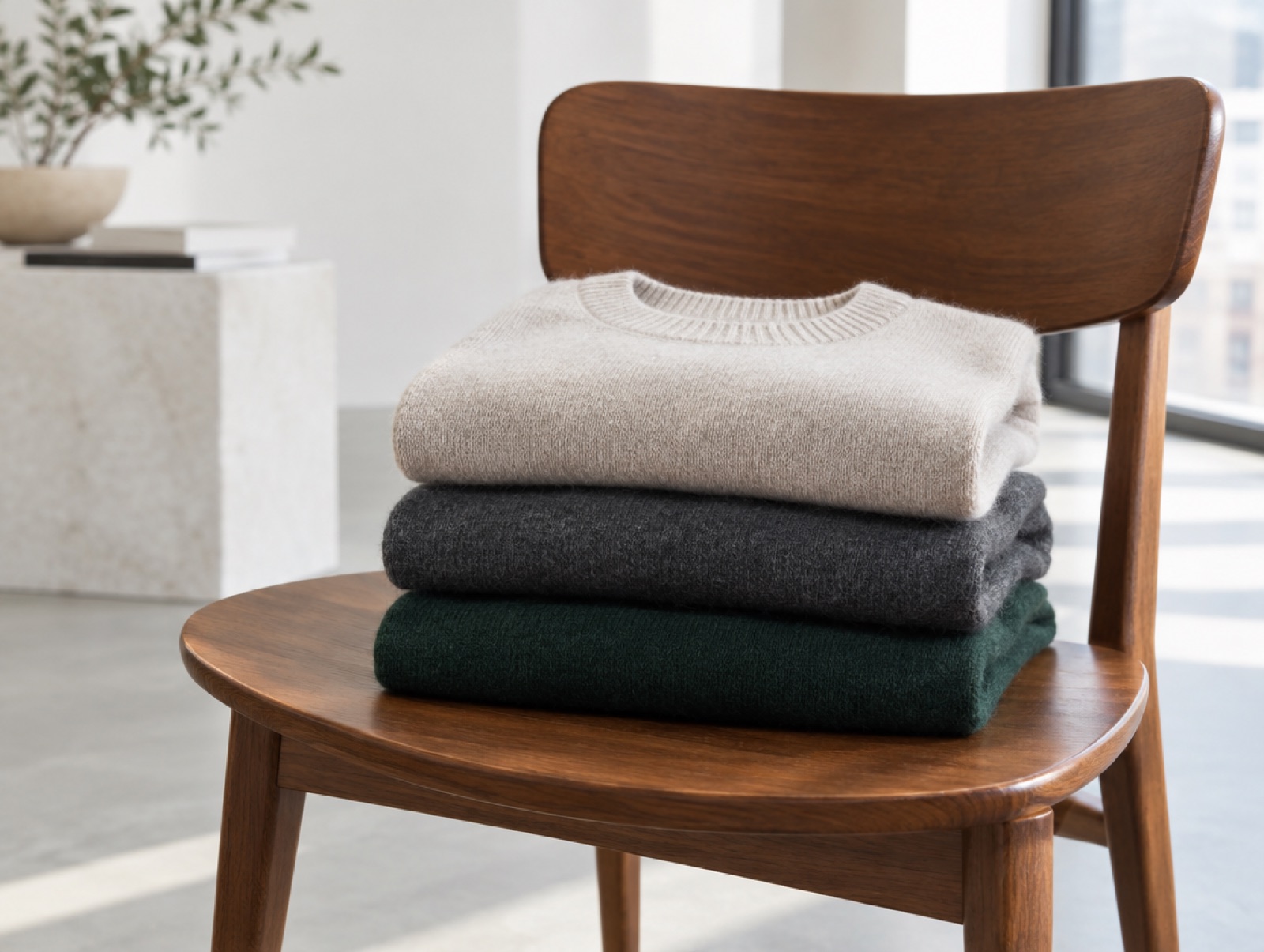
Fully fashioned versus cut-and-sew
A fully fashioned garment is knitted as shaped panels (the machine increases and decreases stitches to form the armhole and shoulder) and the panels are then linked together stitch by stitch. Nothing is cut, so nothing can unravel, and the seams follow the body.
Cut-and-sew knitwear is made by knitting a flat length of fabric, cutting shapes out of it and sewing them together. It is much faster and much cheaper, the cut edges must be overlocked to stop them running, and the seams are bulkier. Look at the shoulder: a fully fashioned one has small chevron marks where stitches were decreased.
Gauge and ply
Gauge is how fine the knit is: the number of needles per inch. A 30-gauge cashmere is fine enough to wear under a jacket; a 7-gauge is a chunky outer garment. Ply is how many strands are twisted into the yarn: two-ply is the standard for good knitwear, and more plies mean a heavier, warmer, generally more durable garment.
The common confusion is that ply describes thickness. It describes construction; a two-ply of fine yarn is thinner than a single-ply of thick yarn.
Judging it
- Rub the surface hard with a palm. Loose fibre appearing means short-fibre yarn and pilling to come.
- Stretch the ribbing at the hem and cuff and let go. It should snap back completely.
- Look at the shoulder seam for fully fashioned decrease marks.
- Check the ply and gauge if stated; two-ply and a stated gauge signal a maker who knows what they are selling.
De un vistazo
Créditos fotográficos 1
- A stack of three sweaters: Original art · Il Sartoriale · Il Sartoriale · Il Sartoriale original art