Vêtement · Tailoring
The tailcoat
A tailcoat is the most formal thing a man can wear, short at the front with two tails behind, now seen mainly at state occasions.
An evening tailcoat, white tie, is cut to the waist at the front with two tails behind, worn with a white piqué waistcoat, a stiff-fronted shirt with a wing collar and a white bow tie. It is the highest level of formal dress and survives mainly at state occasions and a handful of institutions.
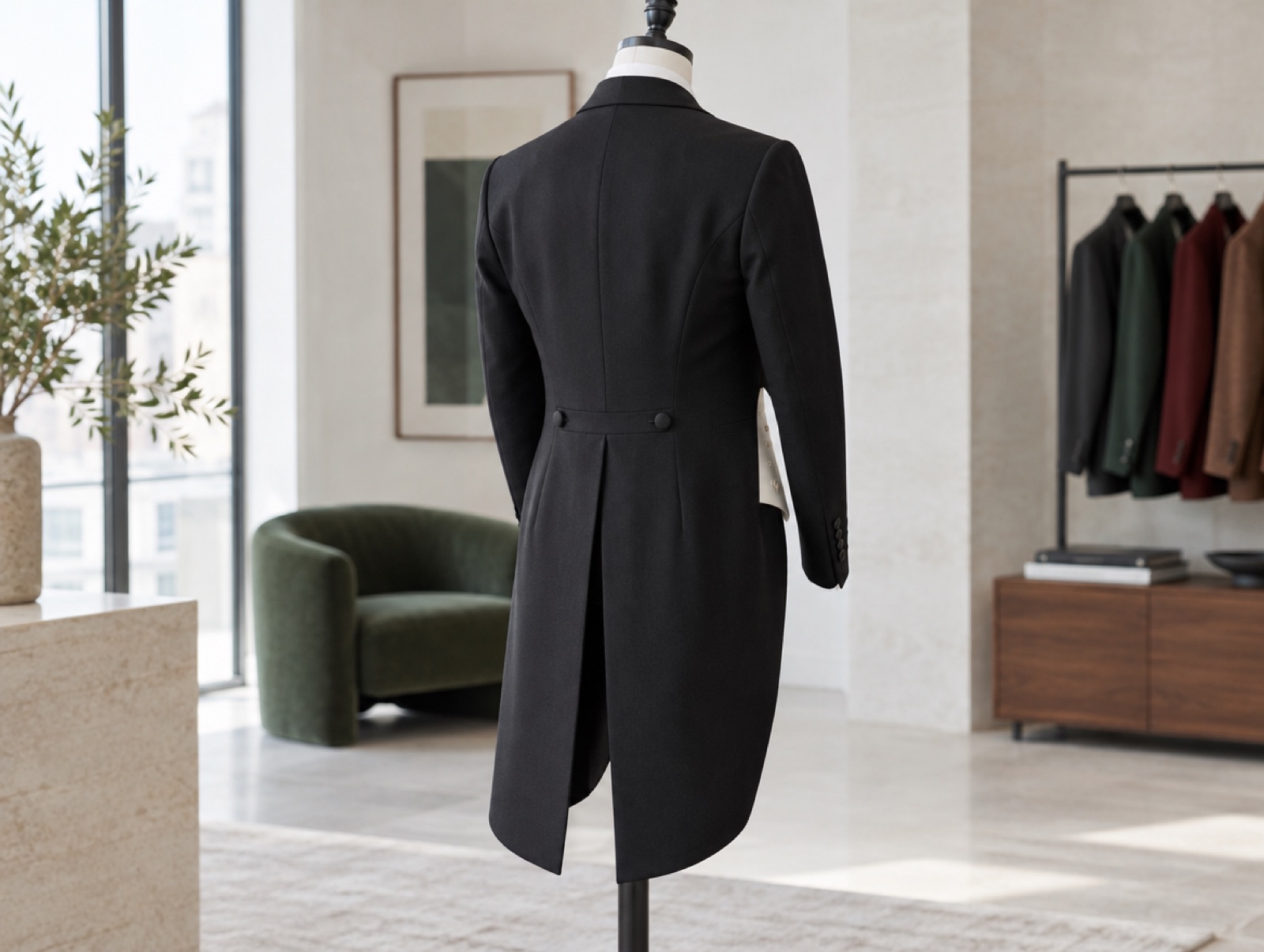
How it is cut
The front of the coat ends at the natural waist and does not fasten: the buttons on a tailcoat are decorative and the coat is never done up. Behind, two tails fall to roughly the back of the knee. The lapels are silk-faced peaks, and the coat is cut to sit open over the waistcoat.
The proportions are unforgiving. A tailcoat that is a centimetre too long at the front or too short at the tail looks wrong immediately, which is why hired white tie almost never looks right.
The rules
- White piqué waistcoat, cut so it does not show below the front of the coat.
- Stiff-fronted shirt with a detachable wing collar and studs rather than buttons.
- White piqué bow tie, hand tied.
- Black patent pumps or highly polished oxfords.
- No pocket square in the breast pocket by strict convention, though this is now often ignored.
Why almost nobody gets it right
White tie is unforgiving in three specific ways. The coat front must end exactly at the natural waist and the waistcoat must not show below it. The trousers must be worn at the natural waist, held by braces. And the shirt front is stiff, so it must fit the chest precisely or it will bow.
None of these tolerances survives hire. A tailcoat is one of the few garments where the difference between a made one and a rented one is visible across a room.
Images
Licences →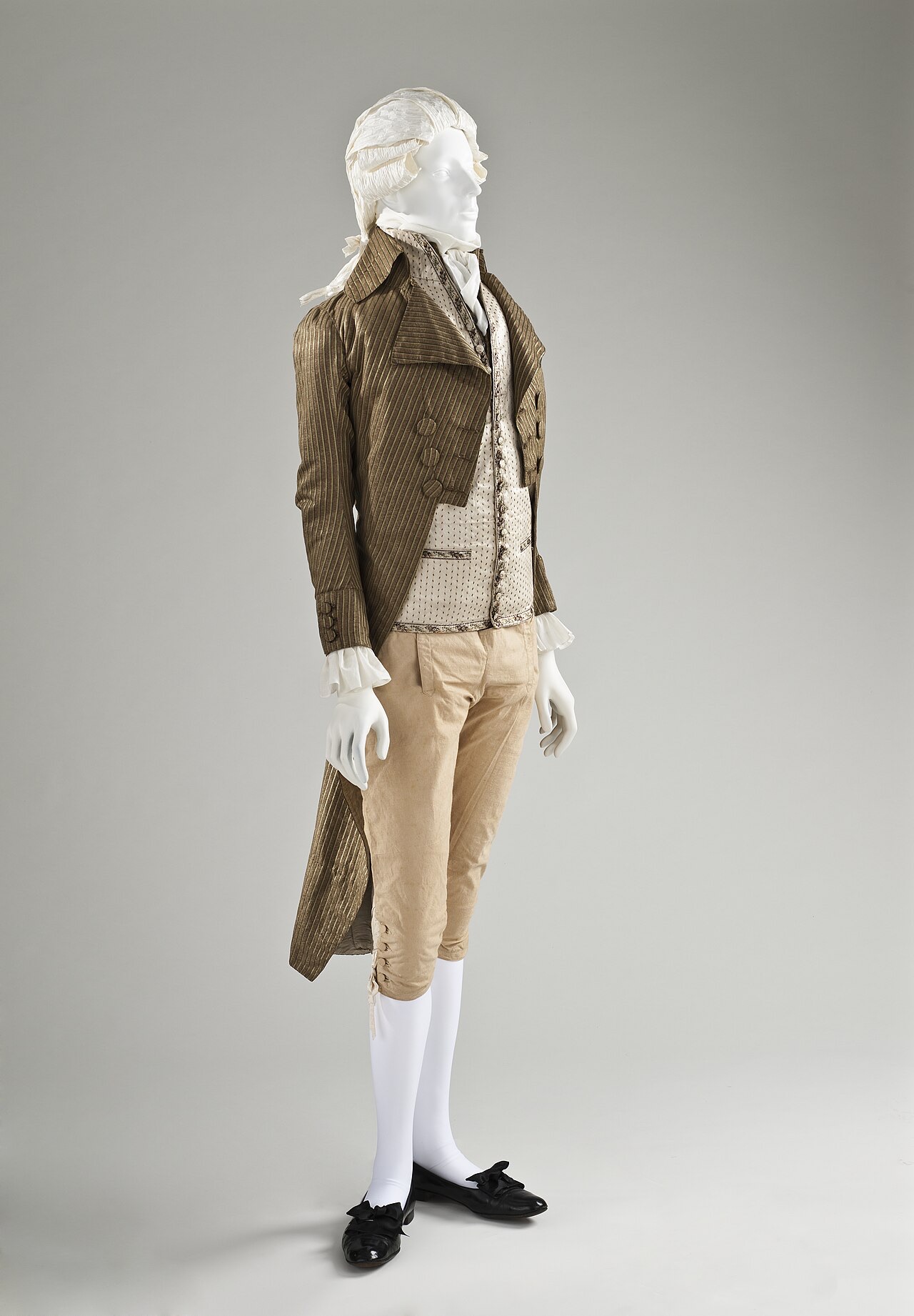
En un coup d'œil
Crédits photographiques 2
- An evening tailcoat seen from behind: Original art · Il Sartoriale · Il Sartoriale · Il Sartoriale original art
- Man's striped tailcoat vests and breeches 1790-1795: Historical view · Unknown author · Wikimedia Commons · Public domain