服装 · Trousers
Trousers
Trousers wear out about twice as fast as the matching jacket, and how high they sit on your waist shapes everything else about them.
Trousers wear out roughly twice as fast as the jacket they came with, which is why suits were traditionally sold with two pairs. The variables that matter are rise, width, pleats, and how the waistband is built, and rise is the one that changes everything else.
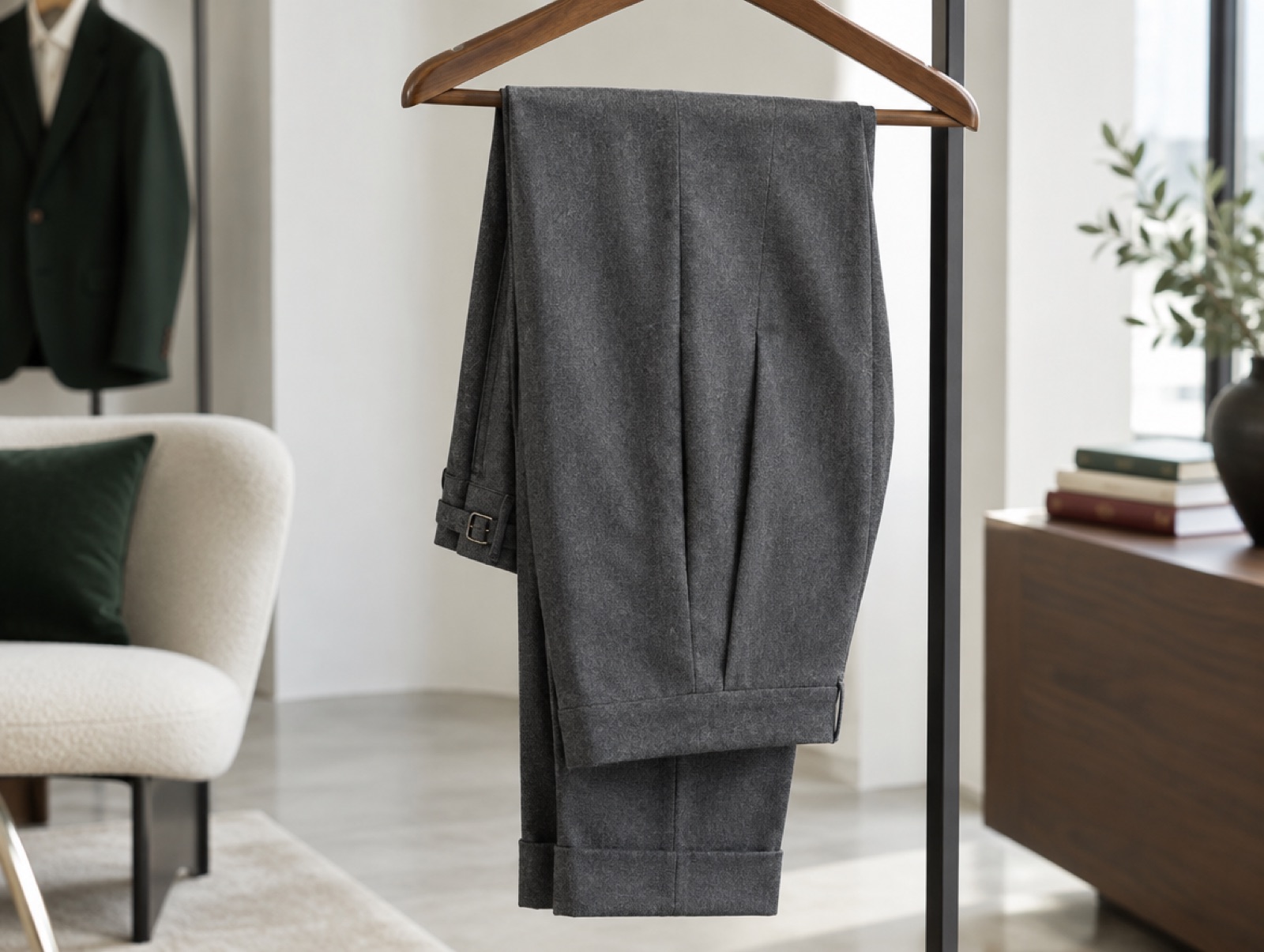
Rise decides the rest
The rise is the distance from the crotch to the top of the waistband, and it determines where the trouser sits. A high rise puts the waistband at the natural waist (the narrowest part of the torso, above the hip bones), and a low rise puts it on the hips.
This is not a detail. A high-rise trouser lengthens the leg, allows the waistcoat to work, permits braces, and lets a fuller cut hang cleanly. A low-rise trouser shortens the visible leg, requires a belt, and looks wrong under a buttoned jacket. Most trousers sold today are cut low because fashion went that way in the 1990s and has only partly come back.
Pleats
A pleat is a fold at the waistband that releases cloth over the hip and thigh. Forward pleats (opening towards the fly) are the English convention; reverse pleats (opening towards the pocket) are the Italian and American one.
Pleats are not a formality signal and they do not make a trouser look old-fashioned by themselves. They add room where a body needs room, which is why they suit a fuller cut and a fuller figure and look wrong on a narrow one. A flat front on a wide trouser is as odd as a pleat on a narrow one.
The waistband
Everything good is inside. A curtain, a strip of cloth hanging free inside the waistband, grips the shirt and hides the seams; a split back seam allows the waist to be let out; side adjusters or brace buttons hold the trouser without a belt.
Cheap trousers have none of these, which is why the shirt escapes, the waist cannot be altered and the belt does structural work it was never meant to do.
Length and break
The break is the fold where the trouser hem meets the shoe. A full break folds visibly; a half break touches and creases slightly; no break ends just above the shoe. All three are correct and the choice should follow the width: the wider the trouser, the more break it can carry.
Turn-ups (cuffs) add weight to the hem, which helps a trouser hang, and are conventionally not worn with formal dress.
概览
制作工艺
所有工艺 →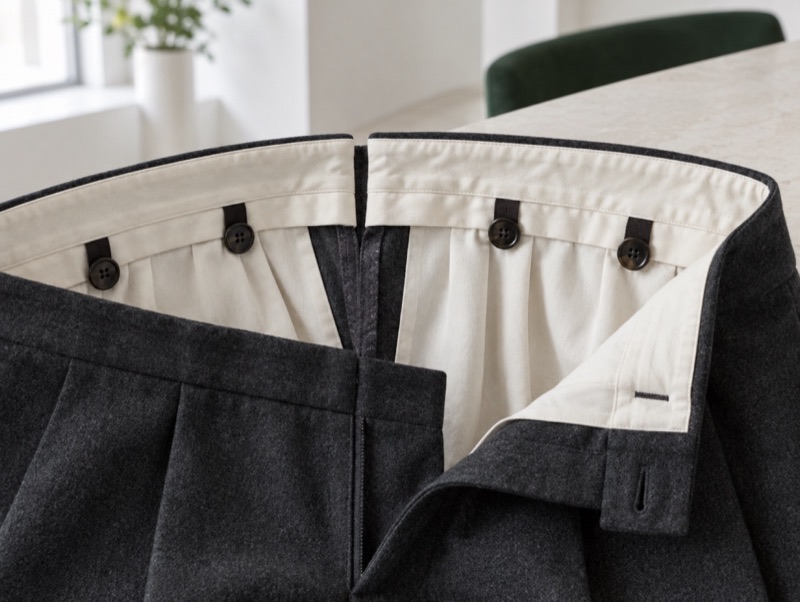
图片版权 2
- Grey flannel trousers on a hanger: Original art · Il Sartoriale · Il Sartoriale · Il Sartoriale original art
- The inside of a bespoke trouser waistband: Original art · Il Sartoriale · Il Sartoriale · Il Sartoriale original art