Guide · Guides
Building a wardrobe, in order
This guide lists twelve clothing purchases in order, starting with the most versatile pieces so each new item works with what you already own.
A wardrobe is not a list of garments but an order of acquisition. Each addition should combine with what is already there, which means starting with the most versatile items and adding specificity later. The sequence below assumes someone who needs to look serious sometimes and not always.
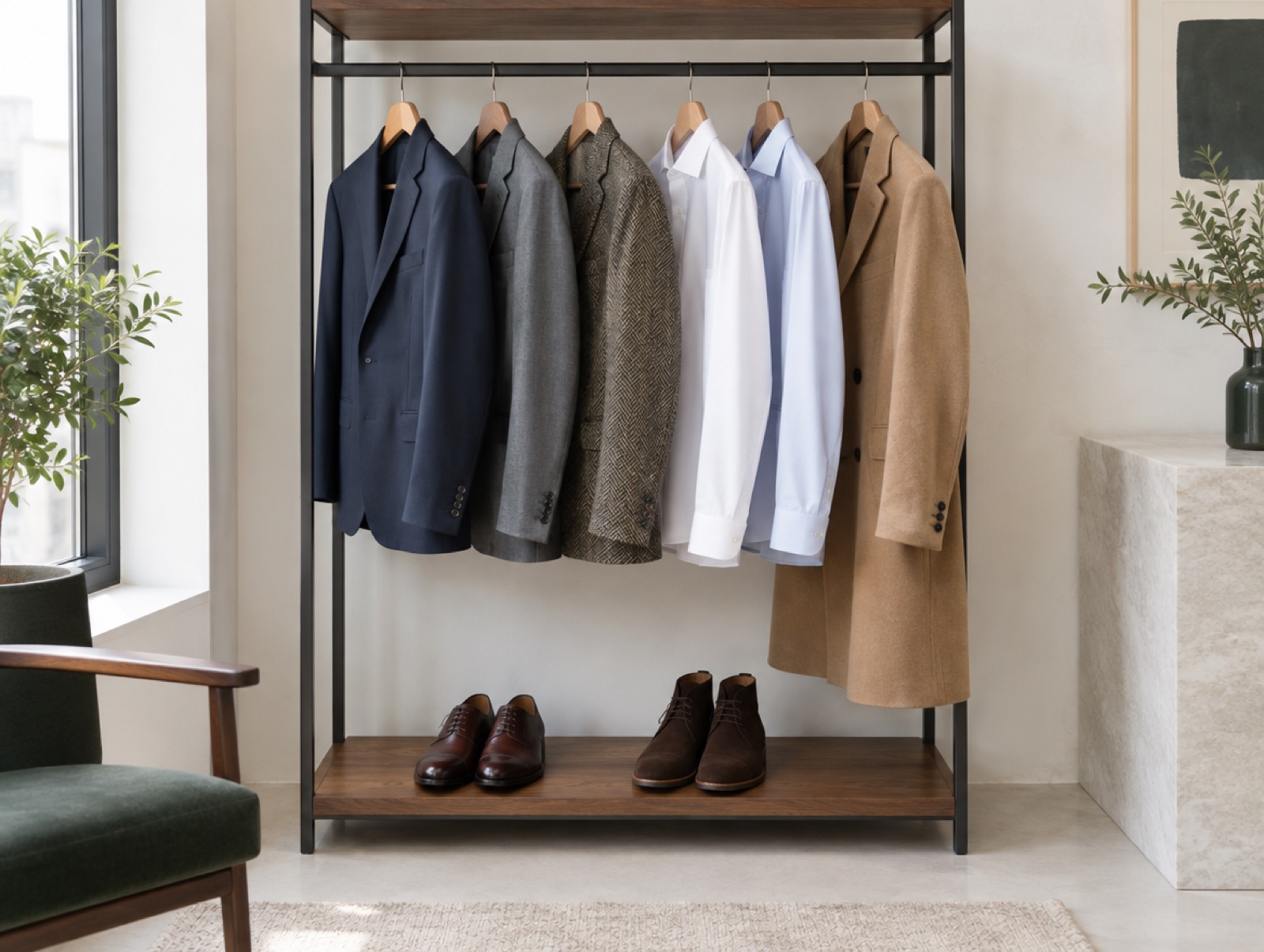
The sequence
- 1. Grey flannel trousers. The most useful single garment in classic menswear. They go with every jacket you will ever own.
- 2. A navy or brown sport coat with texture. Hopsack in summer, flannel or tweed in winter.
- 3. Dark brown or black leather shoes, welted, on a last that fits. Oxford if formality matters, derby if comfort does.
- 4. Three white and pale blue shirts, properly fitted at the shoulder and collar.
- 5. A mid-grey or navy suit, plain, 11 ounces, half canvas at least.
- 6. A second pair of shoes, so the first can rest. This is the highest-return purchase on the list.
- 7. An overcoat, cut to go over the jacket, below the knee, in something heavy enough to hang.
- 8. Chinos or cotton trousers, cut like trousers rather than like jeans.
- 9. Fine-gauge knitwear in two colours, wearable under a jacket.
- 10. The second suit, in whichever of navy or grey you did not buy first.
- 11. A third pair of shoes, in suede or a different colour.
- 12. Whatever you have discovered you actually need, which by this point you will know.
What is deliberately not on the list
A dinner jacket, unless you attend black-tie events more than twice a year. Hire until you do. A black suit, which is less useful than either grey or navy. A tweed jacket before a plain one. And anything bought because it was interesting rather than because it combined with what you owned.
The test at every stage is combinatorial: how many new outfits does this create? A twelfth shirt creates almost none; a second pair of shoes creates several and doubles the life of the first.
At a glance
Picture credits 1
- A small, well-chosen wardrobe: Original art · Il Sartoriale · Il Sartoriale · Il Sartoriale original art