Guia · Guides
How to choose cloth
A suit's weight and weave decide how it feels and performs, while the Super number on the label mostly describes softness, not quality.
Choosing cloth is four decisions: fibre, weight, weave and finish. Get the weight right for the climate and the use, choose a weave that suits the garment, and treat the Super number as a description of softness rather than of quality.
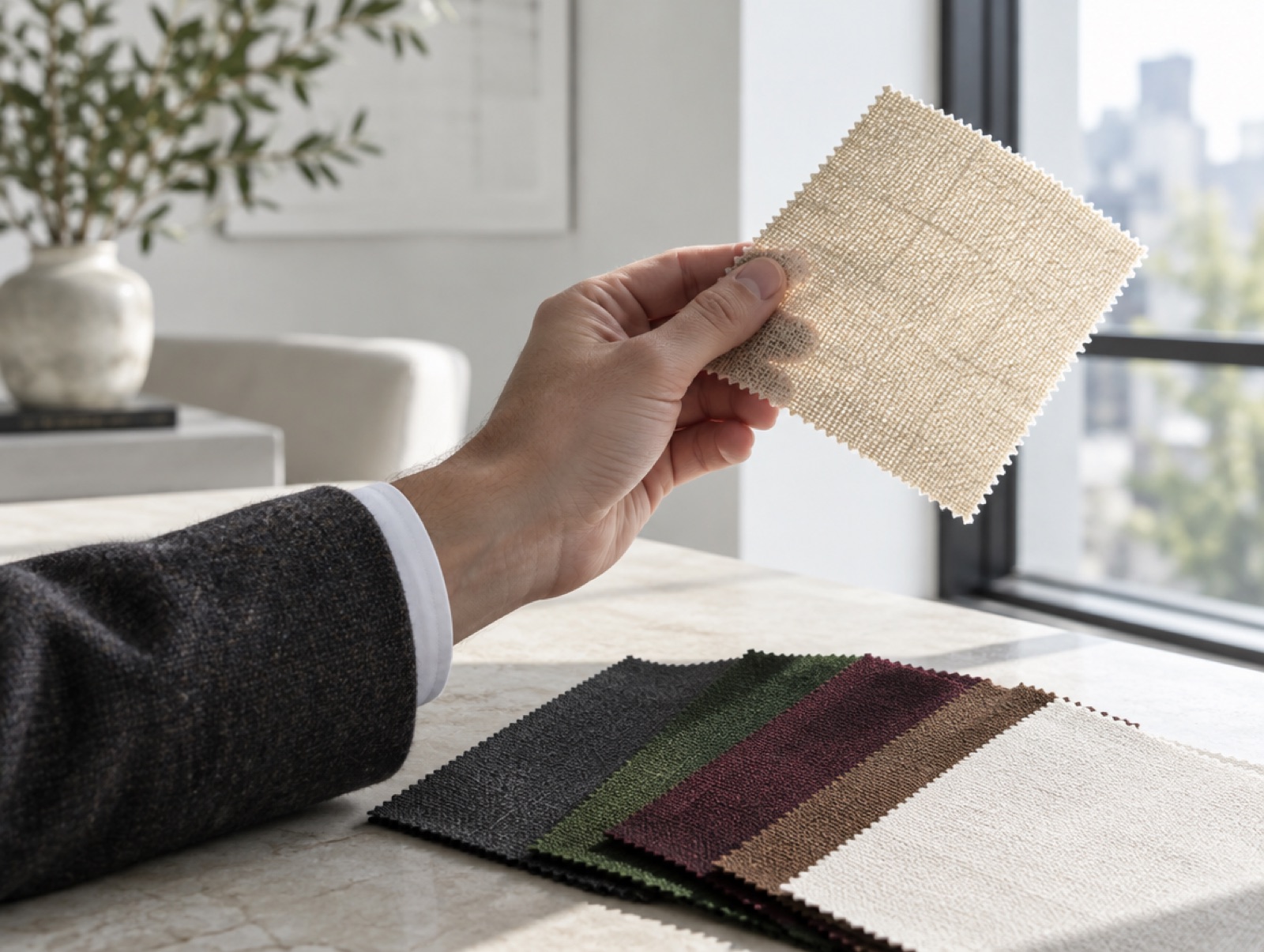
In the bunch
- Hold it to the light. Pinholes mean an open weave, which breathes. A solid wall of cloth does not.
- Scrunch a corner in your fist for five seconds and release. It should recover; if it holds the crumple it will crease in wear.
- Feel for weight, and ignore the instinct that lighter is cooler. Porosity beats mass in heat.
- Drape it over your hand. A cloth that falls in soft folds will drape in a garment; a stiff one will stand away.
- Look at the pattern at arm's length, not at ten centimetres. A check that reads as bold in the book reads as very bold in a suit.
Weight by season
| Weight | Use |
|---|---|
| 7–9 oz | High summer only, and only in an open weave |
| 10–12 oz | Most of the year in a temperate climate; the best all-round choice |
| 13–16 oz | Winter suiting; the traditional English weight |
| 18 oz + | Overcoats and country cloth |
Common mistakes
- Choosing the lightest cloth for a hot climate. A 12-ounce fresco is cooler than a 9-ounce plain worsted because air moves through it.
- Choosing a very high Super number for a suit worn weekly. It will feel wonderful and shine at the seat within two years.
- Choosing a smooth worsted for a sport coat. Without texture it reads as an orphaned suit jacket.
- Choosing a bold pattern for a first commission. You will wear it less than you think and the tailor knows it.
- Choosing black. It reads flat in daylight and is a funeral and evening colour.
Three things that matter more than the mill's name
Yarn twist determines how a cloth resists creasing and how it breathes: a hard-twisted, open-woven summer cloth will outperform a smoother, more expensive one in heat by a wide margin.
Super numbers describe the fineness of the fibre and nothing else. A higher number means a finer, softer, more delicate cloth, not a better one, and often a less durable one. Buyers routinely read the scale as a quality grade, and mills have not been in a hurry to correct them.
Finish is the least discussed and among the most visible. The same fibre and weave can be finished to a dry, matte handle or a smooth, slightly lustrous one, and that choice affects how formal the finished garment looks more than the pattern does.
Imagens
Licenciamento →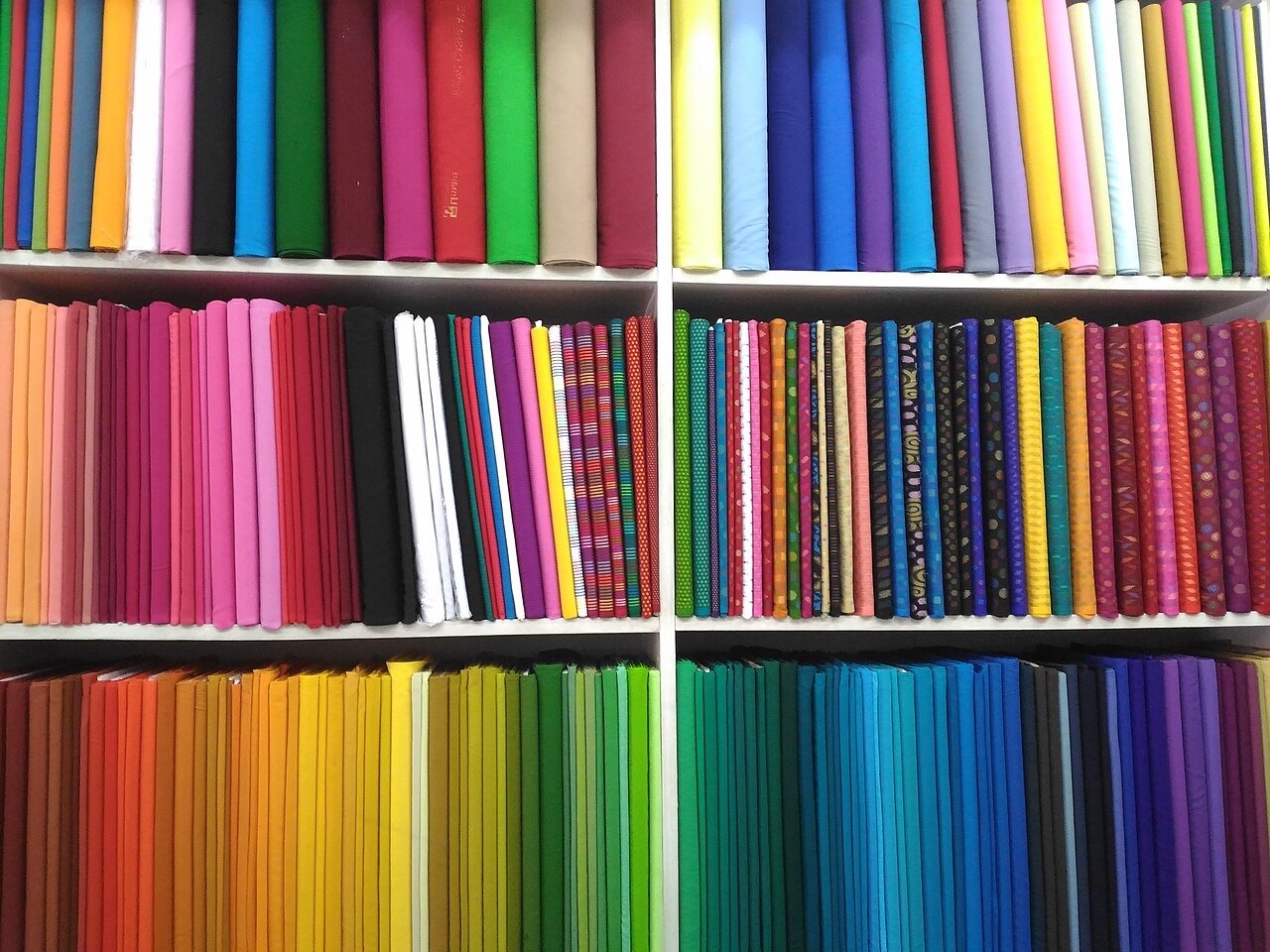
Em síntese
Créditos fotográficos 2
- A cloth swatch held up to the light: Original art · Il Sartoriale · Il Sartoriale · Il Sartoriale original art
- Rainbow of colourful cloth bolts 20170113: Photograph · Abhijitgogoi22 · Wikimedia Commons · CC BY-SA 4.0