Sejarah · History
How men's shoes reached their present form
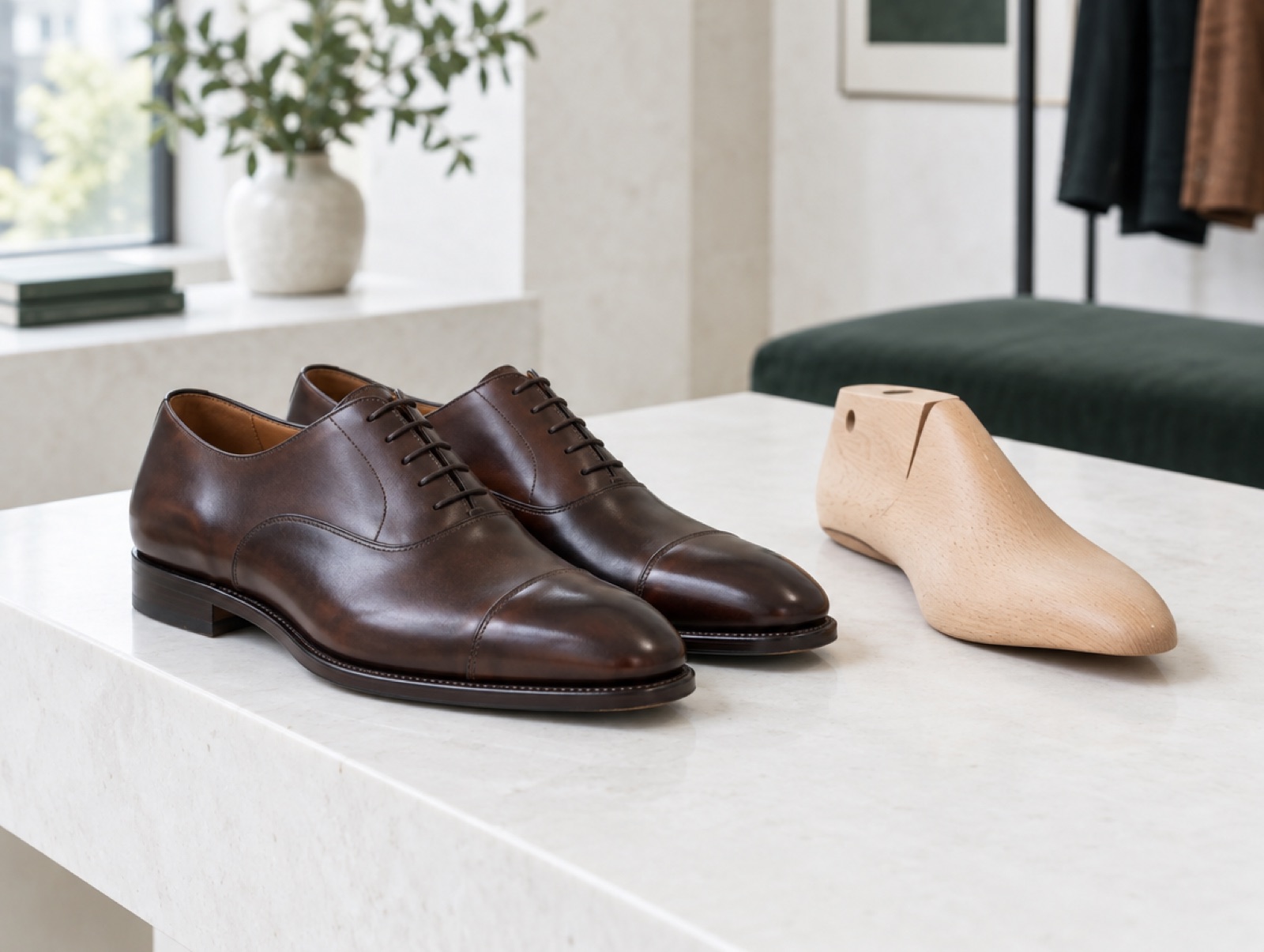
Ordinary dress shoes owe a lot to the 1870s Goodyear welting machine, which let machines build shoes that could still be repaired.
Men's dress shoes settled into their modern patterns (oxford, derby, brogue, loafer) during the nineteenth and early twentieth centuries. What made them ordinary rather than luxurious was the Goodyear welting machine of the 1870s, which mechanised a construction that could be repaired.
Before machines
Shoes were made by hand, one pair at a time, frequently without distinction between left and right, straights, made on symmetrical lasts, were normal into the nineteenth century. Fit was approximate and footwear was expensive relative to income.
The patterns we now recognise emerged as construction improved: closed lacing produced the oxford, open lacing the derby, and Irish and Scottish country footwear contributed the perforated brogue.
Northampton and the machine
Northampton had made shoes since the seventeenth century, on cattle, oak bark for tanning and a position on the road network. Industrialisation in the nineteenth century concentrated the trade there, and Charles Goodyear Jr.'s welt-stitching machinery of the 1870s made welted construction (durable and, crucially, resoleable) producible in quantity. That is the whole basis of the modern good-shoe market. Without a construction that can be repaired, an expensive shoe is an extravagance rather than an investment.
The twentieth century
Two divergent developments. At the top, bespoke shoemaking survived essentially unchanged, in London, Vienna, Budapest and Paris, and was later learned wholesale in Japan. At the bottom, cemented construction , gluing the sole to the upper, made footwear cheap, light and disposable, and now accounts for the overwhelming majority of shoes made.
The middle, welted factory production, is a smaller business than it was and is concentrated in a handful of places: Northampton, Spain, parts of Italy and eastern Europe.
Gambar
Lisensi →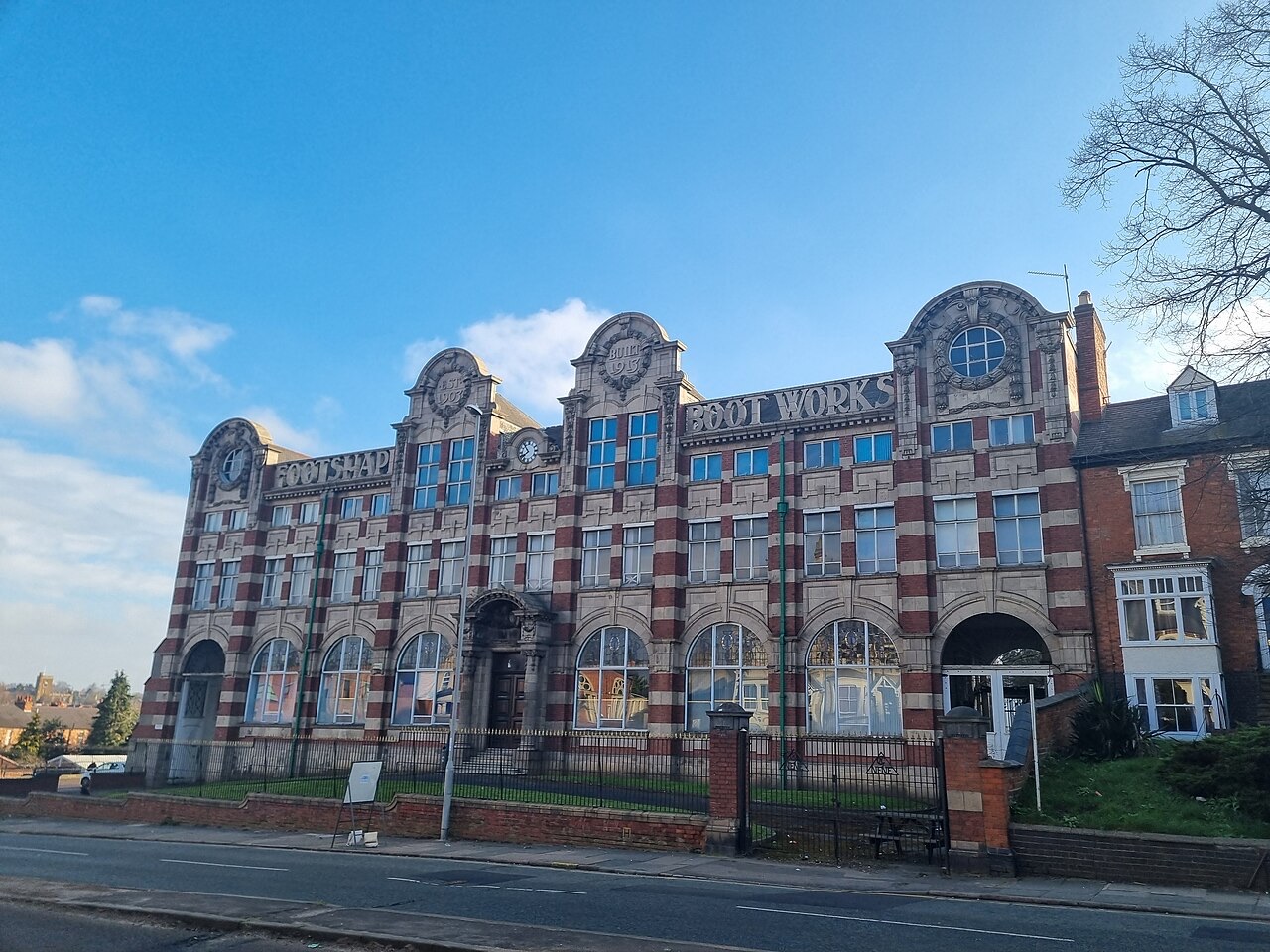
Sekilas pandang
Kredit foto 2
- New welted oxfords beside a last: Original art · Il Sartoriale · Il Sartoriale · Il Sartoriale original art
- Barratt Shoe Factory 2024: Photograph · Bearas · Wikimedia Commons · CC BY 4.0