Fabric · Fibre
Alpaca
Warm, lustrous, silky in drape and much less prone to itch than its reputation suggests.
Alpaca is the fleece of a domesticated Andean camelid, farmed principally in Peru. The fibre is hollow, which makes it warm for its weight; it has little crimp, so it drapes rather than springs; and it comes in a wide range of natural colours. Baby alpaca is a fineness grade, not an age.
Character
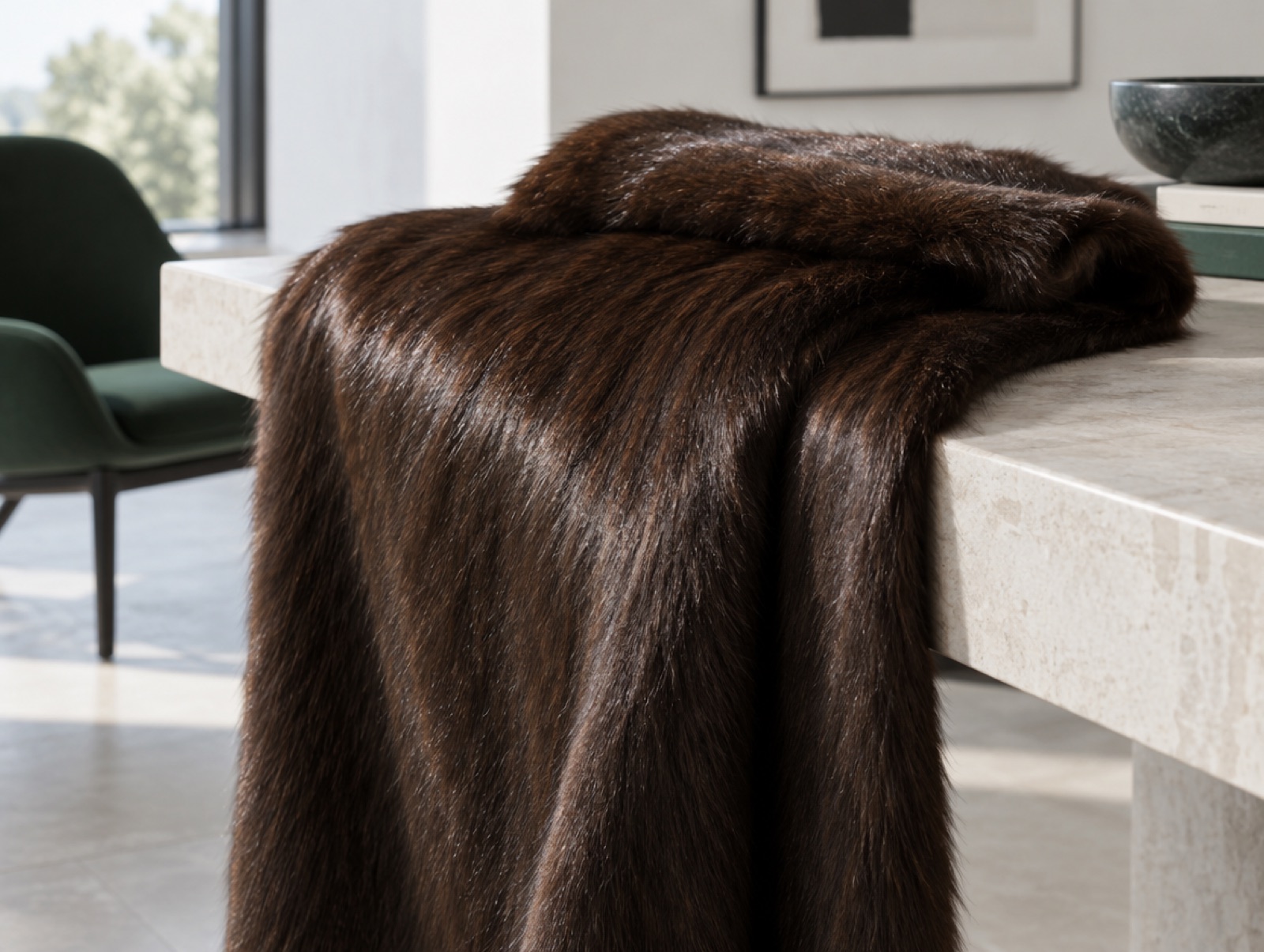
Alpaca has a smooth surface with few scales, which gives it lustre and makes it slippery to spin, and very little crimp, which means it hangs rather than bounces. In a coat that produces a heavy, fluid drape that wool cannot match; in a suit it means the cloth will not hold a sharp press.
Because the fibre is hollow it insulates unusually well for its weight, and because it contains no lanolin it is tolerated by some people who react to wool.
Grades and the “baby” confusion
Baby alpaca does not mean fibre from a baby animal. It is a fineness grade, generally around 21 to 22 microns and finer, and it can come from an adult. Royal alpaca is finer still, around 19 microns. Suri alpaca is a different fleece type from a different variety of the animal, with long lustrous locks and no crimp at all.
Alpaca also occurs in over twenty recognised natural shades, which is why undyed alpaca is common where undyed wool is not.
Where it works and where it does not
Alpaca's lack of crimp means it drapes rather than springs, which makes it excellent in a coat and awkward in a suit: it will not hold a pressed crease and it does not recover from creasing the way wool does.
In knitwear it is warm, light and slightly slippery, and it grows a soft halo with wear. Suri alpaca, with its long lustrous locks, produces a distinctly shiny cloth that some people find beautiful and others find unwearable.
Images
Licensing →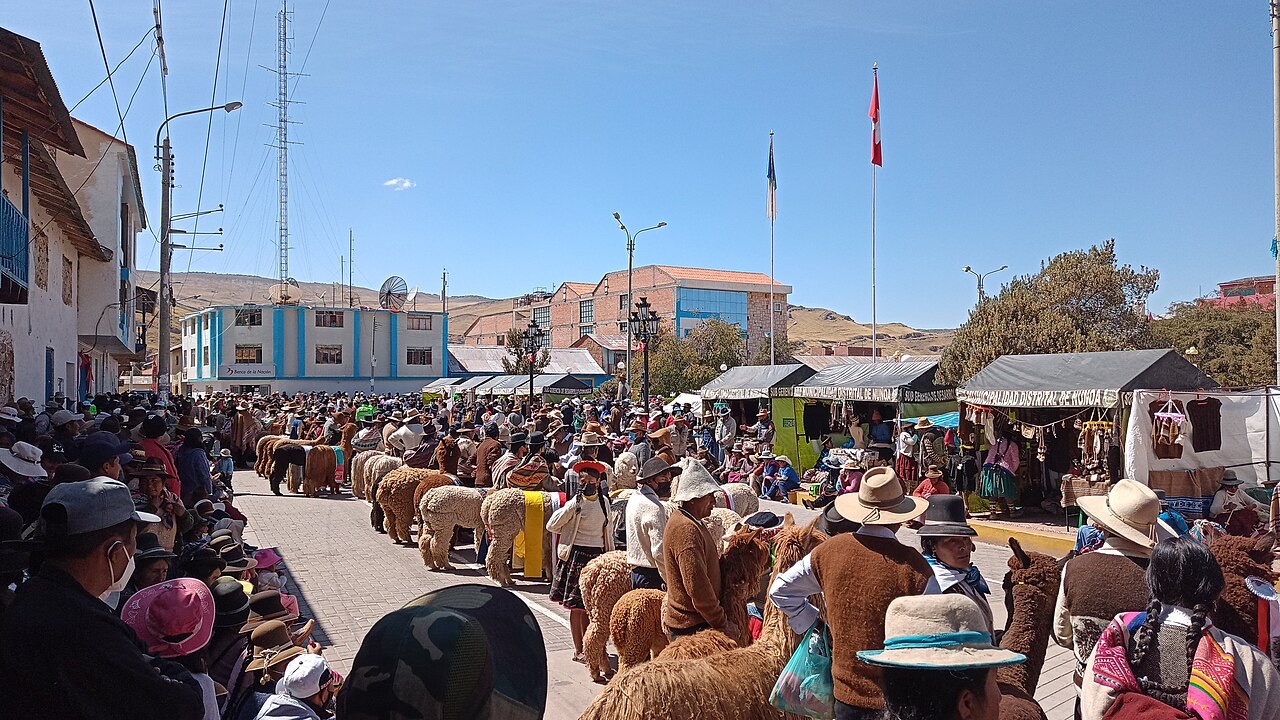
At a glance
What it is used for
Picture credits 4
- Dark alpaca coating with a long lustrous nap: Original art · Il Sartoriale · Il Sartoriale · Il Sartoriale original art
- Dia Nacional de la Alpaca 02: Photograph · Elwinlhq · Wikimedia Commons · CC BY-SA 4.0
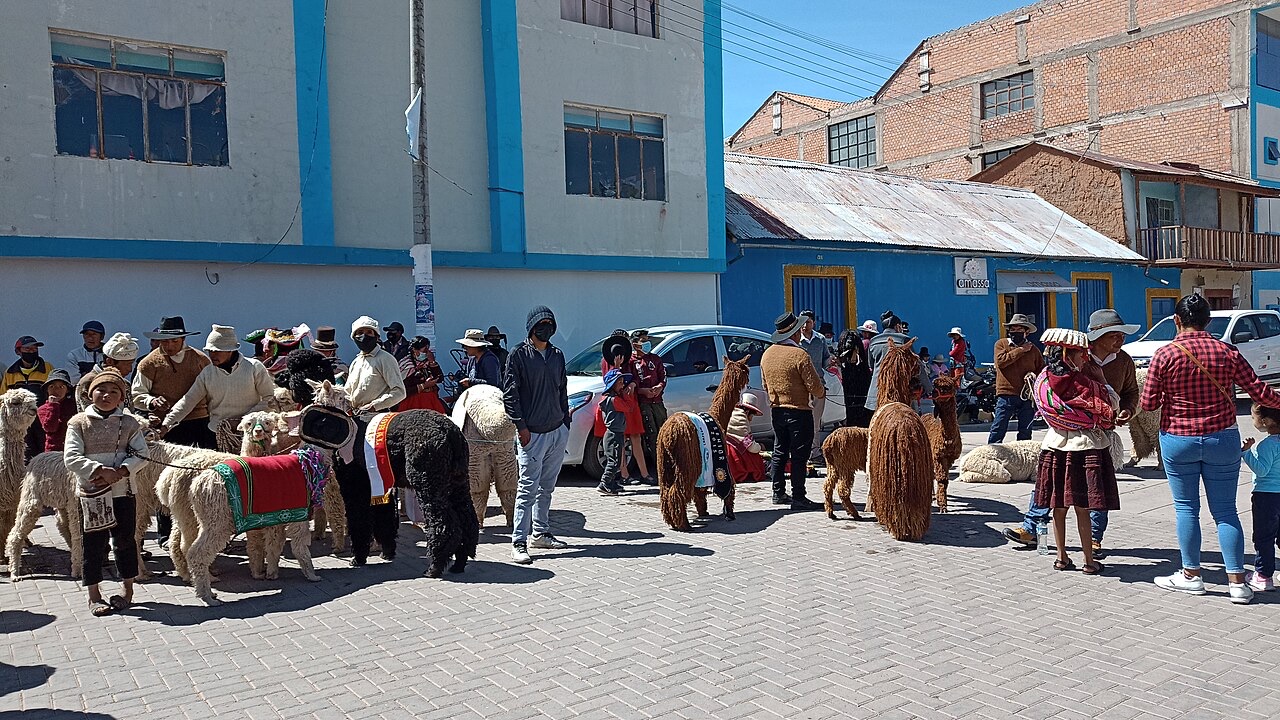
- Dia Nacional de la Alpaca 06: Photograph · Elwinlhq · Wikimedia Commons · CC BY-SA 4.0
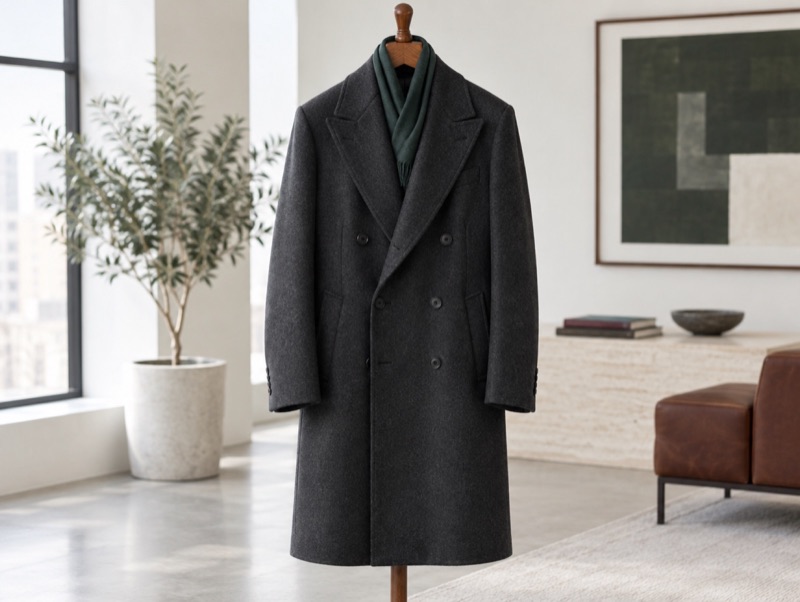
- A charcoal double-breasted overcoat: Original art · Il Sartoriale · Il Sartoriale · Il Sartoriale original art