Fabric · Cloth
Corduroy
Corduroy is a warm, very hard-wearing cotton cloth with soft raised ridges, and fewer, wider ridges look more rustic than fine ones.
Corduroy is a cut-pile cotton cloth in which the pile forms vertical ridges, wales, separated by channels. It is counted in wales per inch: fewer, wider wales are more rustic; more, finer wales are closer to velvet. It is warm, extremely durable and, like velvet, has a nap.
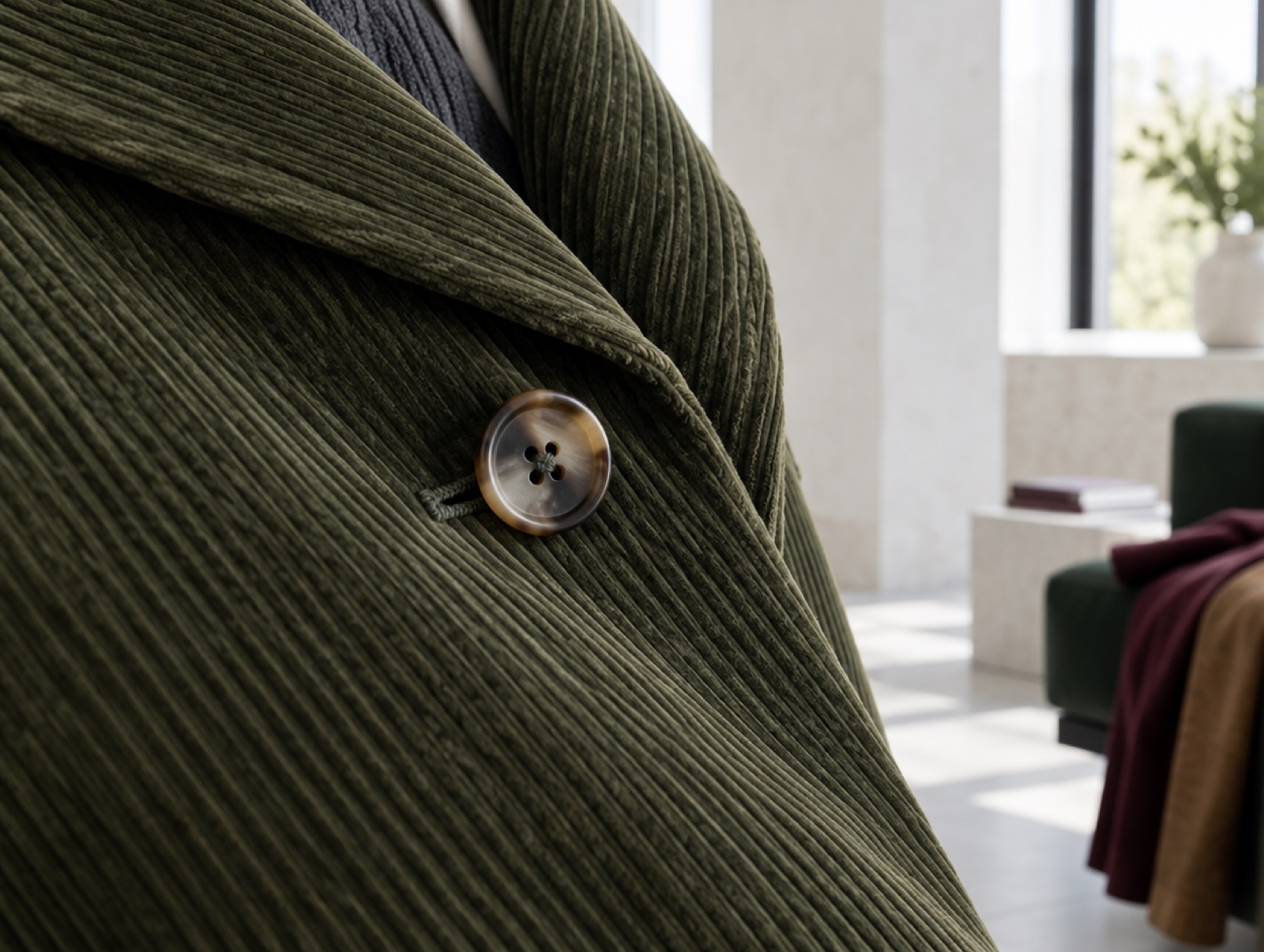
Reading the wale count
| Wales per inch | Character | Typical use |
|---|---|---|
| 3–6 | Very wide, rustic ribs | Casual trousers, workwear |
| 8–11 | The standard | Trousers and jackets |
| 14–16 | Fine | Jackets, shirts; tailors more cleanly |
| 18–21 | Needlecord | Shirts, lightweight trousers |
As a tailoring cloth
Corduroy tailors well in the finer wales and awkwardly in the wide ones, where the ribs fight the seams. Like velvet it has a nap and must be cut all one way. It also wears in a specific and rather attractive fashion: the pile flattens where the garment is stressed, so a corduroy jacket develops light patches at the elbows and seat that mark it as used rather than worn out.
Buying and wearing
For a jacket, a finer wale (14 to 16) tailors cleanly and reads as a texture rather than a statement. For trousers, 8 to 11 is the traditional range and wears best. Anything wider is workwear, deliberately.
Corduroy has a nap and every panel must run the same way; check a garment in raking light for a panel that reads a different shade. It also flattens at the seat and knees with wear, which is not a fault and is what gives an old pair its character.
At a glance
What it is used for
-
 The sport coat
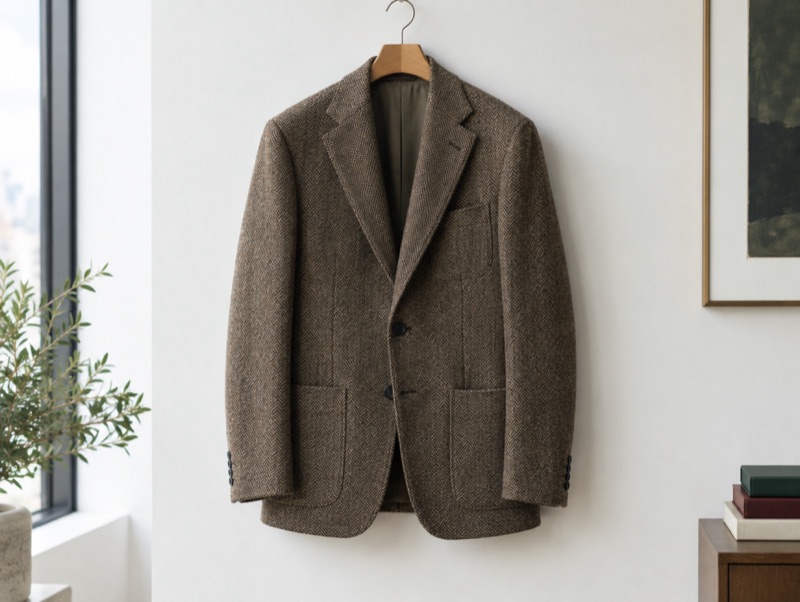
A sport coat is a jacket worn with non-matching trousers, traditionally in textured cloth like tweed with patch pockets and a softer feel than suit jackets.
-
 Trousers
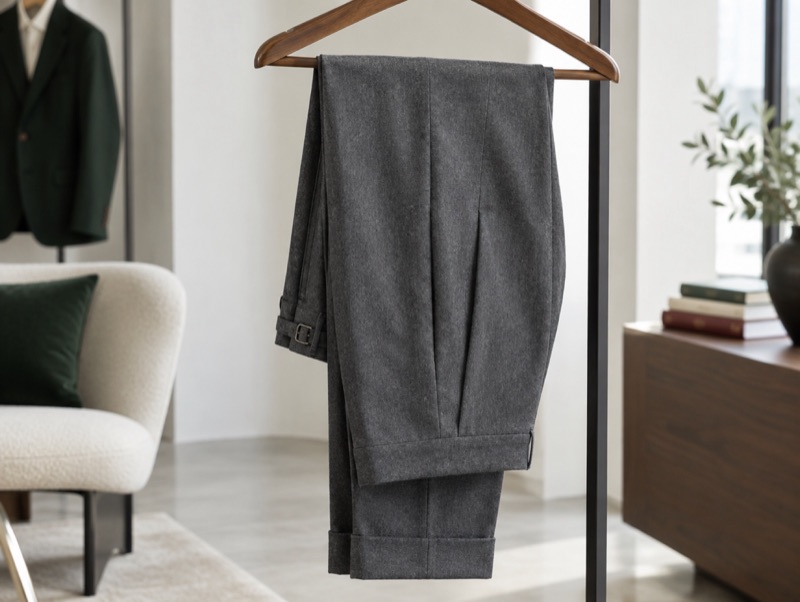
Trousers wear out about twice as fast as the matching jacket, and how high they sit on your waist shapes everything else about them.
Picture credits 3
- Olive corduroy with its wales close up: Original art · Il Sartoriale · Il Sartoriale · Il Sartoriale original art
- A tweed sport coat on a hanger: Original art · Il Sartoriale · Il Sartoriale · Il Sartoriale original art
- Grey flannel trousers on a hanger: Original art · Il Sartoriale · Il Sartoriale · Il Sartoriale original art