Tecido · Fibre
Cotton
Cotton is the fibre around the cotton plant's seeds, and the longer its fibres, the smoother, stronger and less likely to pill the cloth.
Cotton is the fibre surrounding the seeds of the cotton plant. Its quality is determined almost entirely by staple length: longer fibres make smoother, stronger, more lustrous yarn that pills less. Extra-long staple cottons (Sea Island, Egyptian Giza, Supima) are the shirting standard.
Staple length is the whole story
| Grade | Staple length | Character |
|---|---|---|
| Short staple (upland) | under about 26 mm | Ordinary cotton; the bulk of world production |
| Long staple | about 28–33 mm | Smoother, stronger; good shirting |
| Extra-long staple (ELS) | about 34 mm and above | Sea Island, Giza 45/87, Supima; the finest shirting |
Named cottons
Sea Island is the historical benchmark: an extra-long staple cotton grown in the West Indies, and formerly on the sea islands off the American southeast. Genuine Sea Island production is small and certified; the name is also used loosely, and a shirt described as Sea Island without a certification is worth questioning.
Egyptian covers a wide range and is not by itself a quality claim; much cotton grown in Egypt is ordinary. The specific varieties that matter are named: Giza 45 and Giza 87 are the extra-long staple ones. Supima is a trademark for American-grown Pima, an ELS cotton, and is genuinely controlled.
Two-fold and yarn counts
Shirting is quoted as a yarn count and a fold: 120/2 means a 120-count yarn, two-fold, two fine yarns twisted together. Higher counts mean finer yarn and a lighter, smoother, more transparent cloth; two-fold construction in both warp and weft makes a stronger, more stable fabric than single-ply.
As with Super numbers in wool, higher is not simply better. A 200/2 shirting is beautiful and delicate; a 120/2 will outlast it by years. For a shirt worn weekly and laundered hard, the 120/2 is the more sensible object, and every good shirtmaker will tell you so if asked.
Imagens
Licenciamento →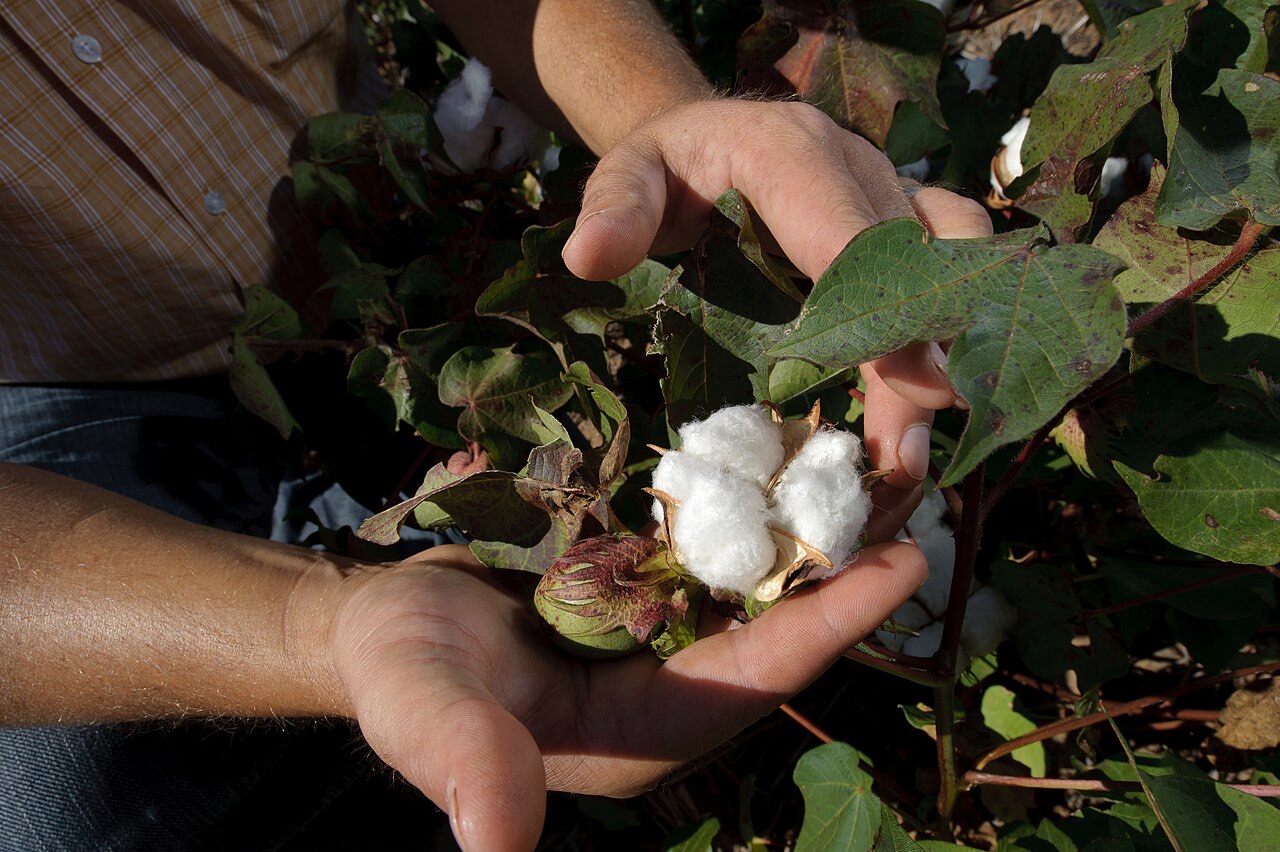
Em síntese
Quem trabalha com isto
Casas e fabricantes de tecidos neste site com ligação documentada a Cotton.
Para que é utilizado
 01
01
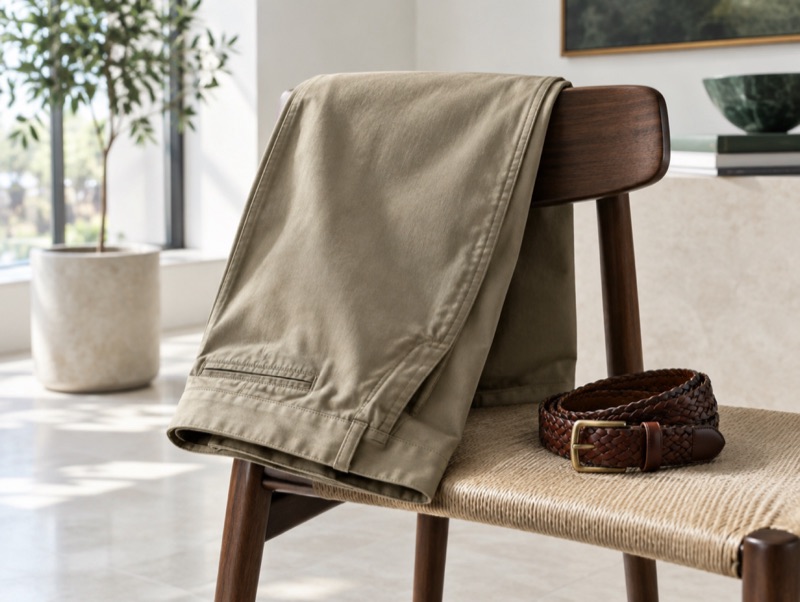
Chinos
Chinos are cotton twill trousers that came from military uniform, and a good pair is cut like tailored trousers rather than like jeans.
 02
02
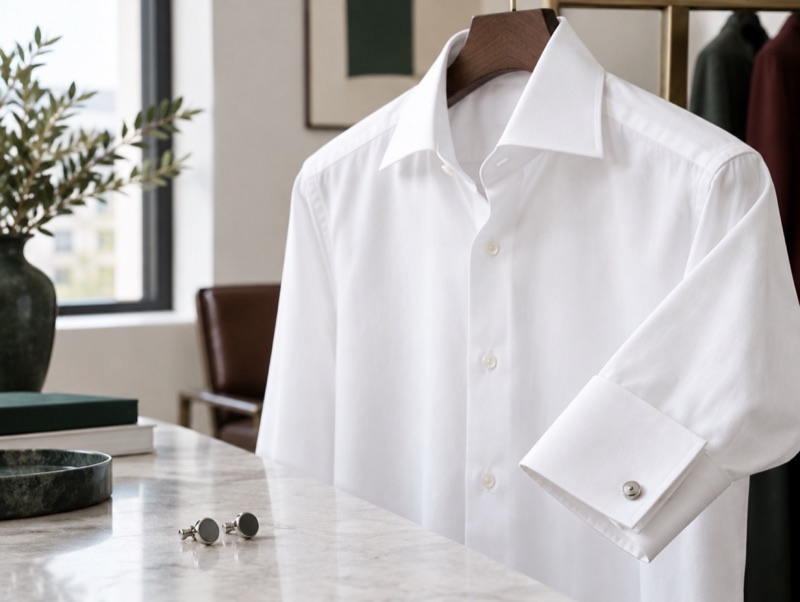
The dress shirt
A dress shirt is judged by how it fits at the collar, shoulder and cuff, and by construction details that decide how long it lasts.
 03
03
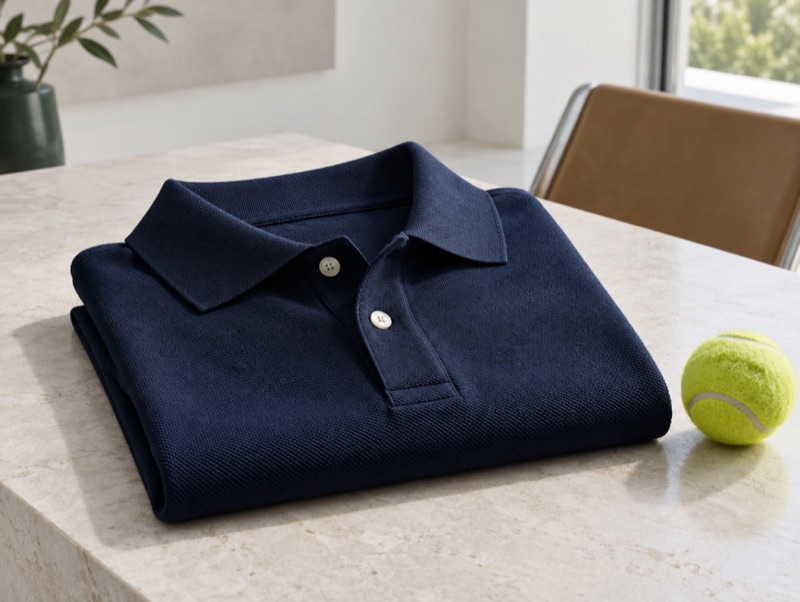
The polo shirt
The polo shirt is a soft-collared, short-sleeved knitted shirt that René Lacoste designed for tennis in the 1920s, later named by polo players.
 04
04
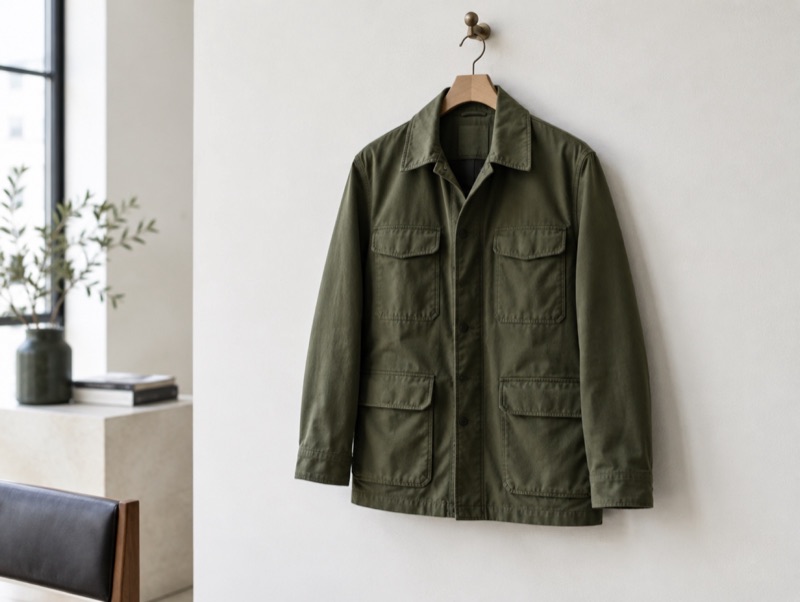
The field jacket
A field jacket is a hip-length military-style jacket with four outside pockets, based on the American M-65, with the safari jacket as its civilian cousin.
 05
05
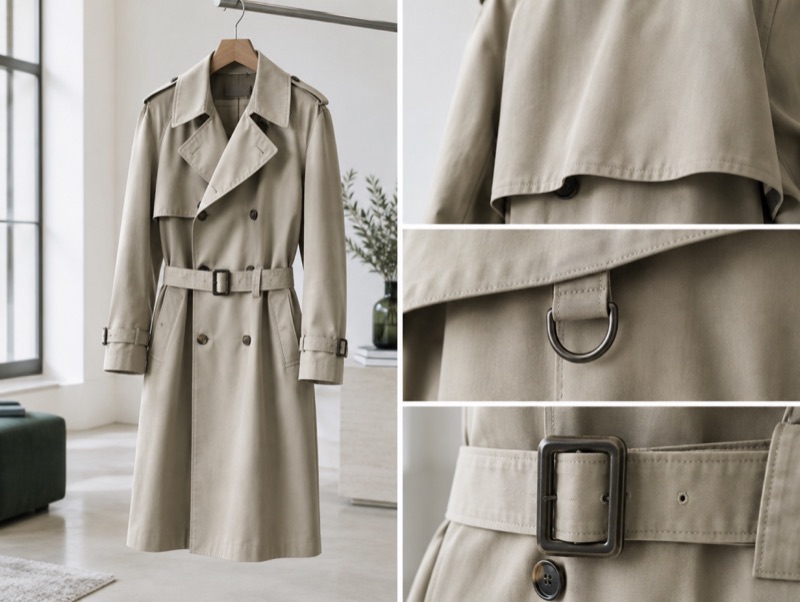
The trench coat
The trench coat is a belted, double-breasted cotton raincoat made for British officers in the First World War, whose practical details now survive as decoration.
Créditos fotográficos 9
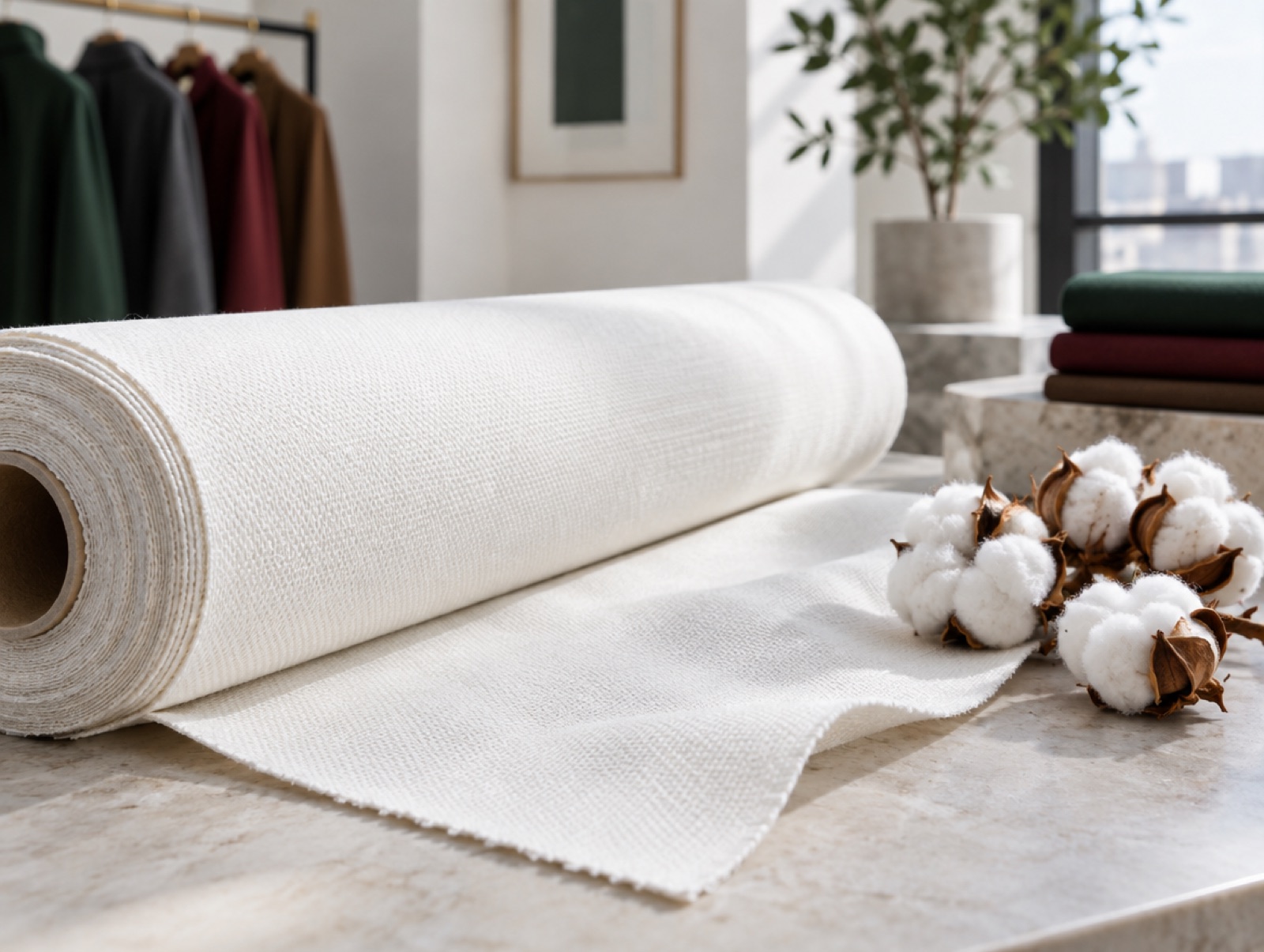
- White oxford cotton with raw cotton bolls: Original art · Il Sartoriale · Il Sartoriale · Il Sartoriale original art
- Cotton boll maturing on Bobby Byrd's cotton plant in Hale County near Plainview, Texas. (24490395753): Photograph · USDA NRCS Texas · Wikimedia Commons · Public domain
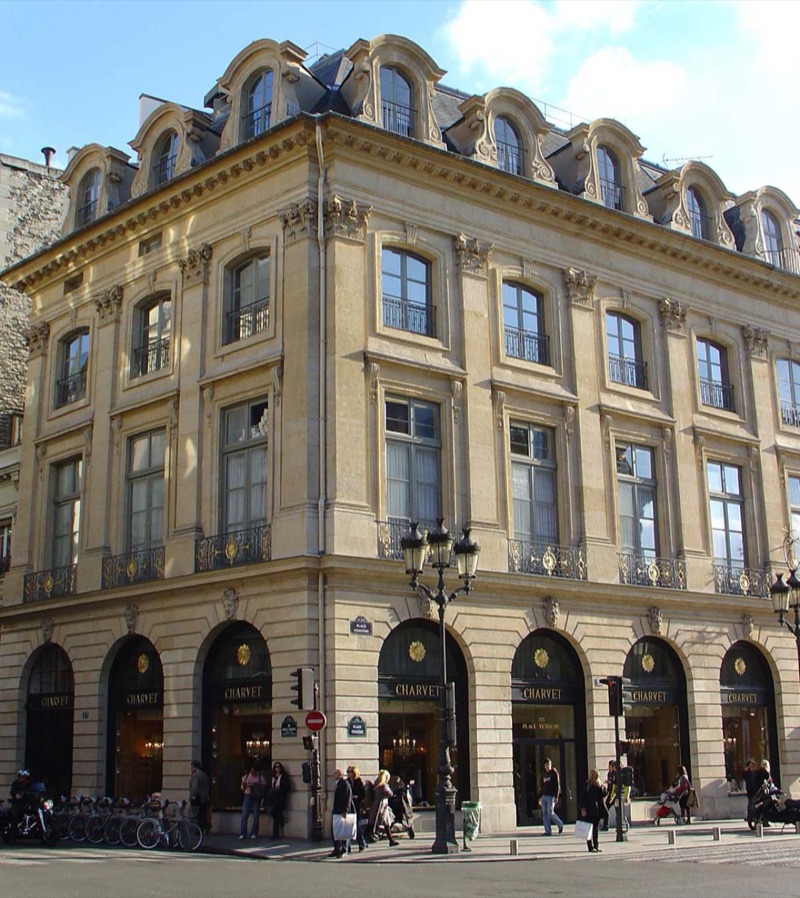
- Charvet store: Photograph · Racconish · Wikimedia Commons · CC BY-SA 3.0
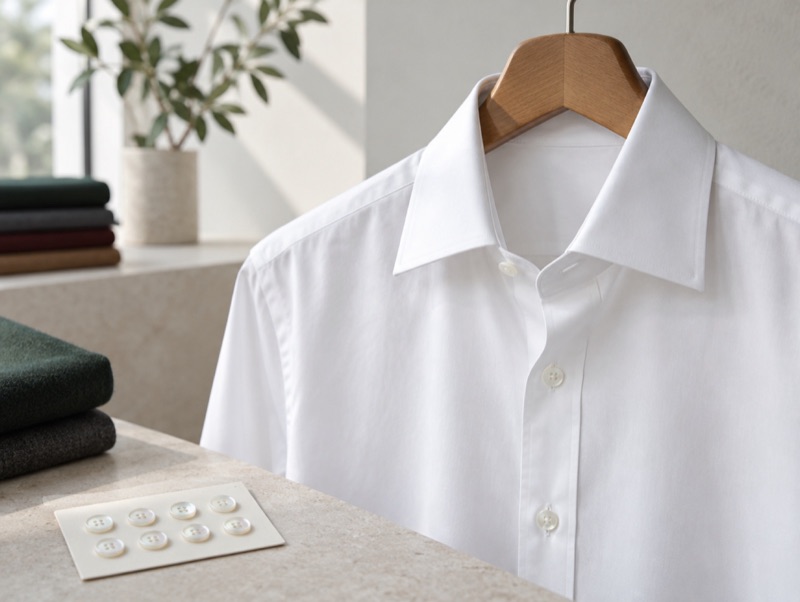
- An illustration of a shirt of the kind the house makes. Not a photograph of the house's own work.: Original art · Il Sartoriale · Il Sartoriale · Il Sartoriale original art
- Khaki chinos over a chair: Original art · Il Sartoriale · Il Sartoriale · Il Sartoriale original art
- A white dress shirt with a double cuff: Original art · Il Sartoriale · Il Sartoriale · Il Sartoriale original art
- A navy piqué polo shirt: Original art · Il Sartoriale · Il Sartoriale · Il Sartoriale original art
- An olive field jacket on a hook: Original art · Il Sartoriale · Il Sartoriale · Il Sartoriale original art
- A gabardine trench coat: Original art · Il Sartoriale · Il Sartoriale · Il Sartoriale original art