Tissu · Cloth
Gabardine
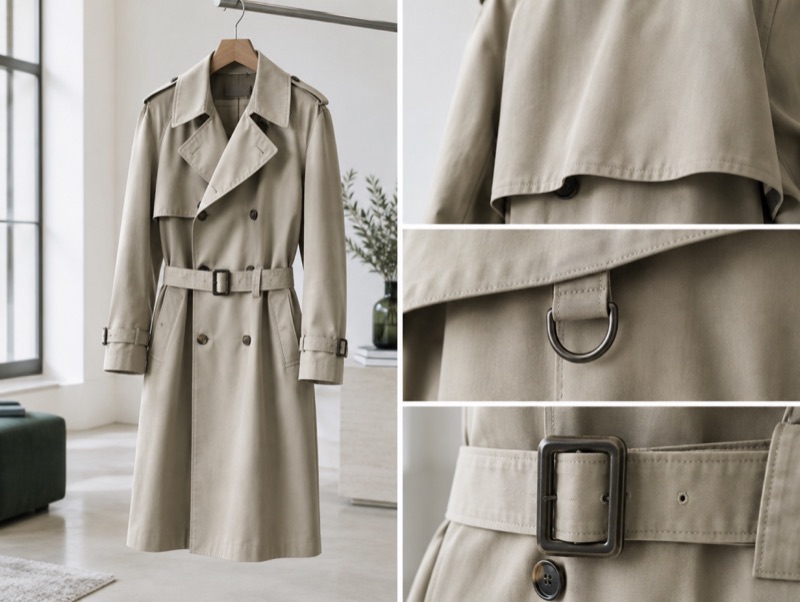
Gabardine is a tough, tightly woven wool cloth Thomas Burberry developed to shed rain, and it became the classic trench coat fabric.
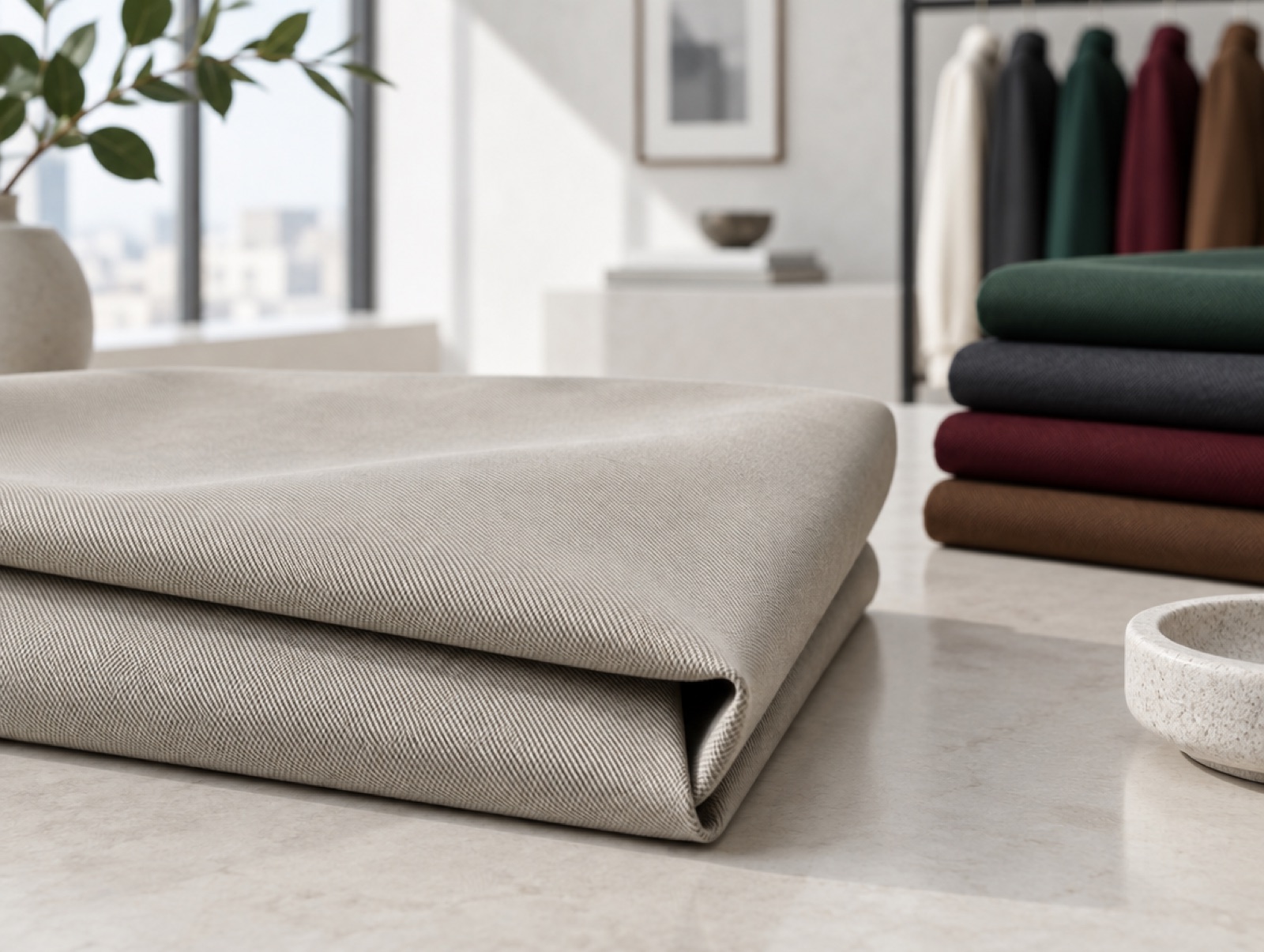
Gabardine is a densely woven worsted twill with a pronounced steep diagonal on the face and a smooth back. Thomas Burberry developed it in the 1870s as a breathable, weather-resistant cloth, and it became the fabric of the trench coat. It is hard-wearing, sheds rain and shows every mark.
Weather resistance from structure
Gabardine's resistance to rain comes from how tightly it is woven, not from a coating. Yarn is spun tight, packed densely in a steep twill, and the cloth is finished so the surface sheds water while remaining breathable, a genuine innovation in the 1870s and one that predates every technical membrane by a century.
Burberry patented the cloth, and it dressed polar expeditions and early aviators before it dressed anyone in a city.
As a suiting
Gabardine makes a hard-wearing, clean-faced suit or trouser with a distinctive dry handle and a crisp line. Its drawback is that the smooth, tightly woven face shows shine at the points of wear (seat, elbows, knees) sooner than a textured cloth does, and once a gabardine has gone shiny nothing brings it back.
Shine, and what to do about it
The dense flat face that makes gabardine weather-resistant also makes it prone to developing shine at the seat, elbows and knees, where the fibres are compressed and polished by wear. Once it appears it is essentially permanent; a brushing and a steam help temporarily.
The preventive measures are the ordinary ones done more diligently: rest between wearings, brush after each, and press with a cloth between the iron and the fabric rather than directly.
En un coup d'œil
À quoi cela sert
Crédits photographiques 2
- Stone cotton gabardine with a steep twill: Original art · Il Sartoriale · Il Sartoriale · Il Sartoriale original art
- A gabardine trench coat: Original art · Il Sartoriale · Il Sartoriale · Il Sartoriale original art