Kumaş · Fibre
Guanaco
Vicuña's larger cousin, and the fibre people reach for when vicuña is out of the question.
The guanaco is the other wild South American camelid, larger and far more numerous than the vicuña. Its down fibre is very fine (coarser than vicuña, comparable to good cashmere) and it is used in small quantities by a handful of Italian mills.
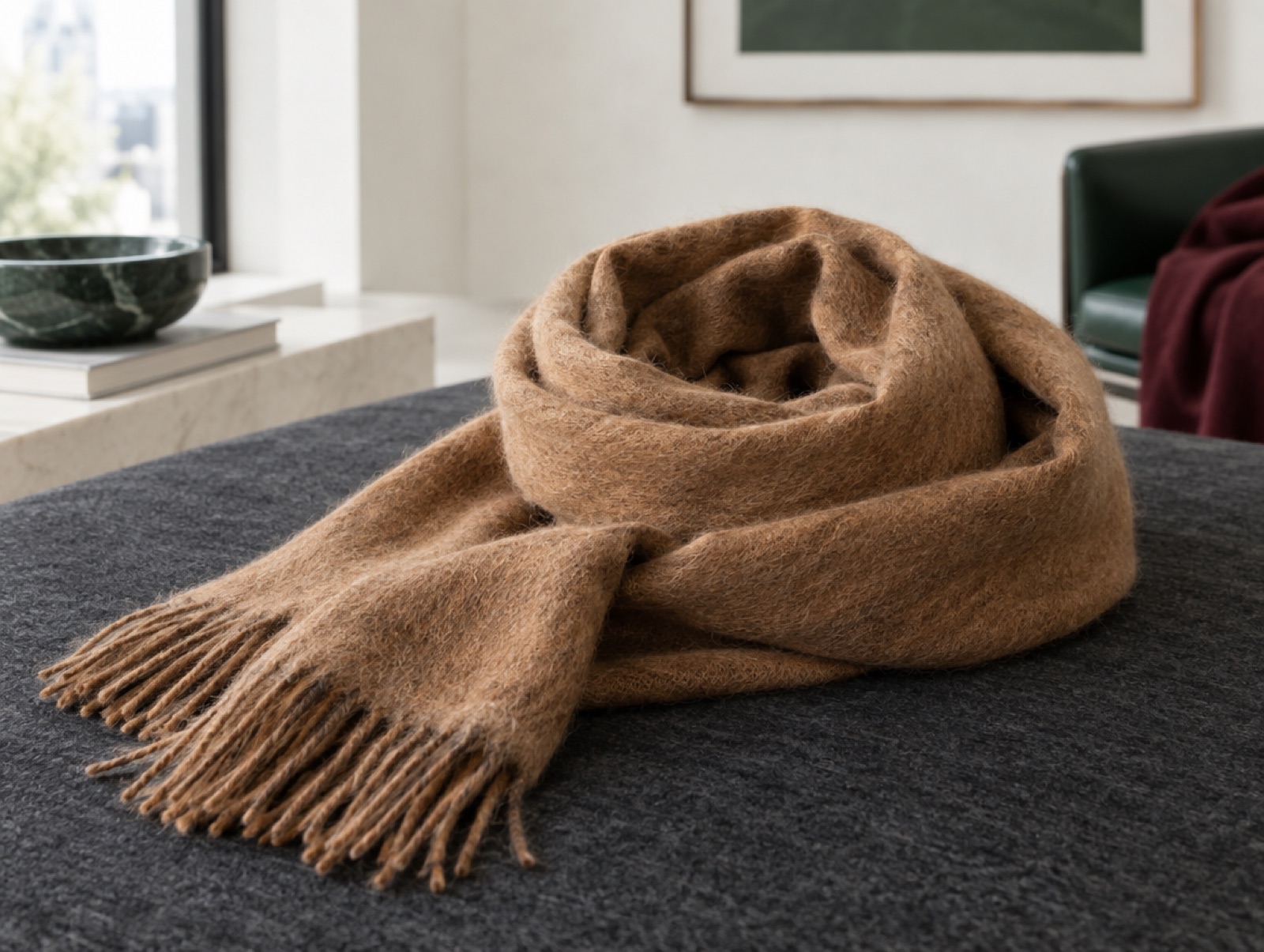
Between cashmere and vicuña
Guanaco down runs around 14 to 16 microns: not vicuña, but finer than most cashmere and with a similar warmth for weight. It is harvested in small quantities in Argentina and Chile, under regulation, and appears occasionally in coating and knitwear. It is scarce enough to be expensive and obscure enough to be under-marketed, which makes it one of the more interesting things in a merchant's book.
Why you rarely see it
Guanacos are wild, protected, and harvested under national quota systems in Argentina and Chile. The quantities released are small, the logistics are difficult, and there is no established consumer awareness of the fibre to justify a marketing push. The result is a material that is technically close to cashmere in fineness and to vicuña in scarcity, and that almost nobody asks for. When it appears it is usually blended, in coating or fine knitwear, from one of a handful of Italian mills.
Against vicuña
Coarser (around 14 to 16 microns against vicuña's 12 to 13), which in practice means slightly less soft and slightly more robust. It takes dye better than vicuña, which is usually left in its natural colour because the fibre is too fine to survive the process well.
For a buyer who wants something genuinely rare without vicuña's price and fragility, it is the more sensible of the two, and the one nobody will recognise.
Kısaca
Fotoğraf kredileri 1
- A guanaco scarf in warm honey-brown: Original art · Il Sartoriale · Il Sartoriale · Il Sartoriale original art