生地 · Cloth
Irish linen
Irish linen means linen woven and finished in Ireland, known for crisp, substantial cloth, though the flax itself is usually grown elsewhere.
Irish linen refers to linen woven and finished in Ireland, traditionally around Belfast, which was the centre of world linen production in the nineteenth century. It is associated with crisp, substantial cloth, particularly handkerchiefs and heavier suitings. The flax itself is generally grown elsewhere.
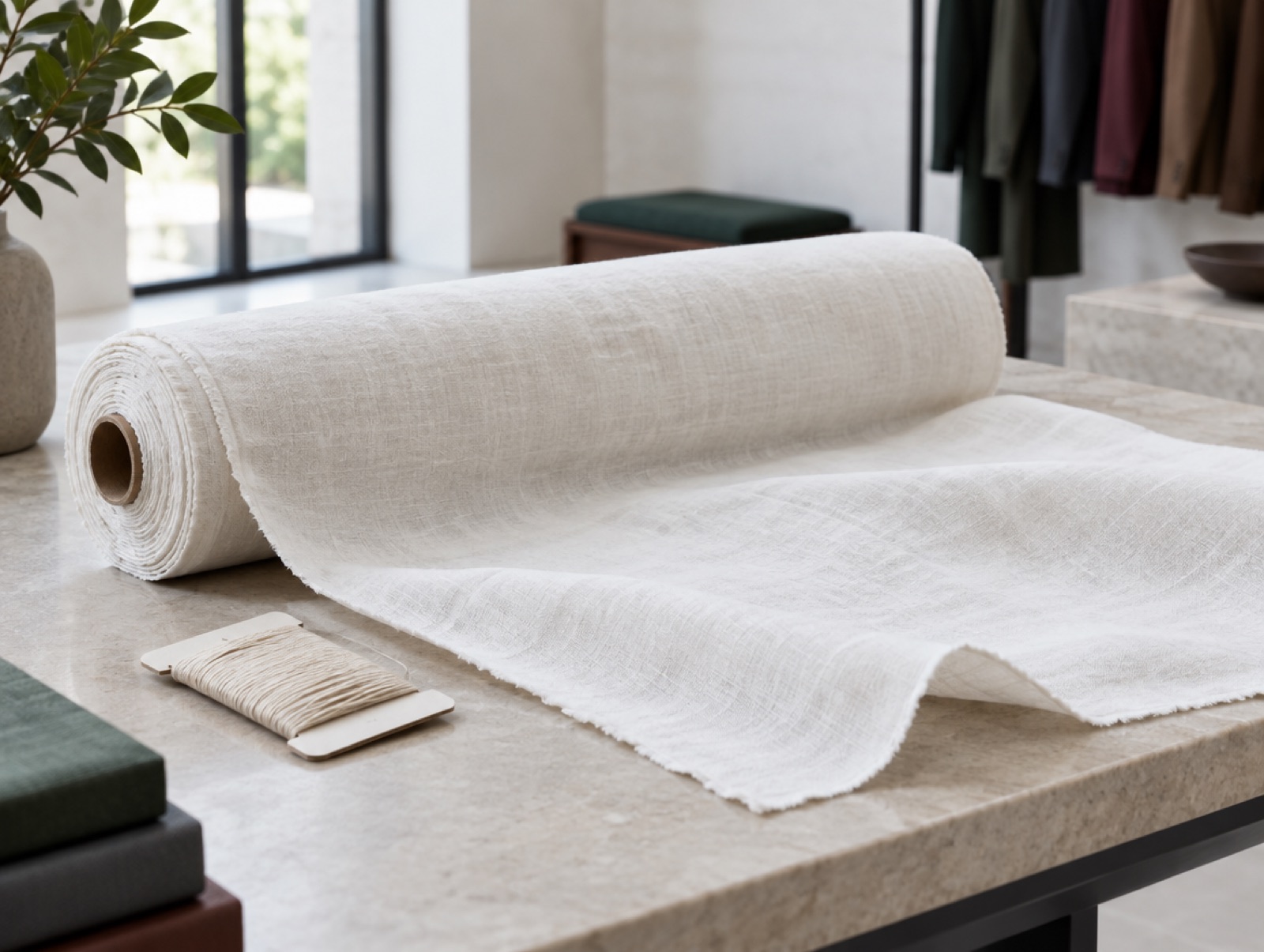
What the name covers
Belfast and the Lagan valley industrialised linen production and dominated the world trade in the nineteenth century. The industry has since contracted enormously, but Irish weaving and finishing continues, and the name attaches to cloth woven there rather than to Irish-grown flax, which is now rare. The practical association is with weight and crispness. Irish linen handkerchiefs and heavier Irish suitings have a dry, substantial handle that distinguishes them from softer continental linens.
Where you will meet it
Most often in handkerchiefs, where Irish linen remains the standard, and in heavier jacketing and suiting cloths sold through the English merchants.
As a description it tells you where a cloth was woven and finished, which is a genuine fact about it, and nothing about the flax, which almost certainly grew in France or Belgium.
The Belfast trade
Nineteenth-century Belfast was the largest linen-producing centre in the world, with mills, bleach greens and a shipbuilding industry that grew alongside it. The industry collapsed through the twentieth century and what remains is a small number of specialist weavers and finishers.
The surviving association is with weight and crispness: Irish linen handkerchiefs and heavier Irish suitings have a dry, substantial handle noticeably different from the softer continental linens.
概要
写真クレジット 1
- A bolt of white linen on a merchant's table: Original art · Il Sartoriale · Il Sartoriale · Il Sartoriale original art