Fabric · Fibre
Mohair
Angora goat hair: glossy, wiry, cool, and almost impossible to crease.
Mohair comes from the Angora goat, farmed mainly in South Africa. The fibre is smooth and lustrous with almost no crimp, which makes mohair cloth crisp, springy, resistant to creasing and cooler than its weight suggests. Blended with wool it produces the classic hard-finished summer suiting and the sharp-shouldered mod suits of the 1960s.
Why it behaves as it does
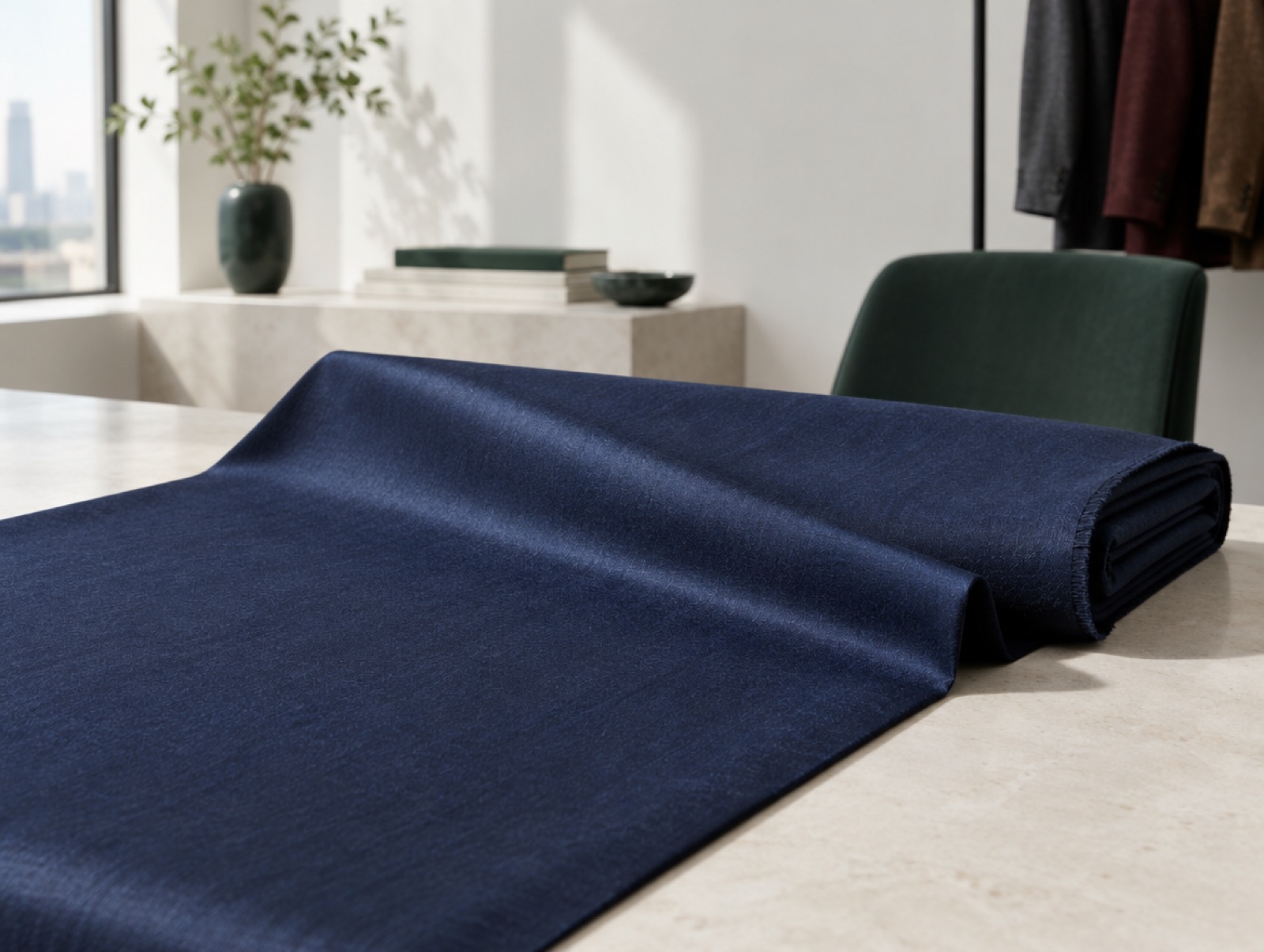
Mohair has a smooth scale structure and very little crimp. That gives it lustre (it reflects light directionally, which is why a mohair suit has a faint sheen) and remarkable resilience: the fibre springs back rather than folding, so mohair cloth resists creasing to an unusual degree. It is also hollow-ish and open in weave, so air moves through it. A wool-mohair blend at 9 or 10 ounces is one of the most practical hot-weather suitings there is: it looks crisp at the end of a day when a pure wool would look slept in.
Kid mohair and the sixties
Kid mohair, from the first shearings of a young goat, runs around 24 to 27 microns; adult mohair is considerably coarser, above 30. Since coarse mohair is scratchy, the fineness grade matters more here than with most fibres.
The mohair-blend suit is inseparable from a particular moment: the sharp, lustrous, slightly iridescent two-tone suits of the British mod scene in the 1960s were mohair blends, and the cloth's brief association with cheapness afterwards was a reaction to that ubiquity rather than to the material.
The summer suit argument
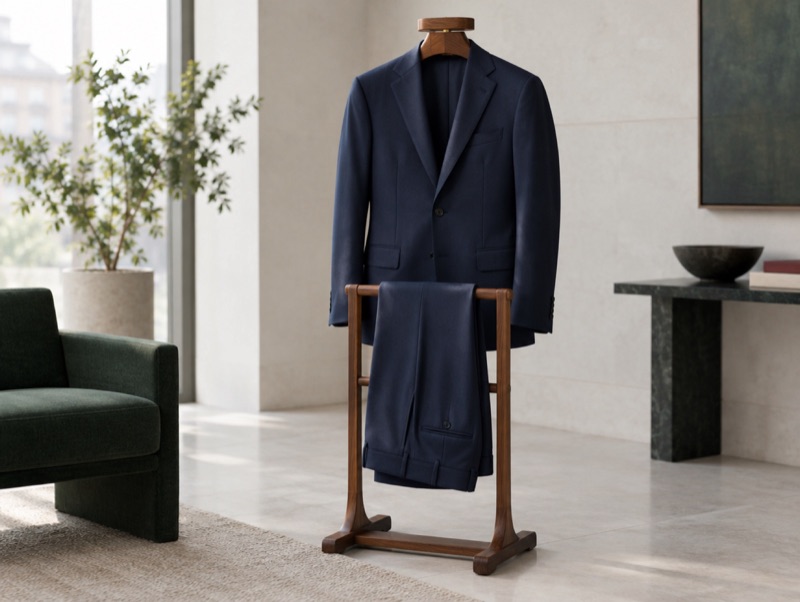
A wool-mohair blend around 9 to 11 ounces is one of the most practical hot-weather suitings available: the mohair adds spring and crease resistance, the open construction breathes, and the cloth looks presentable at the end of a long day when a soft pure wool would not.
It has a faint sheen, which is either a feature or a problem depending on the room. In a conservative professional setting a high mohair content reads as showy; at 15 to 20 per cent it simply reads as crisp.
Images
Licensing →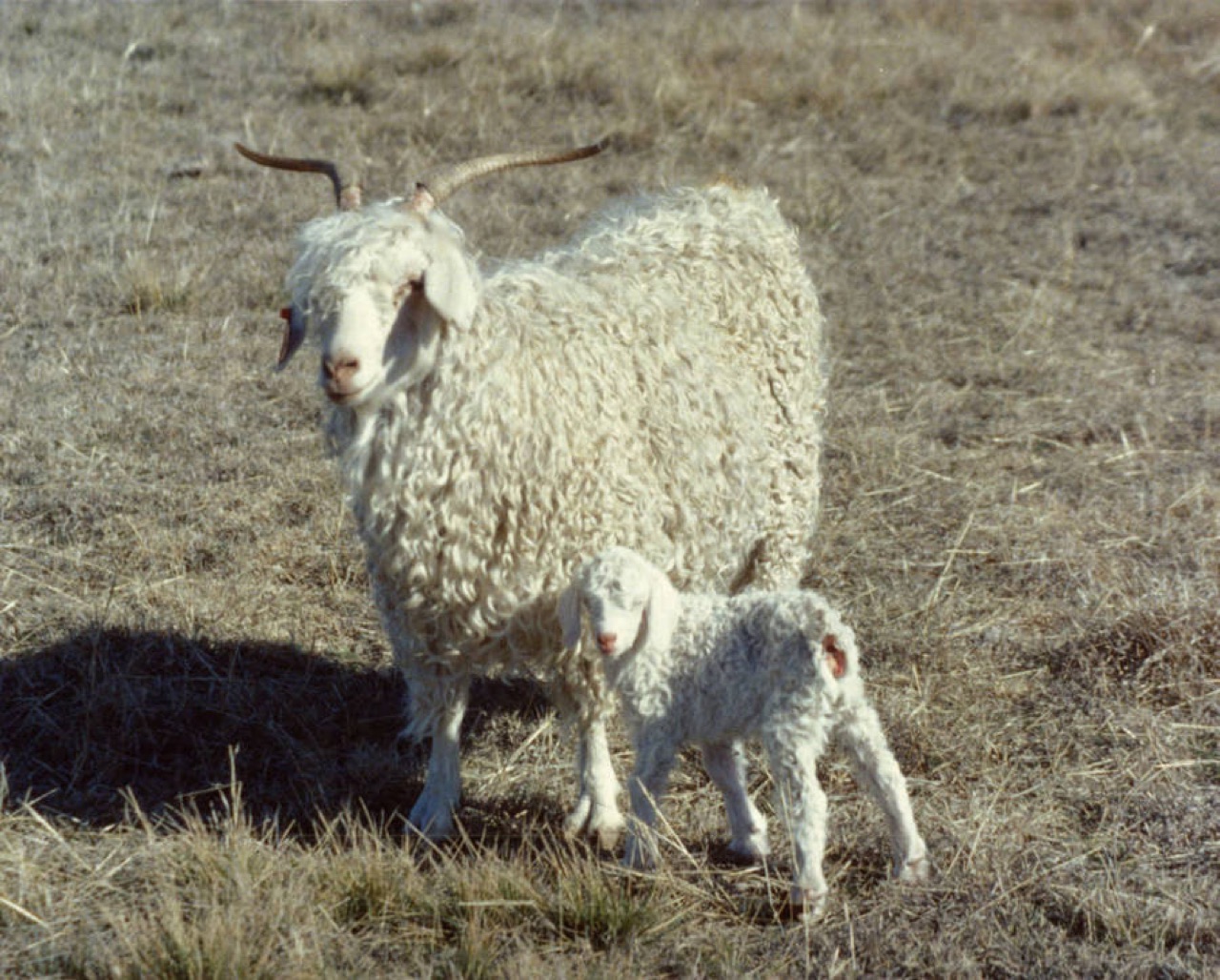
At a glance
What it is used for
Picture credits 4
- Midnight-blue mohair suiting with a dry sheen: Original art · Il Sartoriale · Il Sartoriale · Il Sartoriale original art
- Mohair goats-nanny with newborn. - DPLA - f92a422df737028204114eb061497348: Photograph · Connolly, Guy E · Wikimedia Commons · Public domain
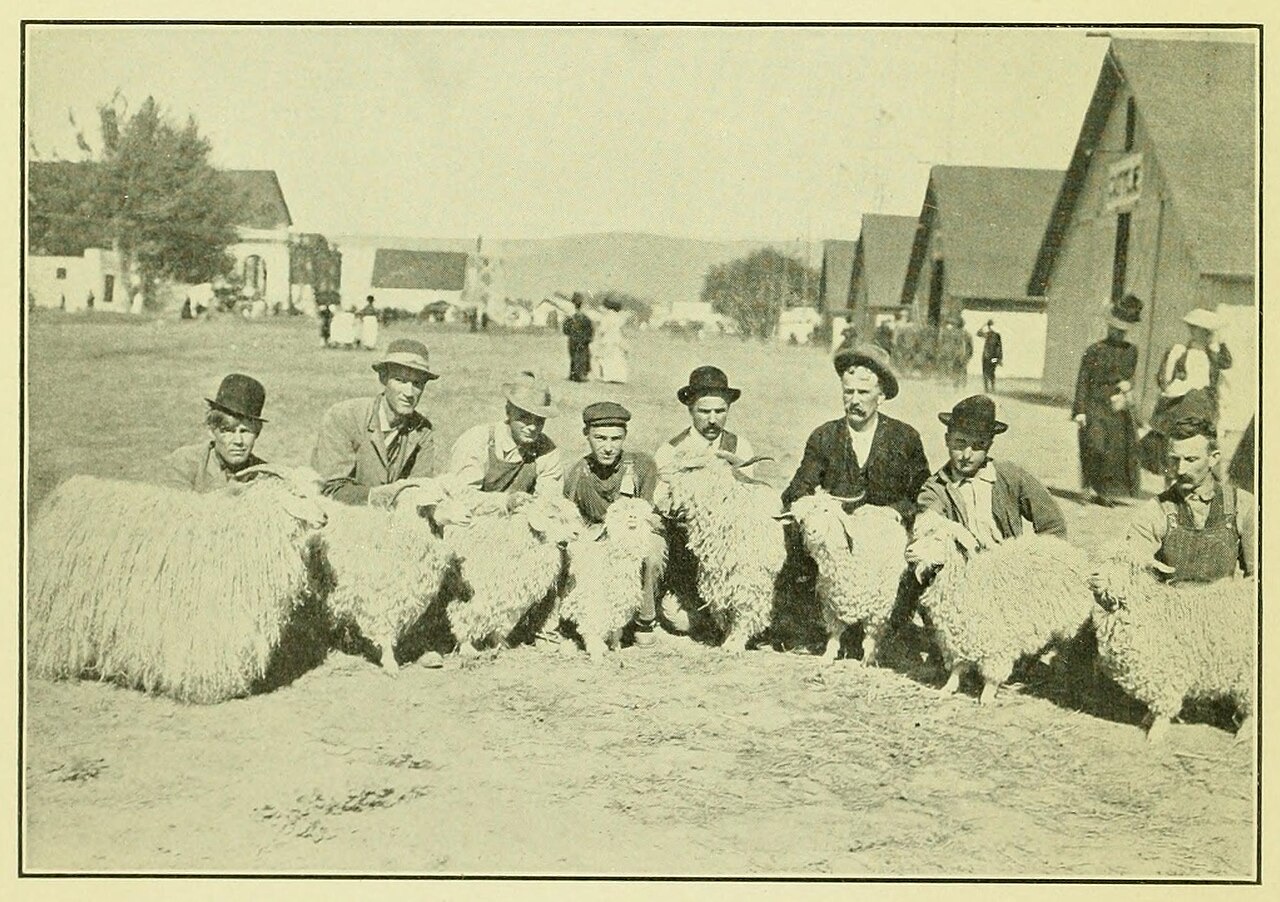
- Angora goats washington state fair yakima 1910: Photograph · Alva L. McDonald · Wikimedia Commons · Public domain
- A navy suit on a valet stand: Original art · Il Sartoriale · Il Sartoriale · Il Sartoriale original art