Tecido · Cloth
Tweed
Tweed is a rough, flecked wool cloth from Scotland and Ireland that is warm, sheds rain and lasts for ages.
Tweed is a coarse woollen cloth, usually twill-woven from dyed-in-the-wool yarn in several colours, originating in Scotland and Ireland. It is warm, water-shedding and extremely durable, and its characteristic flecked colour comes from blending dyed fibres before spinning rather than from printing or piece-dyeing.
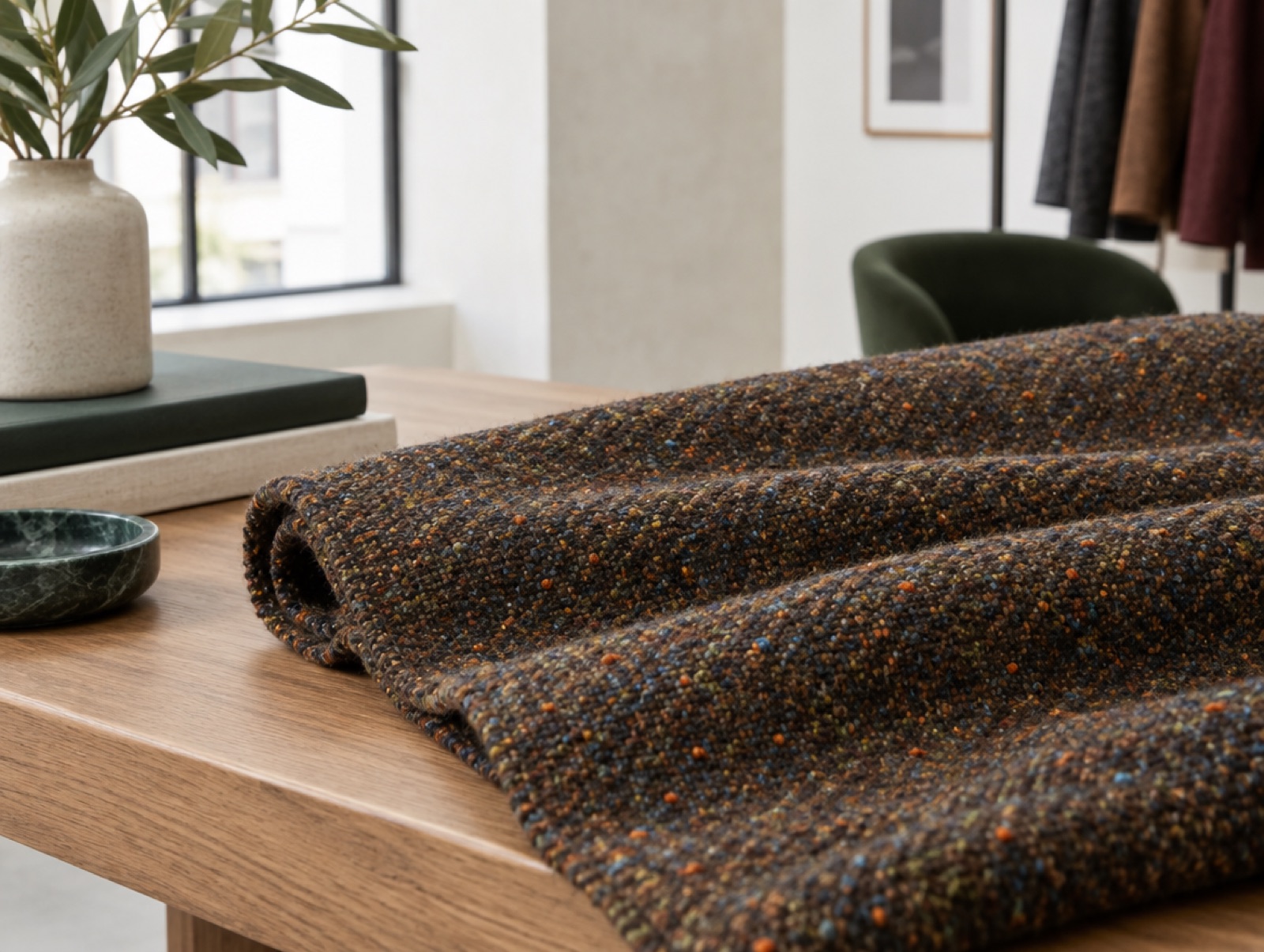
How the colour works
Tweed yarn is spun from fibre that has already been dyed in several colours and blended. The eye mixes them at a distance, so a tweed that reads as brown from across a field is a blend of rust, olive, ochre and grey close up. That depth is impossible to achieve by dyeing finished cloth. The point was camouflage. Estate tweeds, patterns commissioned by Scottish estates for their staff and guests, were coloured to match the specific ground of that estate, and the practice produced hundreds of distinct documented checks.
The main families
| Type | What it is |
|---|---|
| Harris Tweed | Hand-woven in the Outer Hebrides from virgin Scottish wool; protected by Act of Parliament |
| Donegal | Irish tweed with coloured slubs (flecks of contrasting fibre) through a plain ground |
| Shetland | Softer, lighter, from Shetland wool; the usual choice for a comfortable tweed jacket |
| Cheviot | Firm and hard-wearing, from Cheviot sheep; a country cloth |
| Saxony | Softer, finer, milled; a town tweed |
| Estate / district check | A pattern commissioned for a specific estate, often documented and dated |
The Harris Tweed Act
Harris Tweed is one of very few textiles protected by legislation. Under the Harris Tweed Act 1993, the cloth must be made from pure virgin wool dyed and spun in the Outer Hebrides and hand-woven by islanders at their own homes. Each length is inspected and stamped with the Orb mark.
The name is therefore a genuine guarantee of a specific process and place, which distinguishes it from almost every other name in this industry.
Weight and season
Tweed runs heavy: 12 to 16 ounces is ordinary and 18 or 20 is not unusual for a country cloth. That is the point: it is designed to be worn outdoors in cold wet weather, and a light tweed loses most of the properties that make it worth having.
For town wear a Shetland or a Saxony around 12 ounces is the practical choice; for a jacket that will genuinely be worn walking, heavier is better and will outlive its owner.
Imagens
Licenciamento →
Em síntese
Quem trabalha com isto
Casas e fabricantes de tecidos neste site com ligação documentada a Tweed.
-
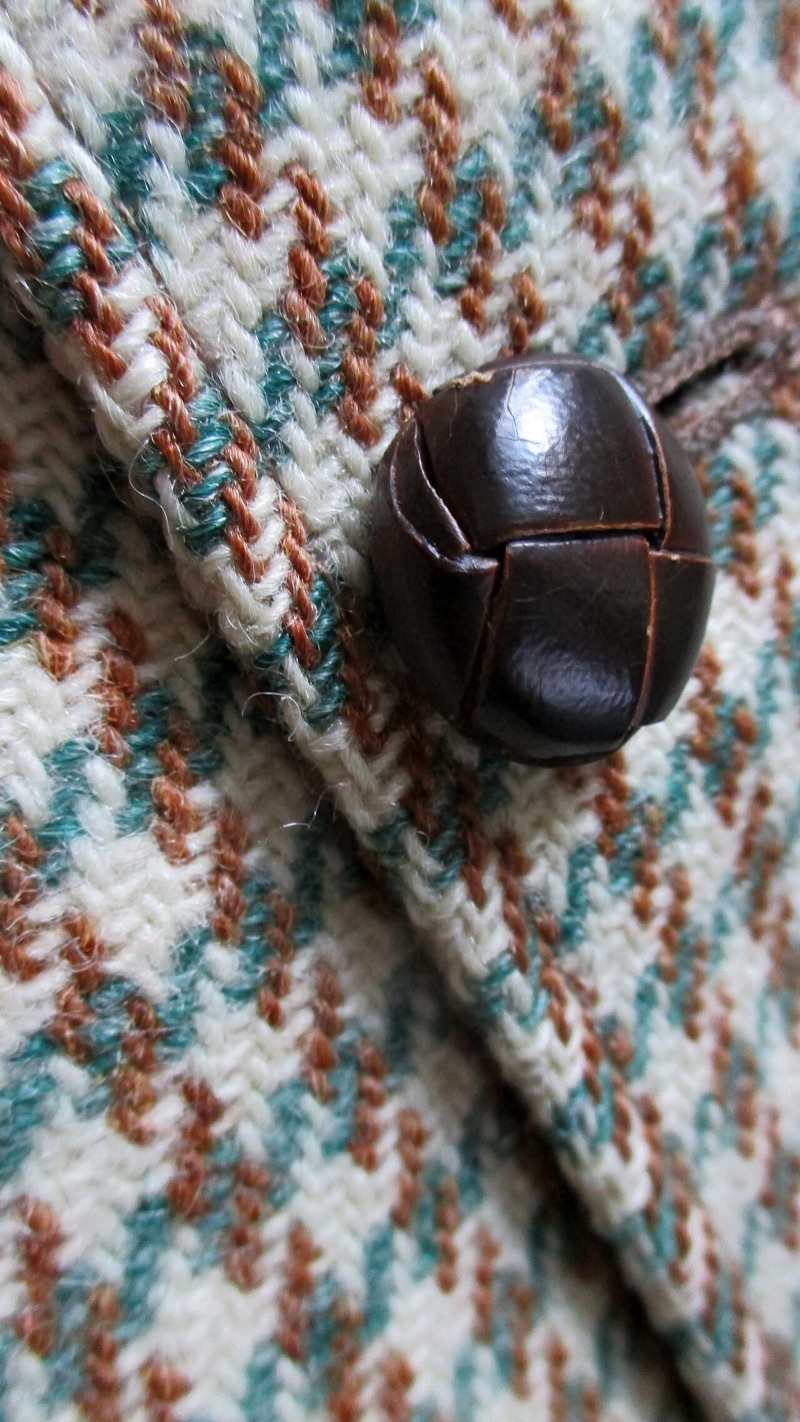 Harris Tweed
Fabricante de tecidos
Harris Tweed
Fabricante de tecidosHarris Tweed is not a company but a legally protected cloth, pure wool dyed and spun in the Outer Hebrides and hand-woven in islanders' homes.
-
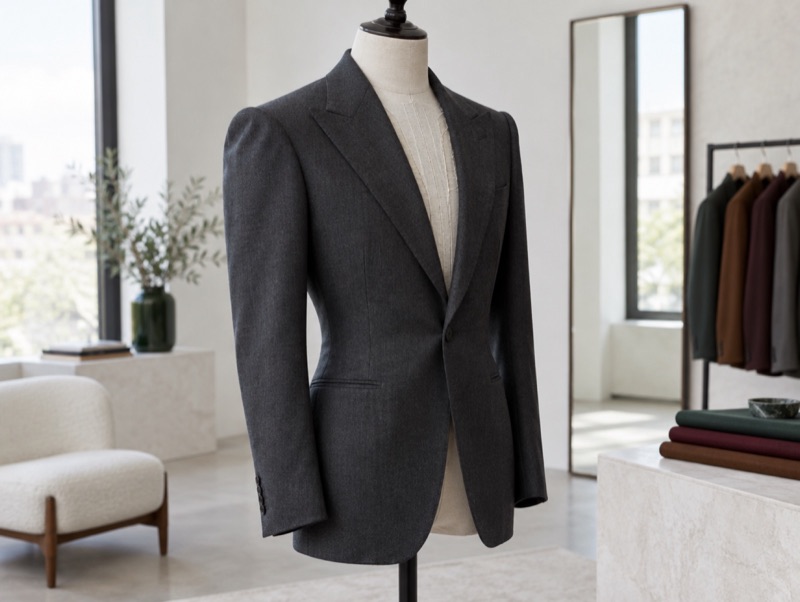 Huntsman
Alfaiate bespoke · London · 1849
Huntsman
Alfaiate bespoke · London · 1849Huntsman, Savile Row's sharpest tailor, makes lean jackets with strong shoulders, a high nipped waist and usually one button, rooted in riding clothes.
Fabricantes e comerciantes de tecidos
Todos os lanifícios →Para que é utilizado
Fontes
- Harris Tweed Act 1993 , UK Parliament.
Quando uma cifra é contestada ou a casa não a publicou, a página diz-o em vez de escolher um número.
Créditos fotográficos 5
- Brown Donegal tweed with coloured flecks: Original art · Il Sartoriale · Il Sartoriale · Il Sartoriale original art
- Catherine Murray, Countess of Dunmore 1849: Photograph · Jame ????r in 1849 · Wikimedia Commons · Public domain
- Harris Tweed Sakko - Ausschnitt mit Lederknopf - Bild 001: Photograph · Lupus in Saxonia · Wikimedia Commons · CC BY-SA 4.0
- An illustration of the house's recorded cut: roped shoulder, full canvas chest, lean, high-waisted, single button. Not a photograph of the house's own work.: Original art · Il Sartoriale · Il Sartoriale · Il Sartoriale original art
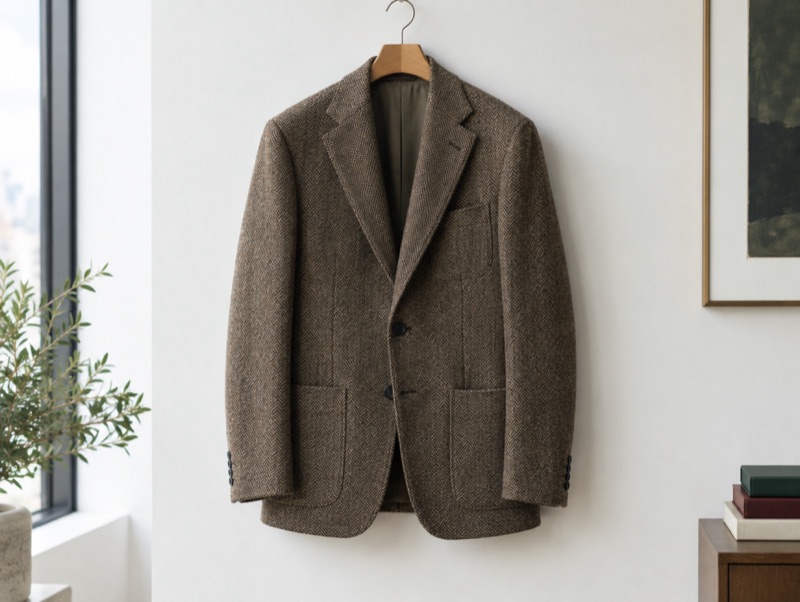
- A tweed sport coat on a hanger: Original art · Il Sartoriale · Il Sartoriale · Il Sartoriale original art