Kain · Cloth
Velvet
Velvet is a fabric with a thick, soft pile that changes colour as you stroke it, mostly used for evening jackets and slippers.
Velvet is woven as two layers joined by an extra set of threads, then cut apart, leaving a dense upright pile on each. In menswear it appears principally in evening jackets and slippers. Cotton velvet is matte and robust; silk velvet is fluid and fragile.
How it is made
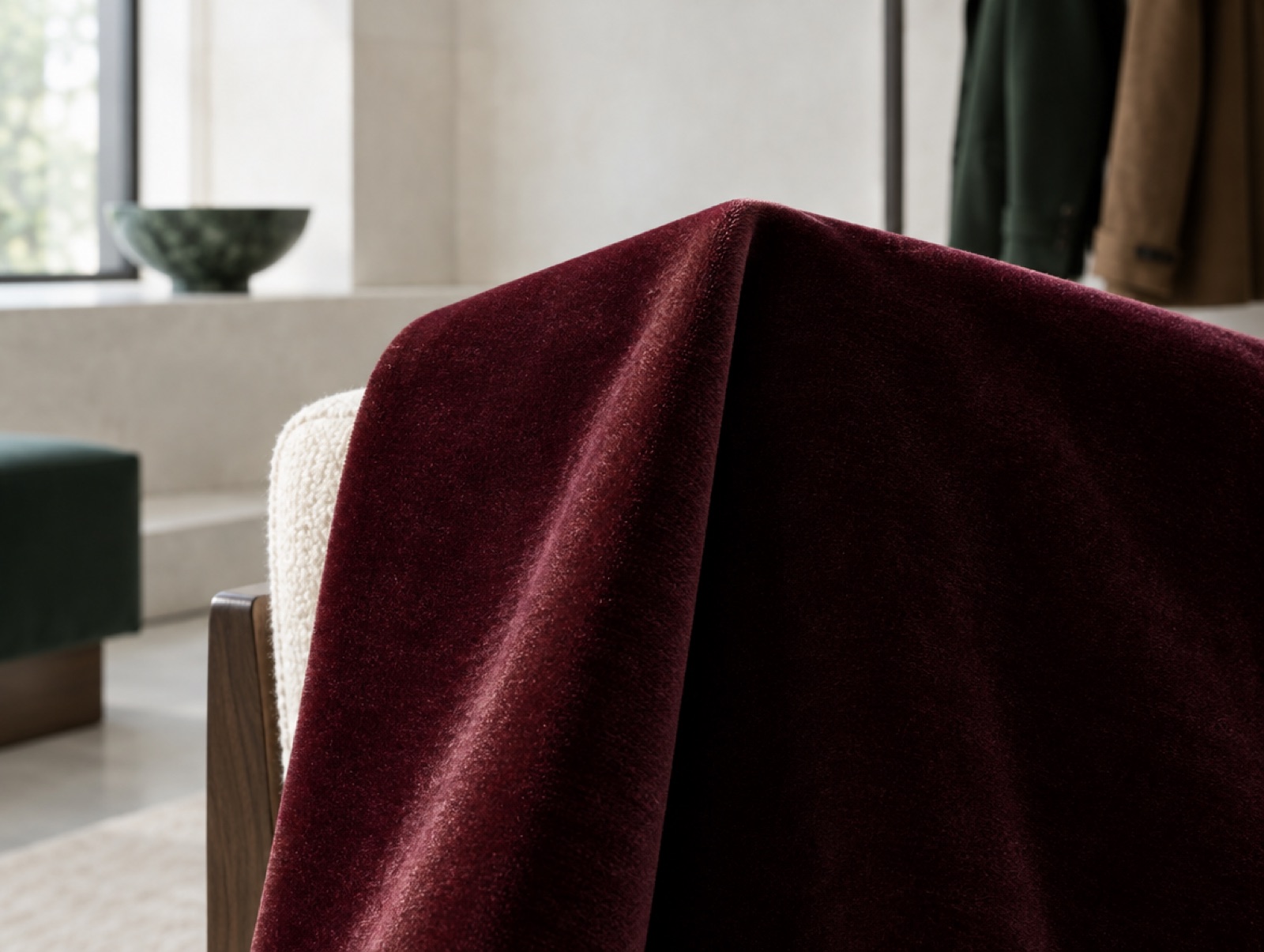
On a double-cloth loom, two fabrics are woven face to face, connected by a pile warp running between them. A blade slices the connecting threads, separating the two cloths and leaving each with a cut pile standing upright.
Because the pile stands in one direction, velvet has a nap: it looks darker one way and lighter the other. A garment must be cut with every panel running the same way, and the convention in tailoring is pile running downwards, which reads richer.
In menswear
The velvet smoking jacket is the principal use, and its history is domestic rather than formal: a jacket worn at home after dinner to keep tobacco smoke off one's clothes. It became evening wear by association.
Cotton velvet is the practical choice: matte, dense, hard-wearing. Silk velvet is more beautiful and marks if you look at it. Velvet slippers, usually with a hand-embroidered motif, are the other survival.
Living with pile
Velvet crushes where it is compressed: at the back of a jacket after sitting, at the crook of the elbow, and the marks are the pile lying flat rather than damage. Steam lifts them: hang the garment in a bathroom with a hot shower running and brush the pile gently in one direction as it dries.
Never press velvet directly with an iron. The pile flattens permanently and there is no recovery.
Sekilas pandang
Untuk apa digunakan
 01
01
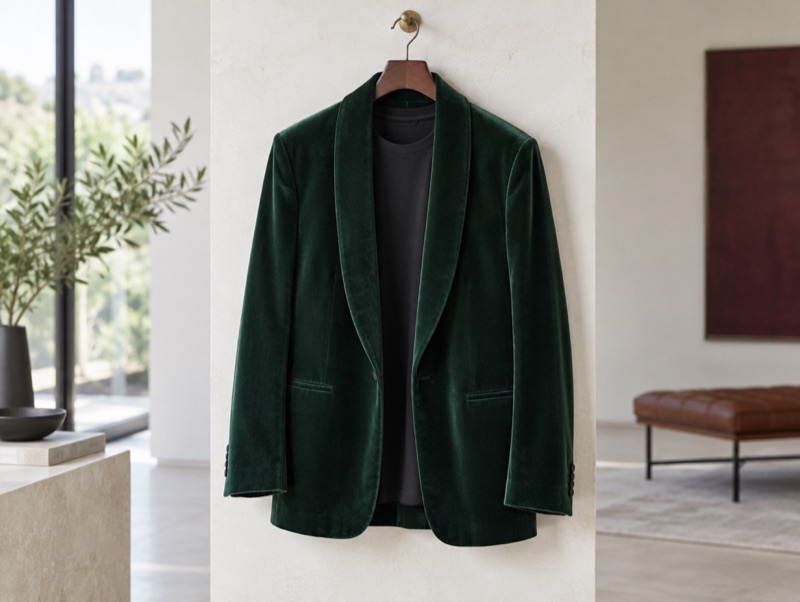
The smoking jacket
A smoking jacket is a soft velvet or quilted silk jacket meant for wearing at home after dinner, and the ancestor of the dinner jacket.
 02
02
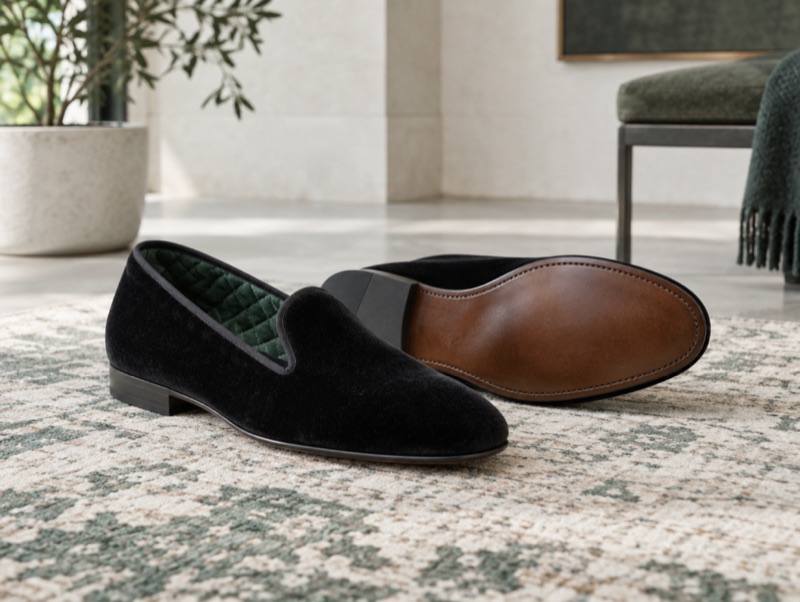
The velvet slipper
The velvet slipper, or Albert slipper, is a soft indoor shoe, often embroidered on the toe, that now turns up with informal evening dress.
 03
03
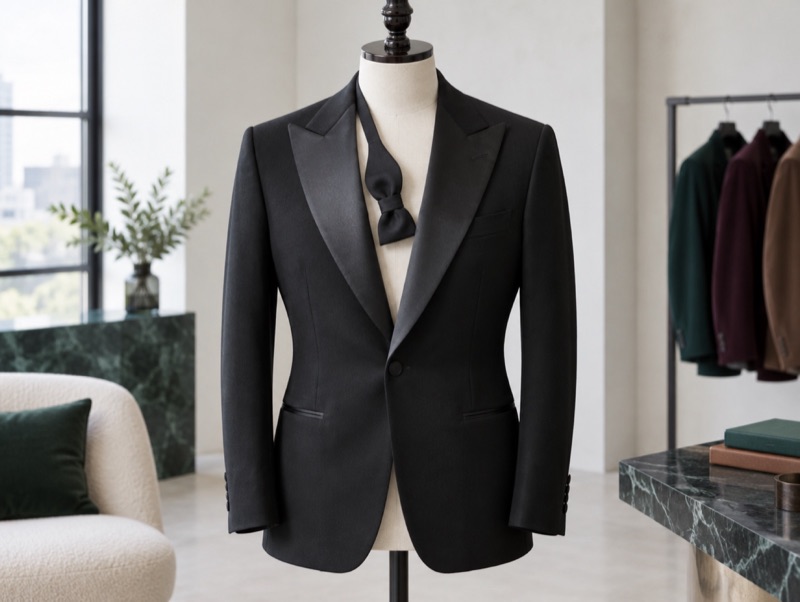
The dinner jacket
A dinner jacket is a black or midnight blue evening jacket with silk-faced lapels, now the formal standard after replacing the tailcoat.
Kredit foto 4
- Burgundy velvet, light and dark across a fold: Original art · Il Sartoriale · Il Sartoriale · Il Sartoriale original art
- A green velvet jacket, worn modern: Original art · Il Sartoriale · Il Sartoriale · Il Sartoriale original art
- Black velvet Albert slippers: Original art · Il Sartoriale · Il Sartoriale · Il Sartoriale original art
- A dinner jacket with a grosgrain lapel: Original art · Il Sartoriale · Il Sartoriale · Il Sartoriale original art