Tissu · Fibre
Wool
The default fibre of tailoring, for reasons that are structural rather than traditional.
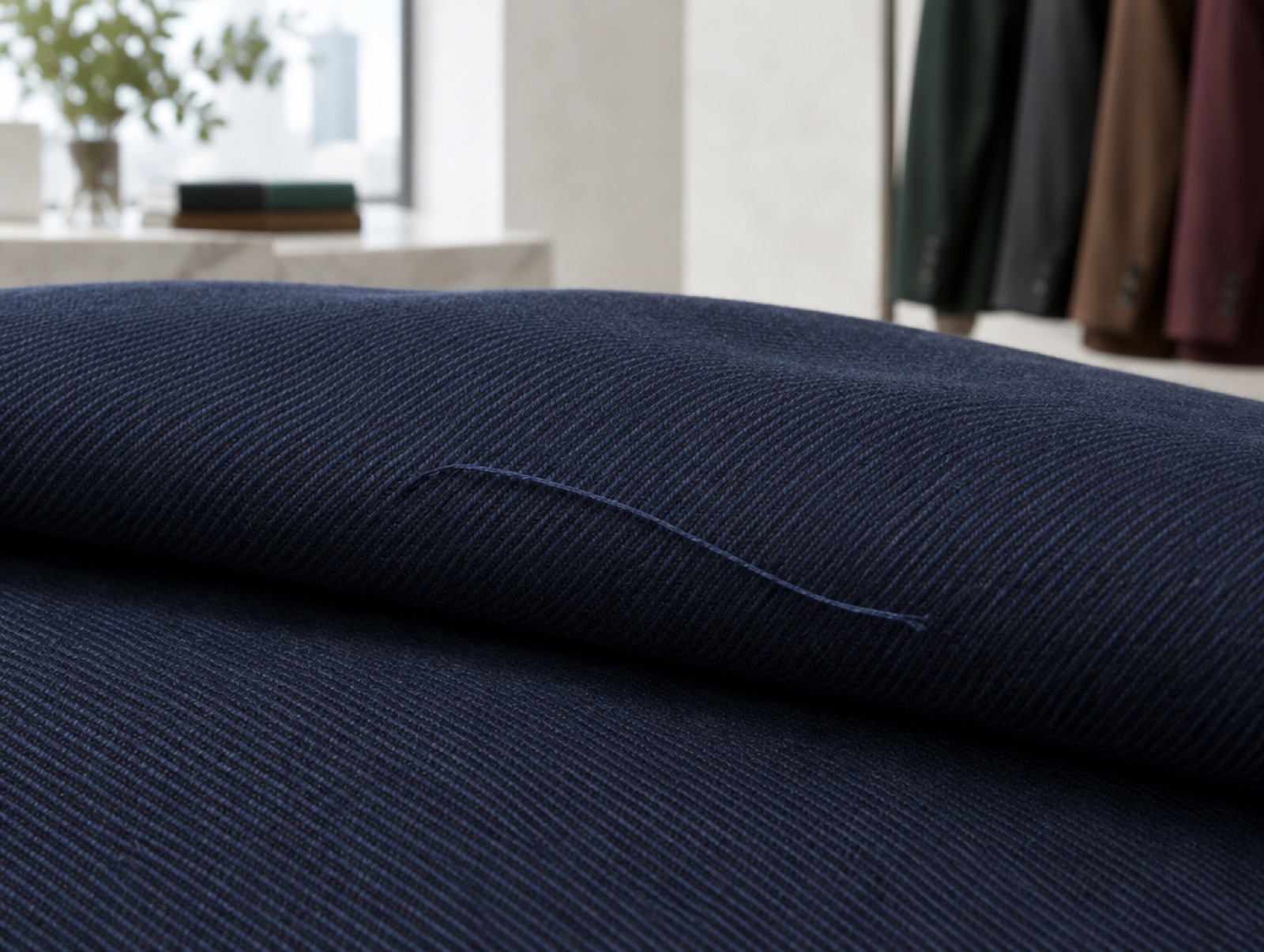
Wool is sheep's hair, and it is the basis of nearly all tailoring. Each fibre is naturally crimped and covered in microscopic scales, which makes wool springy, insulating, resistant to creasing, and , crucially for a tailor, shapeable with heat and steam. No synthetic yet matches the combination.
Why tailoring is built on it
Four properties, all consequences of the fibre's structure. Wool is crimped: each fibre is naturally wavy, so a yarn made from it is springy, traps air, insulates, and recovers from creasing rather than holding the crease. Its surface is covered in overlapping scales, which is why wool felts when agitated in hot water and why it can be milled deliberately. It absorbs a remarkable amount of moisture vapour, around a third of its weight, without feeling wet, which is why wool is comfortable across a wide temperature range. And it is mouldable: heat, steam and pressure will shrink and stretch it into a permanent three-dimensional shape.
That last one is the tailor's property. Almost everything a tailor does with an iron depends on it, and it is why a synthetic-blend suit cannot be shaped the way a wool one can, whatever else the blend does well.
Worsted and woollen
Two ways of spinning, producing two different materials from the same fibre. Worsted yarn is made from long fibres combed parallel before spinning: smooth, strong, fine, with a clear surface. Almost all suiting is worsted. Woollen yarn is carded rather than combed, so the fibres lie in every direction: fuzzier, loftier, warmer for its weight, weaker. Flannel, tweed and most knitwear are woollen.
The distinction explains a great deal. A worsted suit holds a crease and shows a smooth face; a flannel is soft, hides everything, and does not hold a sharp press. They can be the same wool.
Micron and what it does not tell you
Fibre diameter is measured in microns and it is the single most quoted specification in the trade. Merino suiting wool runs roughly 17 to 21 microns; the very fine wools used for high Super numbers go below 15; coarser wools for tweeds and carpets run above 25.
Finer fibre feels softer against the skin, because fine fibres bend rather than prickling. It is also weaker. A cloth woven from 14-micron fibre is more delicate, holds a press less well, and wears out sooner than one woven from 18-micron fibre, and the trade knows this perfectly well. The habit of treating a higher Super number as a higher quality is the most persistent misunderstanding in menswear, and mills are not in a hurry to correct it.
Staple length, how long each fibre is, matters at least as much and is almost never quoted. Long fibres make stronger, smoother, less pilling yarn.
Weight, and how to read it
| Weight | Metric | Season | Character |
|---|---|---|---|
| 7–8 oz | 220–250 g/m | High summer | Very light; needs an open weave to work |
| 9–10 oz | 280–310 g/m | Summer to mid-season | The modern default; drapes moderately |
| 11–12 oz | 340–380 g/m | Three-season | Hangs well, tailors well, holds a press |
| 13–16 oz | 400–500 g/m | Winter | Substantial; the traditional English suiting weight |
| 17 oz + | 530 g/m + | Coats and country cloth | Heavy; extremely durable |
Why wool stopped being heavy
Suiting weights have fallen by roughly a third since the 1950s, and the reason is buildings rather than taste. Central heating, air conditioning and cars removed the need for a cloth that could keep someone warm in an unheated office and a cold train.
The cost is that light cloth drapes less well, creases more readily and wears out faster. Anyone who has handled a 1950s suit notices immediately that it hangs differently, and the difference is mostly ounces.
En un coup d'œil
Qui travaille avec
Maisons et fabricants présents sur ce site avec un lien documenté avec Wool.
-
 Zegna
Marque · Biella · 1910
Zegna
Marque · Biella · 1910Zegna began as a wool mill in 1910 and is now one of the world's biggest luxury menswear companies, still weaving cloth and owning Thom Browne.
-
 Harris Tweed
Fabricant de tissu
Harris Tweed
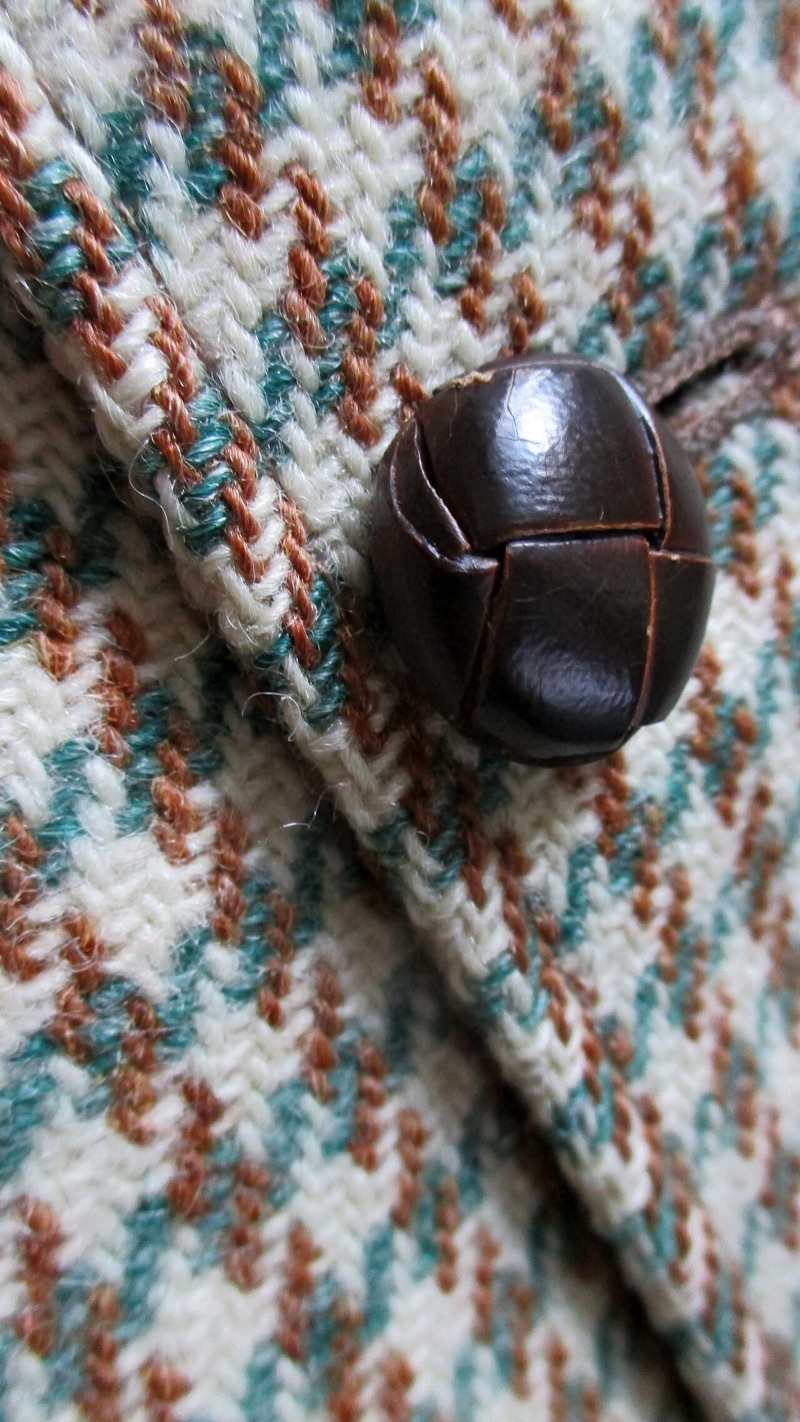
Fabricant de tissuHarris Tweed is not a company but a legally protected cloth, pure wool dyed and spun in the Outer Hebrides and hand-woven in islanders' homes.
-
Vitale Barberis Canonico
Fabricant de tissu · Biella · 1663
Vitale Barberis Canonico is Italy's largest fine-wool mill, and if you own a mid- or upper-market Italian suit, its cloth may well be in it.
-
Fox Brothers
Fabricant de tissu · 1772
Fox Brothers is a Somerset mill that has woven since the eighteenth century and is the go-to name for English flannel, a heavy cloth that tailors beautifully.
-
Holland & Sherry
Fabricant de tissu · 1836
A London cloth merchant of long standing, now with a mill of its own and a very large book.
-
Huddersfield Fine Worsteds
Fabricant de tissu
Huddersfield Fine Worsteds is a Yorkshire cloth merchant offering several old English ranges of sturdy, well-behaved smooth wool suiting.
-
Lanificio Drago
Fabricant de tissu · Biella
A Biellese weaver known for fine, light cloths and a very large seasonal range.
-
Caccioppoli
Fabricant de tissu · Naples
Caccioppoli is a Naples cloth merchant whose light, soft fabrics are standard in Neapolitan tailoring workshops and have spread abroad along with that style.
-
Hardy Minnis
Fabricant de tissu
Hardy Minnis is a London cloth merchant best known for Fresco, an open, airy wool suiting that people who wear suits in heat reorder for decades.
Fabricants et marchands de tissu
Tous les tisseurs →-
Vitale Barberis Canonico
Biella · 1663
Vitale Barberis Canonico is Italy's largest fine-wool mill, and if you own a mid- or upper-market Italian suit, its cloth may well be in it.
-
Fox Brothers
1772
Fox Brothers is a Somerset mill that has woven since the eighteenth century and is the go-to name for English flannel, a heavy cloth that tailors beautifully.
-
Harris Tweed
Harris Tweed is not a company but a legally protected cloth, pure wool dyed and spun in the Outer Hebrides and hand-woven in islanders' homes.
-
Holland & Sherry
1836
A London cloth merchant of long standing, now with a mill of its own and a very large book.
-
Huddersfield Fine Worsteds
Huddersfield Fine Worsteds is a Yorkshire cloth merchant offering several old English ranges of sturdy, well-behaved smooth wool suiting.
-
Lanificio Drago
Biella
A Biellese weaver known for fine, light cloths and a very large seasonal range.
-
Caccioppoli
Naples
Caccioppoli is a Naples cloth merchant whose light, soft fabrics are standard in Neapolitan tailoring workshops and have spread abroad along with that style.
-
Hardy Minnis
Hardy Minnis is a London cloth merchant best known for Fresco, an open, airy wool suiting that people who wear suits in heat reorder for decades.
À quoi cela sert
Sources
- Wool fibre specifications and standards , The Woolmark Company.
Lorsqu'un chiffre est contesté ou qu'une maison ne l'a pas publié, la page l'indique plutôt que de retenir un nombre.
Crédits photographiques 5
- Navy worsted wool suiting, close up: Original art · Il Sartoriale · Il Sartoriale · Il Sartoriale original art
- Front of the Ermenegildo Zegna Global Store (52039067673): Photograph · Chris Rycroft from Cambridge, Massachusetts, United States · Wikimedia Commons · CC BY 2.0
- Harris Tweed Sakko - Ausschnitt mit Lederknopf - Bild 001: Photograph · Lupus in Saxonia · Wikimedia Commons · CC BY-SA 4.0
- A charcoal double-breasted overcoat: Original art · Il Sartoriale · Il Sartoriale · Il Sartoriale original art
- A navy suit on a valet stand: Original art · Il Sartoriale · Il Sartoriale · Il Sartoriale original art