Da qui si comincia · Start Here
How a suit should fit
When buying a suit, get the shoulders right first because they cannot be altered, while the collar, chest, sleeves, length and waist can be adjusted.
Fit is judged at specific points, and they are worth learning in order of alterability. The shoulder cannot be changed and must be right when you buy. The collar, chest and sleeves can be adjusted. Length and waist are straightforward. Everything else is detail.
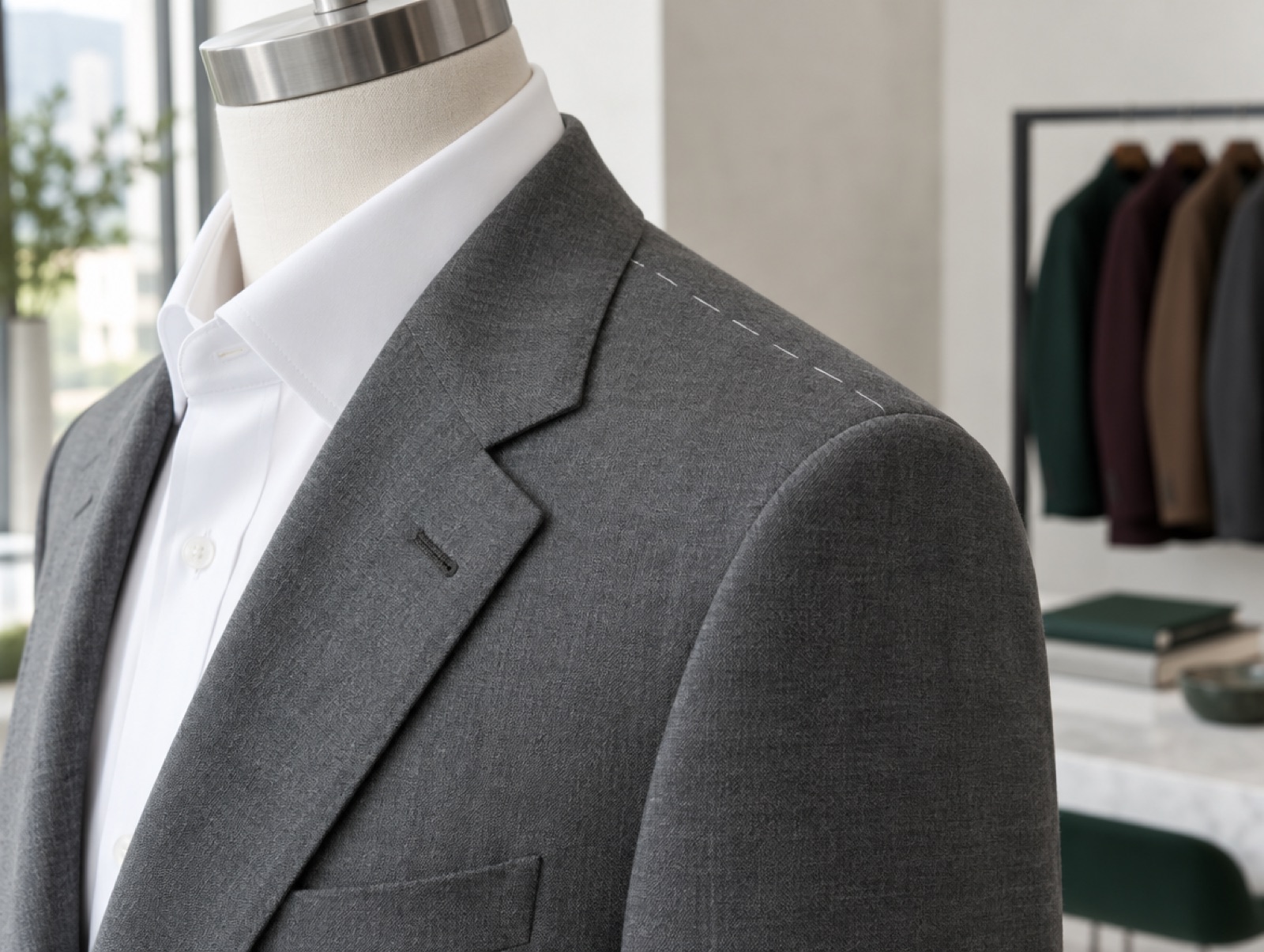
The jacket, in order
- Shoulder. The seam ends where your shoulder ends. Not before, producing a divot; not after, producing a droop. This cannot be altered meaningfully; it is the buying decision.
- Collar. Against the shirt collar with no gap, standing and walking. A gap means the balance is wrong and a good tailor can fix it.
- Chest. Button it. A flat hand should slide inside comfortably; a fist should not. The lapels should lie flat with no X-shaped strain at the button.
- Sleeve. Ends at the wrist bone with about a centimetre of shirt cuff showing. Both sleeves may need to be different lengths.
- Length. Covers the seat. This moves with fashion more than any other measurement, and covering the seat is the version that ages best.
- Waist. Suppressed enough to suggest a shape, not so much that the front pulls.
The trousers
- Waist. Sits where the trouser was cut to sit and stays there without a belt straining. If you are constantly pulling them up, the rise is wrong for how you are wearing them.
- Seat. Smooth, with no horizontal pulling under the buttocks and no sagging.
- Thigh. Enough room to sit down; not so much that the leg looks unshaped.
- Length and break. A matter of taste, but consistent with the width of the leg.
What good fit is not
Tight. The fashion of the 2010s for close-cut jackets and short trousers produced a great deal of clothing that fitted in the sense that it was small, which is different. A jacket you cannot fasten comfortably or reach forward in does not fit.
It is also not the same on everyone. A drape cut and a close-cut coat are both correctly fitted and look nothing alike, because they answer different questions about what a coat should do.
- 1
Spallatermina dove termina il tuo; non può essere modificato
- 2
Collettocontro il colletto della camicia, fermo e in movimento
- 3
Pettouna mano piatta entra; un pugno no
- 4
Manicafino all'osso del polso, un centimetro di polsino in vista
- 5
Lunghezzacopre il sedere
- 6
Vitacontenuto, ma il davanti non tira
In sintesi
Crediti fotografici 1
- A jacket collar sitting flush on a shirt collar: Original art · Il Sartoriale · Il Sartoriale · Il Sartoriale original art