Start here · Start Here
Understanding shoes
A shoe's construction decides whether it can be resoled, which is what makes an expensive pair an investment rather than an extravagance.
The construction of a shoe determines whether it can be resoled, and therefore whether an expensive pair is an investment or an extravagance. Goodyear-welted and hand-welted shoes can be resoled repeatedly; Blake-stitched shoes can with a specialist; cemented shoes cannot. Everything else (leather, last, finishing) matters after that.
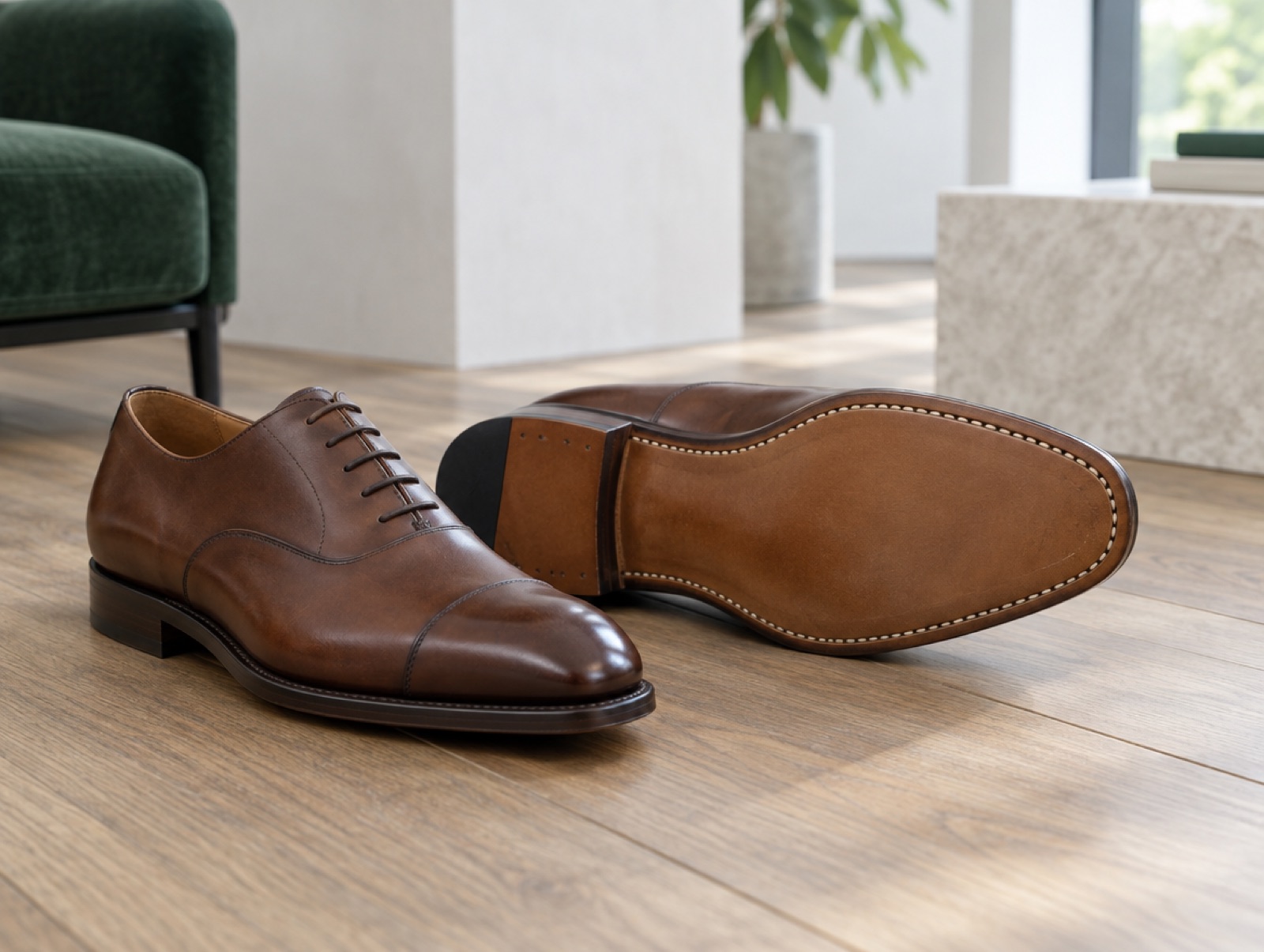
The constructions
| Construction | Resoleable | Character |
|---|---|---|
| Hand welted | Repeatedly; no gemming to fail | Thin close waist; bespoke and a few makers |
| Goodyear welted | Several times | Durable, slightly bulky when new; Northampton standard |
| Blake | Yes, with a Blake machine | Slim, light, flexible; Italian standard |
| Blake rapid | Yes, straightforwardly | A hybrid; slimmer than a welt, easier to repair than Blake |
| Cemented | Generally not | Cheap, light; most footwear made today |
The economics
A £600 Goodyear-welted shoe resoled four times over twenty years costs roughly £45 a year including repairs. A £120 cemented shoe replaced annually costs £120 a year. The expensive shoe is the cheaper one, provided it fits and provided you actually resole it. That argument collapses if the shoe does not fit, which is why the last matters as much as the construction.
Lasts and fit
The last is the form the shoe is built on, and it decides both fit and appearance. Good makers name and number theirs, and experienced buyers choose the last before the model. The same nominal size in two lasts from one maker will fit differently.
There is no international standard making sizes comparable between makers. Learn your size in each maker's principal lasts and treat conversions as approximate.
Care, in one paragraph
Cedar trees the moment you take them off, while the shoe is warm. A day of rest between wearings. Brush off dust. Cream every ten to twenty wearings to feed the leather; wax on the toe and heel only. Resole before the sole wears through, not after. Never dry a wet shoe near heat.
Rotating three pairs makes each last more than three times as long, which is the highest-return habit in the whole of menswear.
What you are paying for above a certain point
Past roughly the price of a good Goodyear-welted shoe, additional money buys three things and not much else: better leather, a more shaped last, and finer finishing (a closer waist, a finer sole edge, a cleaner underside).
None of those make the shoe last longer. They make it look better and fit more precisely, which is a legitimate thing to buy as long as nobody has told you it is durability.
At a glance
Picture credits 1
- An oxford turned to show its welted sole: Original art · Il Sartoriale · Il Sartoriale · Il Sartoriale original art