Teknik · Textile
Finishing
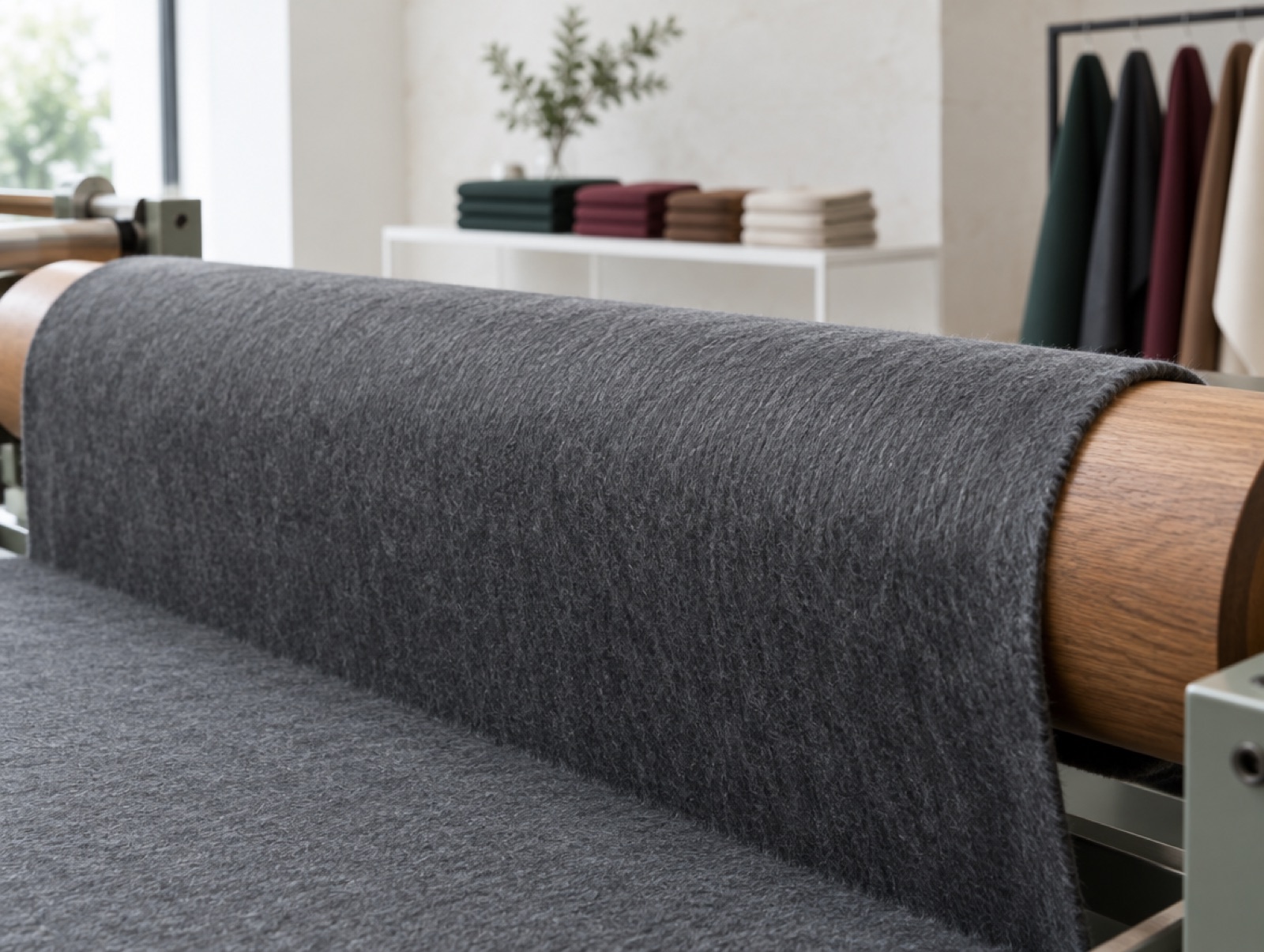
Finishing is the washing, pressing and other treatment cloth gets after weaving, and it largely decides how the fabric feels, looks and shines.
Finishing is everything done to a cloth after weaving: washing, milling, raising, cropping, pressing and setting. It determines handle, surface, stability and lustre, and it is the stage mills are most secretive about: a mill's finishing routine is often the actual trade secret.
The operations
- Scouring: washing out the oils and sizing added for spinning and weaving.
- Milling or fulling: controlled shrinking in warm water so the fibres felt together; this is what makes flannel soft and dense and what turns woven wool into loden.
- Raising: teasels or wire rollers lift fibre ends to the surface, producing a nap.
- Cropping or shearing: cutting that raised nap to an even height.
- Decatising and setting: steam and pressure to stabilise the cloth so it will not shrink or distort later.
Clear finish and milled finish
A clear-finished worsted is cropped close so the weave shows sharply: crisp, businesslike, and inclined to shine at wear points. A milled finish is shrunk and raised so the weave softens under a slight nap: warmer, more forgiving of creasing, and it hides wear rather than displaying it.
The same yarn can produce either. When a tailor says one cloth 'tailors better' than an apparently identical one, this is usually the difference being described.
Why it matters more than people think
A worsted and a flannel can be woven from similar yarn in a similar structure and end up as different materials entirely, because one was milled and raised and the other was not. When a tailor says a cloth from one mill “tailors better” than an apparently identical cloth from another, finishing is usually what they are describing.
It is also where the least information is available. Mills publish fibre, weight and weave; almost none publish their finishing routines, and the differences are largely undocumented outside the trade.
Sekilas pandang
Siapa yang menggunakannya
Rumah mode dan pabrik kain di situs ini yang memiliki keterkaitan terdokumentasi dengan Finishing.
 01
Kain
01
Kain Flannel
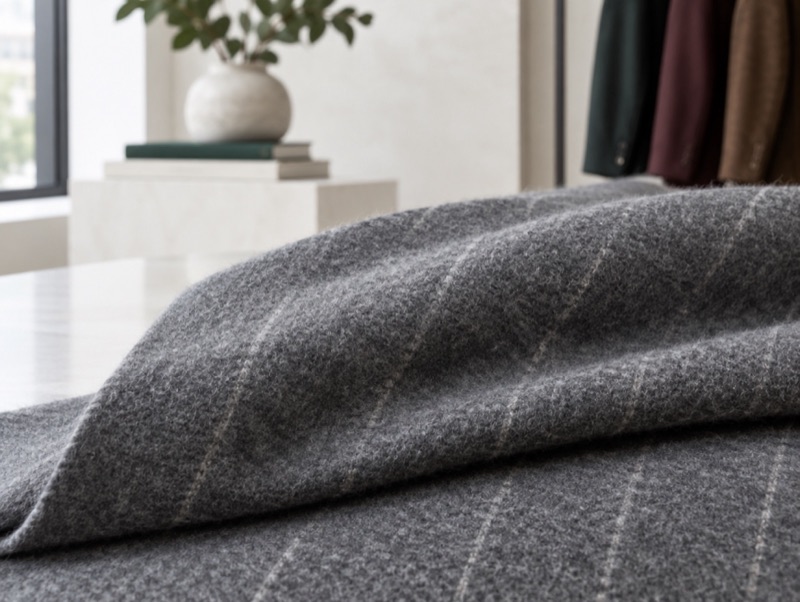
Flannel is wool shrunk and brushed until soft and fuzzy, making warm, matte cloth that forgives creases, and grey flannel trousers are hugely useful.
 02
Teknik
02
Teknik Weaving
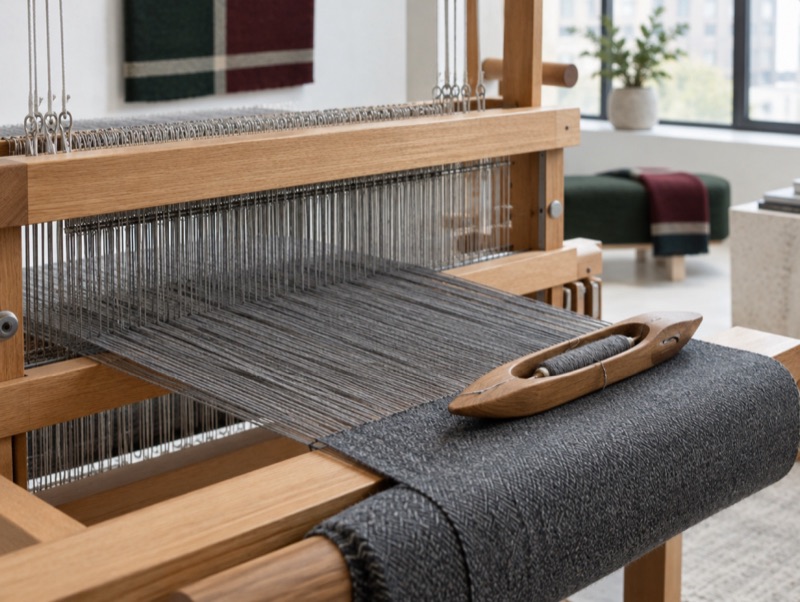
Weaving crosses two sets of threads at right angles, and the pattern of crossing shapes how a cloth hangs, wears, creases and looks.
 03
Mulai di sini
03
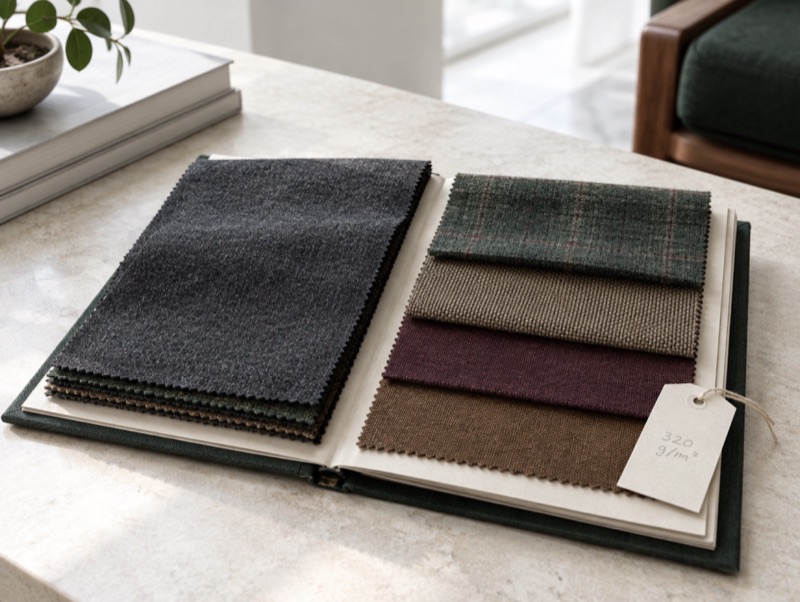
Mulai di sini Understanding fabric
Fabric is described by its fibre, weight, weave and fin
 04
Kain
04
Kain Tweed
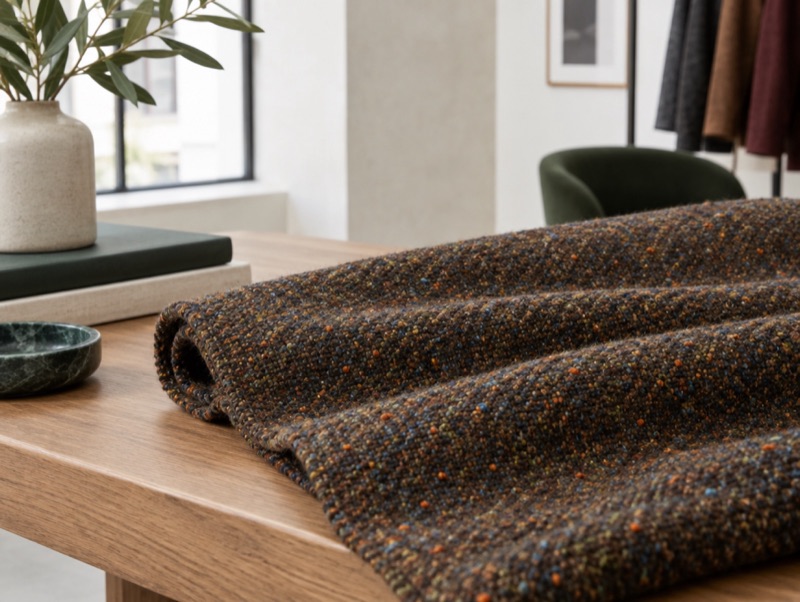
Tweed is a rough, flecked wool cloth from Scotland and Ireland that is warm, sheds rain and lasts for ages.
 05
Kain
05
Kain Super numbers
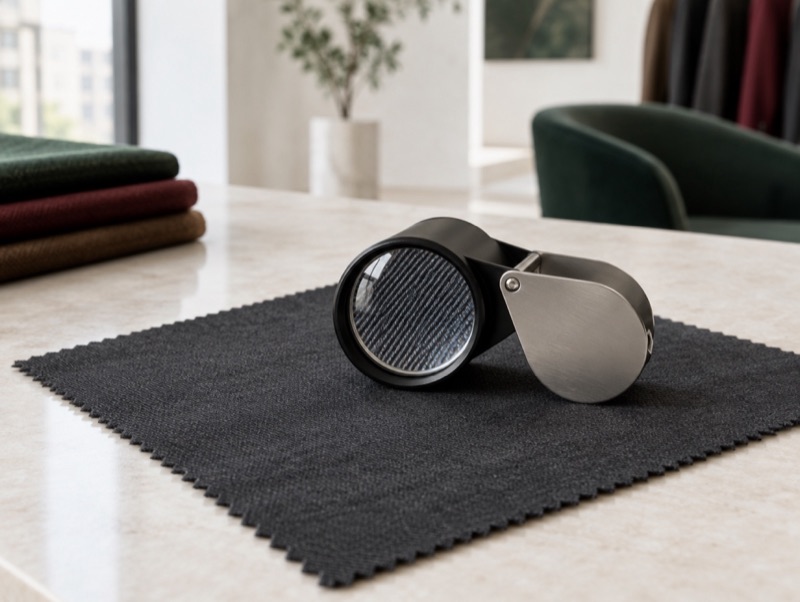
A cloth's Super number, like Super 150s, measures how fine the wool fibre is, so higher means softer but more fragile, not better.
-
Milling
Istilah glosarium
Controlled shrinking of woven wool in warm water so the fibres felt together, producing a denser, softer cloth. What turns a plain woven wool into flannel.
-
Nap
Istilah glosarium
Raised fibre ends on the surface of a cloth, lying in one direction. Napped cloths must be cut with every panel running the same way or the colour shifts between them.
-
Piece-dyed
Istilah glosarium
Cloth dyed after weaving rather than before. Cheaper and more uniform than dyeing in the wool, and it cannot produce the depth of colour a tweed gets from blending pre-dyed fibre.
Kredit foto 6
- Finished flannel passing over a roller: Original art · Il Sartoriale · Il Sartoriale · Il Sartoriale original art
- Mid-grey flannel with a faint chalk stripe: Original art · Il Sartoriale · Il Sartoriale · Il Sartoriale original art
- A loom with a grey worsted warp: Original art · Il Sartoriale · Il Sartoriale · Il Sartoriale original art
- An open cloth bunch book: Original art · Il Sartoriale · Il Sartoriale · Il Sartoriale original art
- Brown Donegal tweed with coloured flecks: Original art · Il Sartoriale · Il Sartoriale · Il Sartoriale original art
- A loupe on fine charcoal worsted: Original art · Il Sartoriale · Il Sartoriale · Il Sartoriale original art