Accessorio · Small Leather
The belt
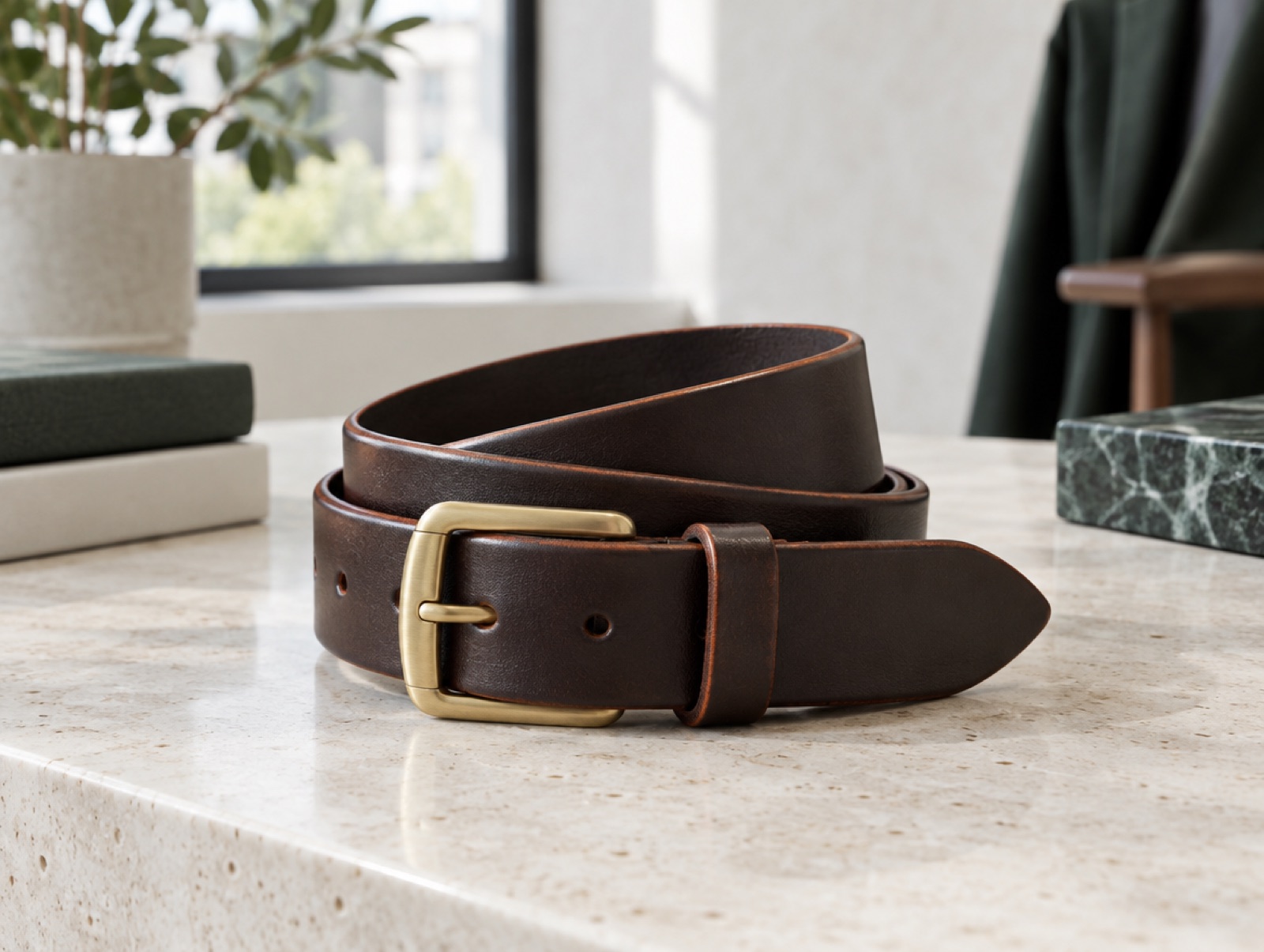
A good dress belt is one solid piece of leather that matches your shoes, narrow with a suit and wider with casual trousers.
A dress belt should be a single piece of full-grain leather rather than a bonded or split-leather strip with a facing, and it should match the shoes in colour and finish. Width follows formality: narrow with a suit, wider with casual trousers.
How to tell a good one
- Look at the cut edge. A single piece of leather shows one continuous cross-section; a bonded belt shows layers, sometimes with a fabric core.
- Bend it sharply. Good leather creases and recovers; bonded material cracks along the fold.
- Check the buckle attachment. Stitched or a proper screw fitting beats a rivet.
- Width: roughly 30–32 mm for a suit; 35 mm and up for casual trousers.
Sizing
A belt is sized to fasten on the middle hole with the trousers worn where you actually wear them, which is usually two inches larger than the trouser waist size rather than the same. A belt fastening on the last hole leaves an unattractive length of tail and no adjustment.
The tail should reach the first belt loop after the buckle and stop; a long tail flapping past the hip is a belt bought too large.
Matching
Belt and shoes should agree: black with black, brown with brown, and ideally similar in finish. A patent belt with matte shoes reads wrong even to people who could not say why.
The alternative is to stop wearing a belt with tailored trousers. Side adjusters or braces hold the trouser better, keep the waist clean under a buttoned jacket, and remove the question entirely.
Formality
A narrow belt in smooth polished calf with a small, plain, gold or silver buckle is the dress version. A wider belt in grain leather with a heavier buckle is casual. Braided and woven belts are the most casual of all and are also the most adjustable, since there are no fixed holes.
With formal dress (black tie and above) a belt is not worn at all, because the trousers have no loops.
Immagini
Licenze →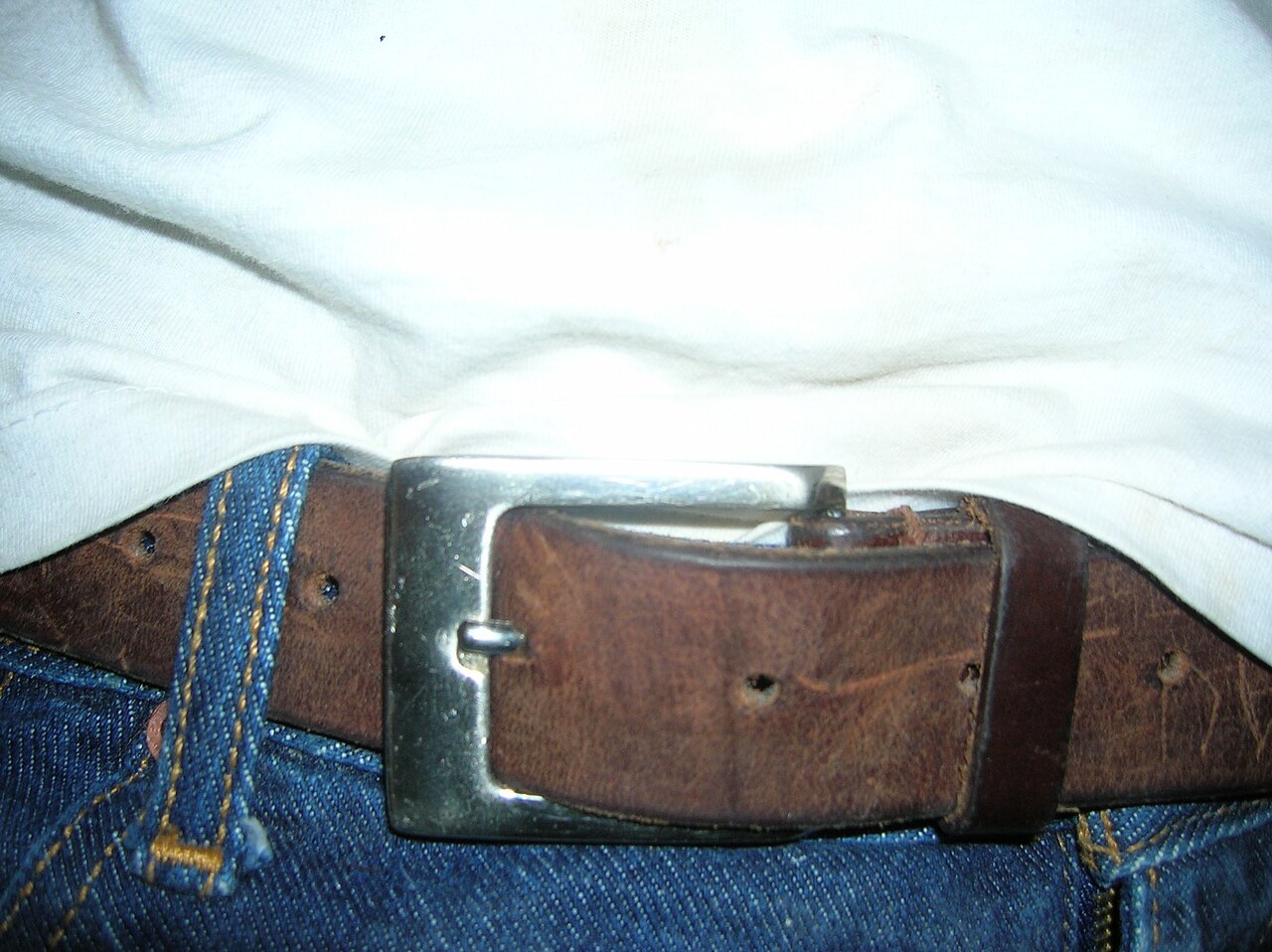
In sintesi
Crediti fotografici 2
- A bridle-leather belt with a brass buckle: Original art · Il Sartoriale · Il Sartoriale · Il Sartoriale original art
- Leather belt & buckle: Photograph · Joeyramoney · Wikimedia Commons · Public domain