Fabric · Leather
Leather
Leather is treated animal hide, and how good it is depends on the animal, the layer of skin used and how it was tanned.
Leather is animal hide treated so it will not decompose. In menswear the important distinctions are the animal (calf for shoes, goat for gloves, sheep for garments), the layer used (full grain, top grain, split), and the tannage. Full-grain calf, chrome-tanned, is the standard for fine shoes.
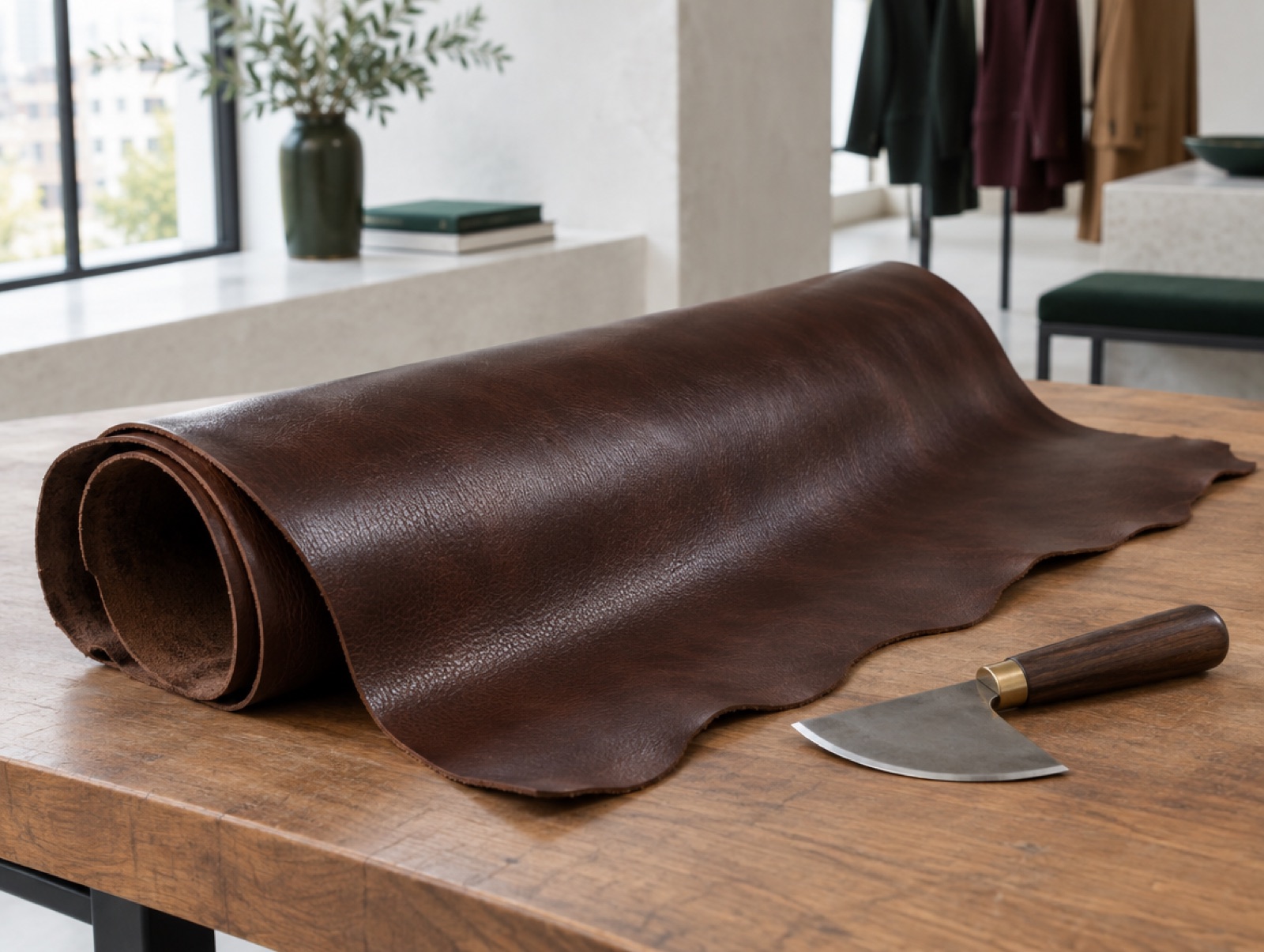
Grain, and the words that hide it
| Term | What it means |
|---|---|
| Full grain | The complete outer surface, unsanded. Strongest; shows the animal's natural marks; develops patina |
| Top grain | The outer surface, sanded to remove blemishes, then finished. Uniform, weaker, less patina |
| Corrected grain | Heavily sanded and embossed with an artificial grain pattern. Uniform and cheap |
| Split | The layer beneath the grain. Used for suede and linings; no grain surface at all |
| “Genuine leather” | A grade below top grain. Despite the wording, it is a low grade, not a guarantee |
Which animal
Calf is the standard for fine shoes: fine, tight grain, thin enough to shape closely. Box calf is chrome-tanned calf finished to a smooth close-grained surface: the archetypal dress-shoe leather. Cordovan is not calf at all but a dense membrane from a horse's hindquarters. Kid and other goat leathers are used for gloves, being thin and elastic. Peccary, from a wild South American pig, is the premium glove leather, recognisable by the distinctive triple-pore pattern.
For soles, vegetable-tanned cow shoulder or bend, which is dense and firm and wears rather than tearing.
Care, briefly
Leather fails by drying and by cracking at flex points, so the principle is to keep it conditioned and to let it dry slowly. Shoe trees inserted while the shoe is still warm hold the shape and absorb moisture; a day off between wearings lets the lining dry; polish feeds the surface and builds a protective layer.
The single most damaging thing is heat. A wet shoe placed near a radiator will dry too fast, the fibres will shrink unevenly, and the leather will crack. Newspaper and patience, or trees and a day.
Images
Licensing →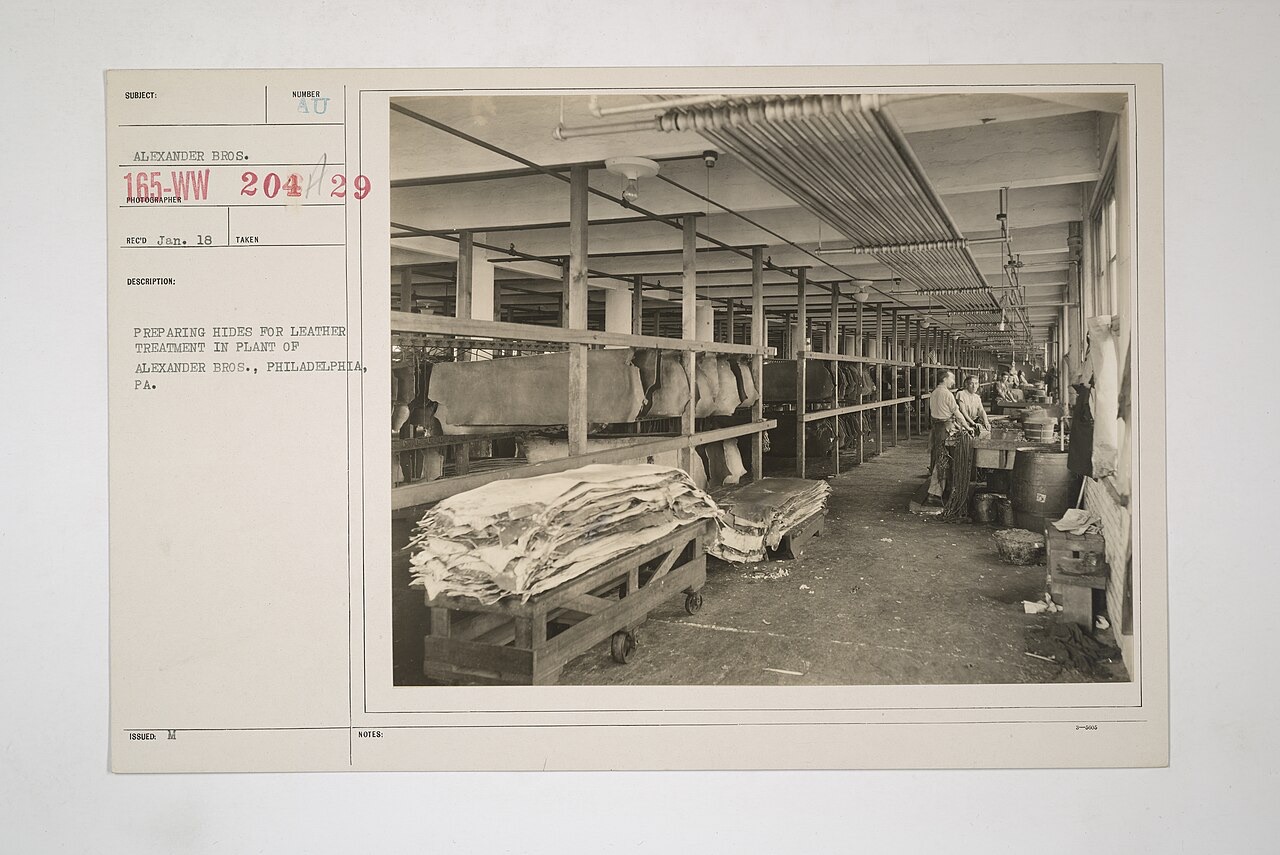
At a glance
Who works with it
Houses and mills on this site with a documented connection to Leather.
-
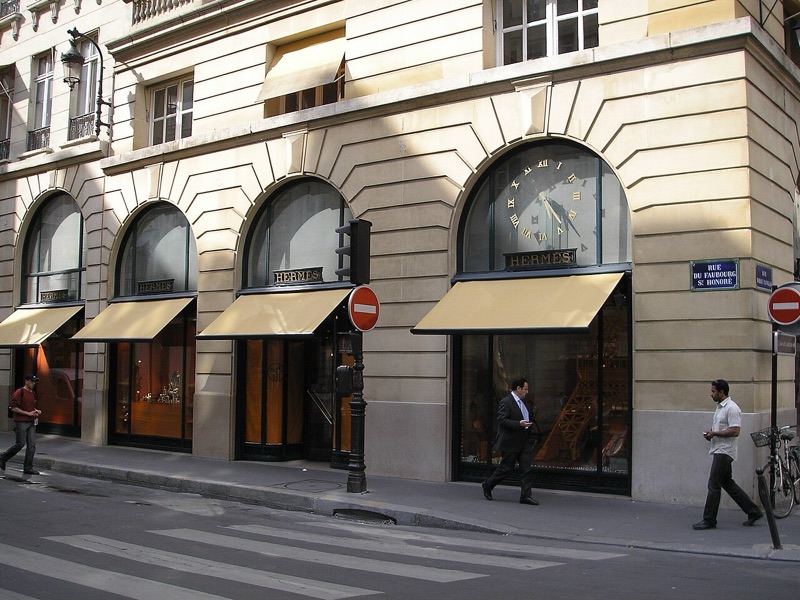 Hermès
Brand · Paris · 1837
Hermès
Brand · Paris · 1837Hermès is a family-controlled Paris luxury house, founded as a harness maker, known for leather bags, small goods and shoes, and it owns John Lobb Paris.
-
Horween Leather Company
Cloth maker · 1905
Horween is a Chicago tannery, working since 1905, famous for shell cordovan and Chromexcel leathers, and rare in being named on other brands' shoes.
-
J & FJ Baker
Cloth maker
J & FJ Baker is England's last oak-bark tannery, slowly tanning sole leather in Devon over about a year for custom and high-end shoes.
Cloth makers and merchants
All mills →-
Horween Leather Company
1905
Horween is a Chicago tannery, working since 1905, famous for shell cordovan and Chromexcel leathers, and rare in being named on other brands' shoes.
-
J & FJ Baker
J & FJ Baker is England's last oak-bark tannery, slowly tanning sole leather in Devon over about a year for custom and high-end shoes.
What it is used for
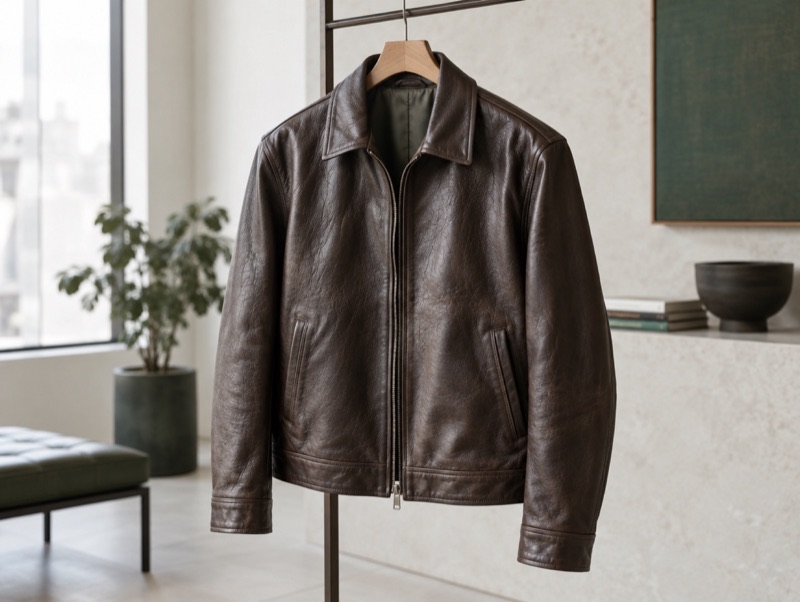 01
01
The leather jacket
A leather jacket's quality depends on the hide, how it was tanned and the cut, with most styles coming from military flight and motorcycle jackets.
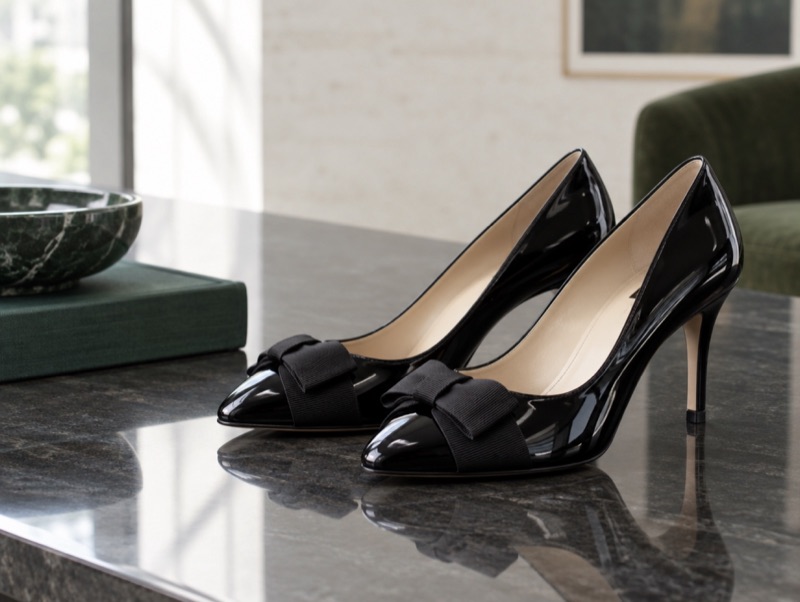 02
02
The evening pump
The evening pump is a low-cut patent leather slip-on with a flat ribbon bow, the most formal shoe there is and correct for white tie.
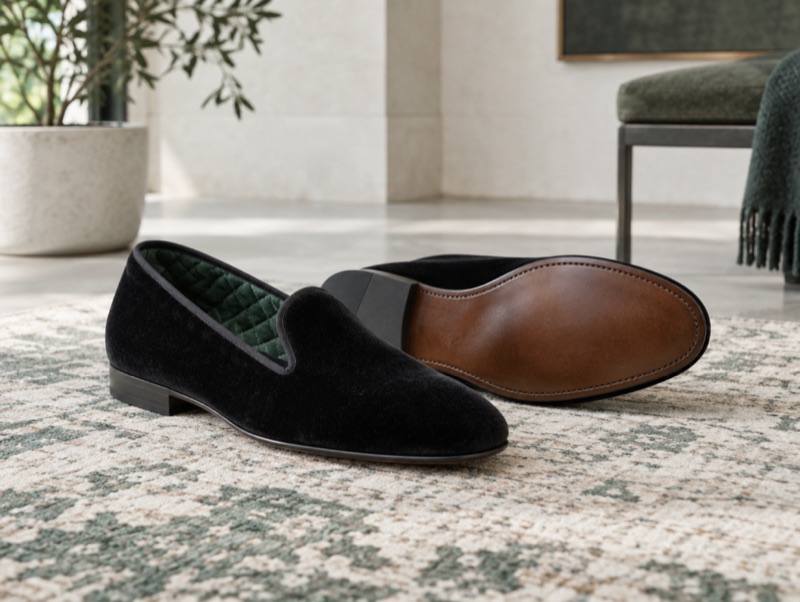 03
03
The velvet slipper
The velvet slipper, or Albert slipper, is a soft indoor shoe, often embroidered on the toe, that now turns up with informal evening dress.
Picture credits 7
- A rolled calf hide on a tanner's bench: Original art · Il Sartoriale · Il Sartoriale · Il Sartoriale original art
- Industries of War - Leather - PREPARING HIDES FOR LEATHER TREATMENT IN PLANT OF ALEXANDER BROS., Philadelphia, Pennsylvania: Photograph · Unknown author · Wikimedia Commons · Public domain
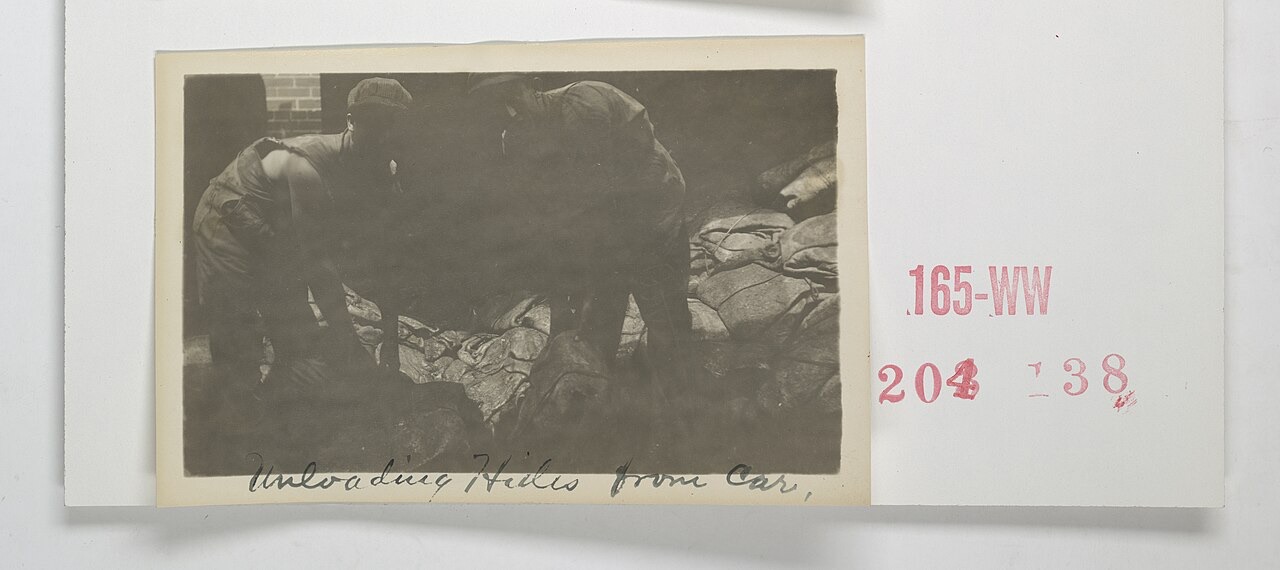
- Industries of War - Leather - Unloading hides from car: Photograph · Unknown author · Wikimedia Commons · Public domain
- Rue du Faubourg-Saint-Honoré, Paris May 2006: Photograph · Gryffindor · Wikimedia Commons · Public domain
- A brown horsehide leather jacket: Original art · Il Sartoriale · Il Sartoriale · Il Sartoriale original art
- Black patent evening pumps with grosgrain bows: Original art · Il Sartoriale · Il Sartoriale · Il Sartoriale original art
- Black velvet Albert slippers: Original art · Il Sartoriale · Il Sartoriale · Il Sartoriale original art