Accessory · Hand
Gloves
Good leather gloves are cut to follow how your hand moves and finely sewn, often lined in cashmere or silk, which explains their price.
A leather glove is cut from a stretched skin in a way that accounts for the hand's movement, then sewn with fine seams and often lined in cashmere or silk. Peccary is the premium leather; lamb, deerskin and hair sheep are the common ones. Naples and Grenoble are the traditional centres.
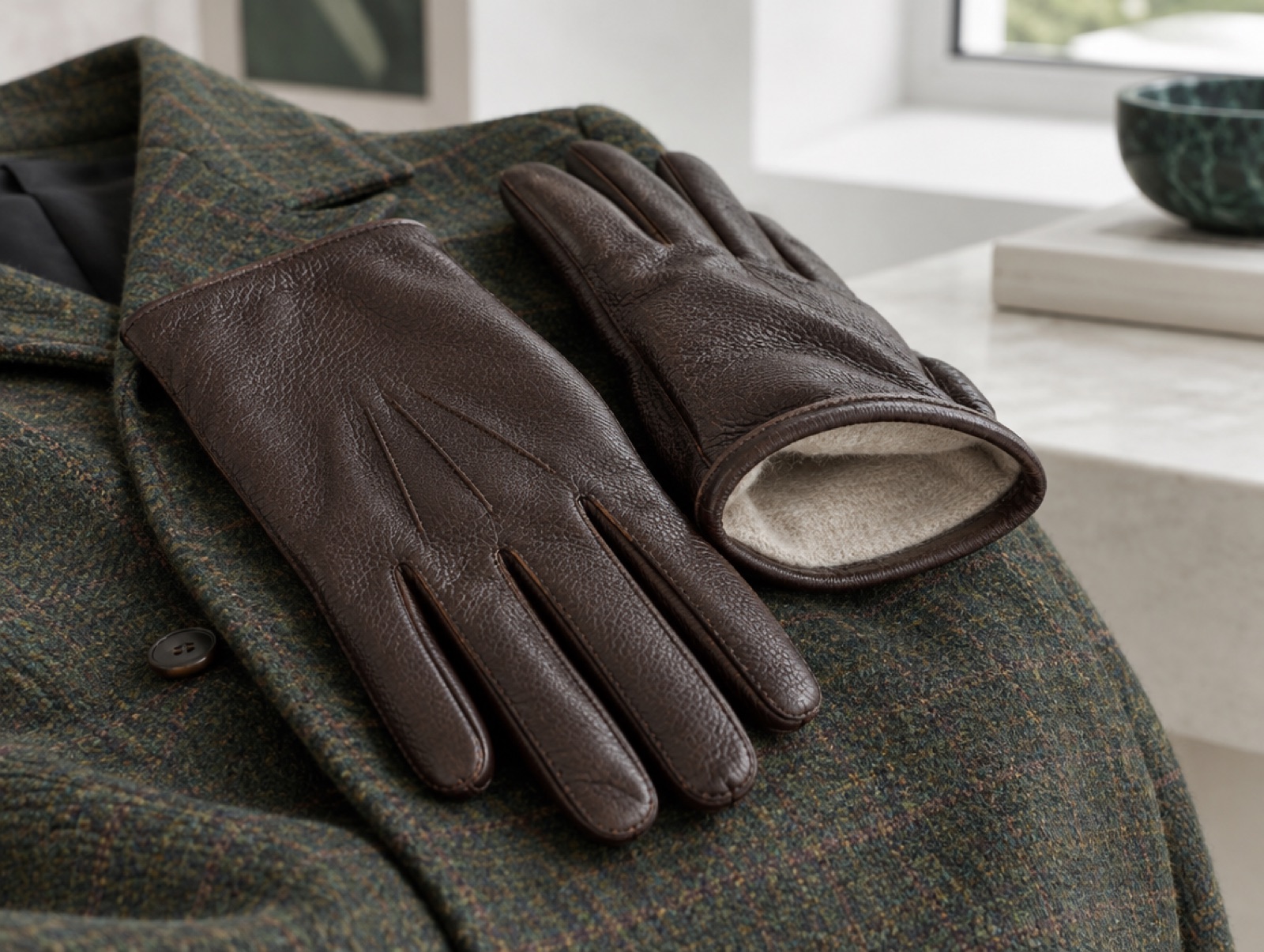
Why glove leather is different
A glove has to stretch in one direction and hold in another. The skin is therefore stretched and marked before cutting (table cutting) so that the stretch runs across the hand rather than along the fingers. Machine-cut gloves from a die cannot make that distinction and fit worse.
Peccary, from a wild South American pig, is the most prized glove leather: thin, exceptionally strong, and identifiable by the distinctive pattern of pores in groups of three. Lamb is soft and common; deerskin is robust and stretchy; hair sheep sits between.
Where they are made
Naples has made gloves for centuries and a number of small workshops still cut and sew by hand. Grenoble in France was the other historic centre. In both cases the trade has contracted to a handful of businesses, and the skill, particularly table cutting, is genuinely scarce.
Fit and break-in
A leather glove should be snug enough that there is no loose leather at the fingertips, and it will stretch across the palm in the first few wearings. A glove bought comfortable will become loose.
Unlined gloves fit closest and are the traditional dress form; cashmere or silk lining adds warmth and bulk. Wet leather gloves should be dried flat and away from heat, and a little leather conditioner once a season keeps them from hardening.
At a glance
How it is made
All techniques →
Picture credits 2
- Peccary leather gloves on a tweed coat: Original art · Il Sartoriale · Il Sartoriale · Il Sartoriale original art
- Hides drying in a tannery loft: Original art · Il Sartoriale · Il Sartoriale · Il Sartoriale original art