Accessoire · Care
Shoe trees
A shoe tree is a close-fitting cedar insert that keeps a shoe in shape and soaks up foot moisture, making it the cheapest way to extend a good shoe's life.
A shoe tree holds a shoe's shape as it dries and absorbs the moisture a foot leaves behind. Cedar is used because it absorbs moisture and resists mould. Trees should be inserted when the shoe is still warm, and the fit should be close: a tree that is too small does nothing.
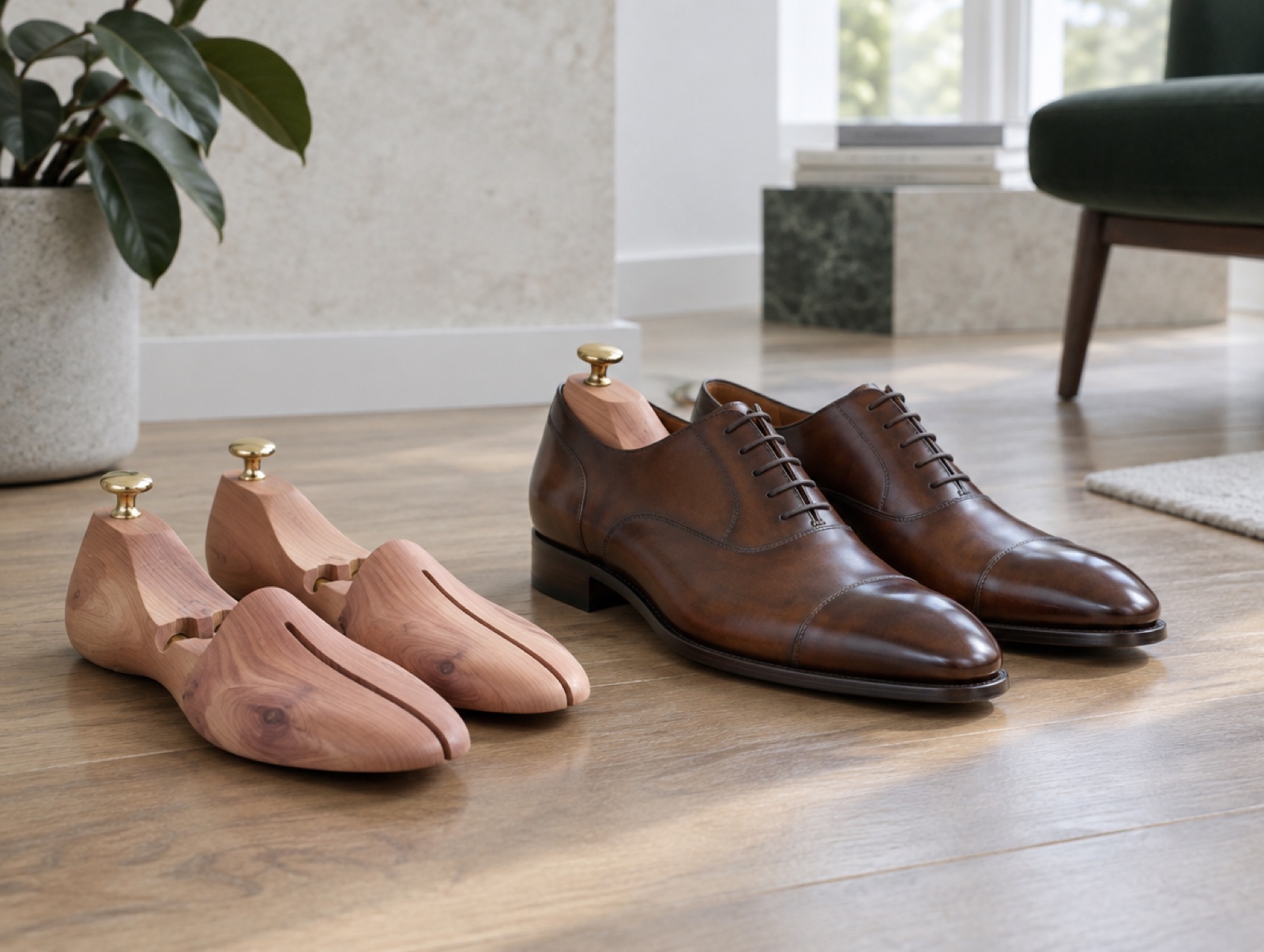
What they actually do
A foot puts out a surprising amount of moisture into a shoe. As leather dries it shrinks and sets in whatever shape it is in, which, without a tree, is curled up with a deep crease across the vamp. That crease eventually cracks.
A tree holds the shoe flat and stretched while it dries and draws moisture out. Unfinished cedar does the second job best; a lacquered or plastic tree does the first only.
What to buy
Unfinished cedar, in a full-heeled form matched approximately to the shoe's shape, one pair per pair of good shoes. Lasted trees made for a specific model are better still and cost considerably more.
Spring-loaded trees with a single bar are better than nothing and noticeably worse than a full tree: they hold the length but do nothing for the shape of the vamp, which is where creases form.
Using them properly
- Insert immediately after taking the shoes off, while they are still warm and damp.
- The tree should fill the shoe: a full-heeled tree matched to the last, not a generic spring-loaded one.
- Leave shoes at least a day between wearings. This does more for their lifespan than polishing does.
- Sand a cedar tree lightly when it stops smelling of cedar; it will absorb again.
In één oogopslag
Fotorechten 1
- Cedar shoe trees beside brown oxfords: Original art · Il Sartoriale · Il Sartoriale · Il Sartoriale original art