Merk · Italy
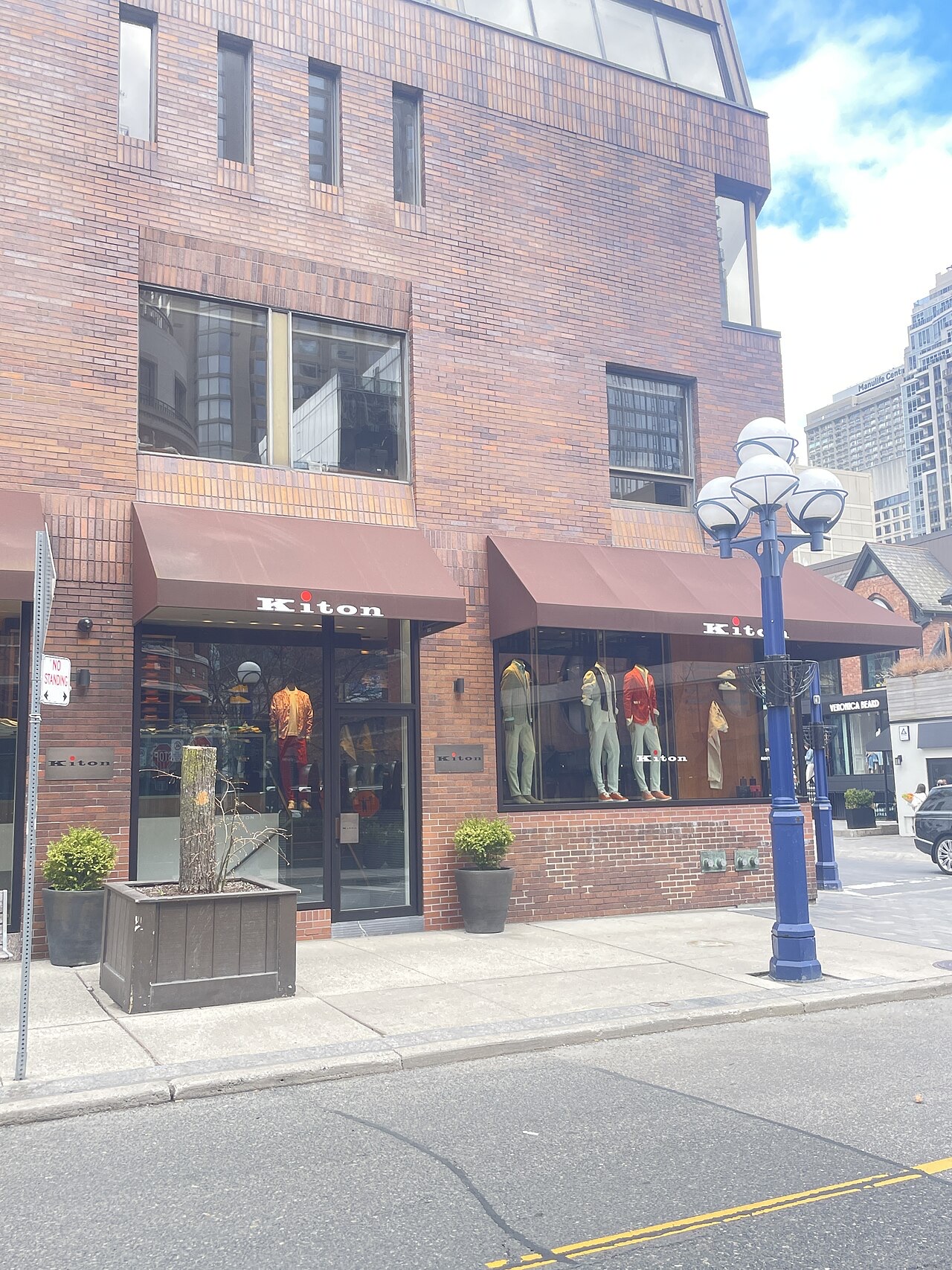
Kiton
Zei KEE-ton
Ciro Paone's answer to the question of whether Neapolitan handwork could be industrialised without being ruined.
Kiton was founded in 1968 by Ciro Paone, a cloth merchant, on the premise that Neapolitan hand tailoring could be produced at scale by employing enough trained tailors. It makes at Arzano outside Naples, owns the Carlo Barbera mill, runs its own tailoring school, and sits at the very top of the ready-to-wear market.
The premise
Ciro Paone came from a family of cloth merchants, and the idea behind Kiton was a merchant's: buy the best cloth, employ the best tailors, and refuse to compromise on either. What made it unusual was doing that at a scale of hundreds of tailors rather than a workshop of five.
The company reports employing several hundred tailors at Arzano and describes a jacket as taking upwards of twenty hours of hand work. Figures of this kind come from the company and are not independently audited; this site records them as the company's own account.
Vertical integration
Kiton owns the Carlo Barbera mill in Biella, which gives it a controlled cloth supply, an arrangement almost no other clothing brand has. It also runs a school at Arzano training young tailors, which addresses the constraint every house in this trade faces: there are not enough makers.
Both are substantive rather than promotional. A brand that owns its mill and trains its own tailors is making a different kind of bet from one that buys finished garments.
The lines
The main Kiton range is hand-finished Neapolitan tailoring at the top of the ready-to-wear market. The K-50 designation refers to garments made by the house's most senior tailors, produced in very limited numbers at a considerable premium.
The house also makes bespoke, shirts, knitwear, accessories and outerwear, and works the rarest fibres: vicuña among them.
Kiton or Brioni
The comparison is unavoidable and the answer is stylistic. Kiton is Neapolitan: softer shoulder, lighter chest, a jacket that moves. Brioni is Roman: cleaner, more structured, a more formal line. Both are made to a very high standard and both are extremely expensive.
The ownership difference is now the sharper one. Kiton remains family-owned; Brioni belongs to Kering.
Sizing and fit
Cut in the Neapolitan manner: close through the chest, high armhole, short in the body and the sleeve by English or American standards. Someone used to Anglo-American sizing will usually need a size up and still find the jacket short.
The shoulder is the part to judge, since it cannot be altered. Everything else on a Kiton jacket can be adjusted, and the house's own alterations service is set up to do it.
Industrialised handwork, and whether that is a contradiction
Ciro Paone's proposition was that the Neapolitan hand-tailored coat could be made in quantity without becoming a factory coat, and the way it was done is the interesting part: not by mechanising the handwork but by employing a great many tailors in one building and training more, including through the house's own school.
The result genuinely is hand-tailoring at volume. The reasonable criticism is not about the making but about what surrounds it: the price of the most conspicuous cloths, and a house identity that has drifted toward display in a city whose tailoring tradition is founded on the opposite.
For a buyer the question is narrower than the argument usually gets: at this price, is a Kiton coat better made than the alternatives? On construction, generally yes. On whether it suits you, that is a separate question about cut.
In één oogopslag
Wat het kost
Prijzen op de gehele site →Dit zijn geen offertes. De onderstaande prijzen zijn de meest recente cijfers die wij aan een bron konden toeschrijven, weergegeven in de valuta waarin ze zijn gepubliceerd.
| Wat | Service | Prijs | Waargenomen |
|---|---|---|---|
| Cashmere sweaterAn indicative band, not a quotation. Bespoke entry prices normally exclude tax and cloth beyond the house bunch, and houses raise them without announcement. | Ready To Wear | €1,500–3,000 | September 2026 |
| Ready-to-wear suitAn indicative band, not a quotation. Bespoke entry prices normally exclude tax and cloth beyond the house bunch, and houses raise them without announcement. | Ready To Wear | €7,000–12,000 | September 2026 |
| Vicuña overcoatVicuña outerwear is made in very small numbers and priced per piece. | Ready To Wear | €25,000–50,000 | September 2026 |
Vergeleken met
Alle vergelijkingen →Bronnen
- Company information , Kiton.
Waar een cijfer betwist is of een huis het niet heeft gepubliceerd, zegt de pagina dat, in plaats van een getal te kiezen.
Fotorechten 1
- IMG Kiton Toronto: Photograph · Shanmeichen · Wikimedia Commons · CC BY 4.0