Garment · Outerwear
The overcoat
An overcoat is a long coat worn over a suit jacket, and it needs to be roomy, long and heavy enough to hang properly.
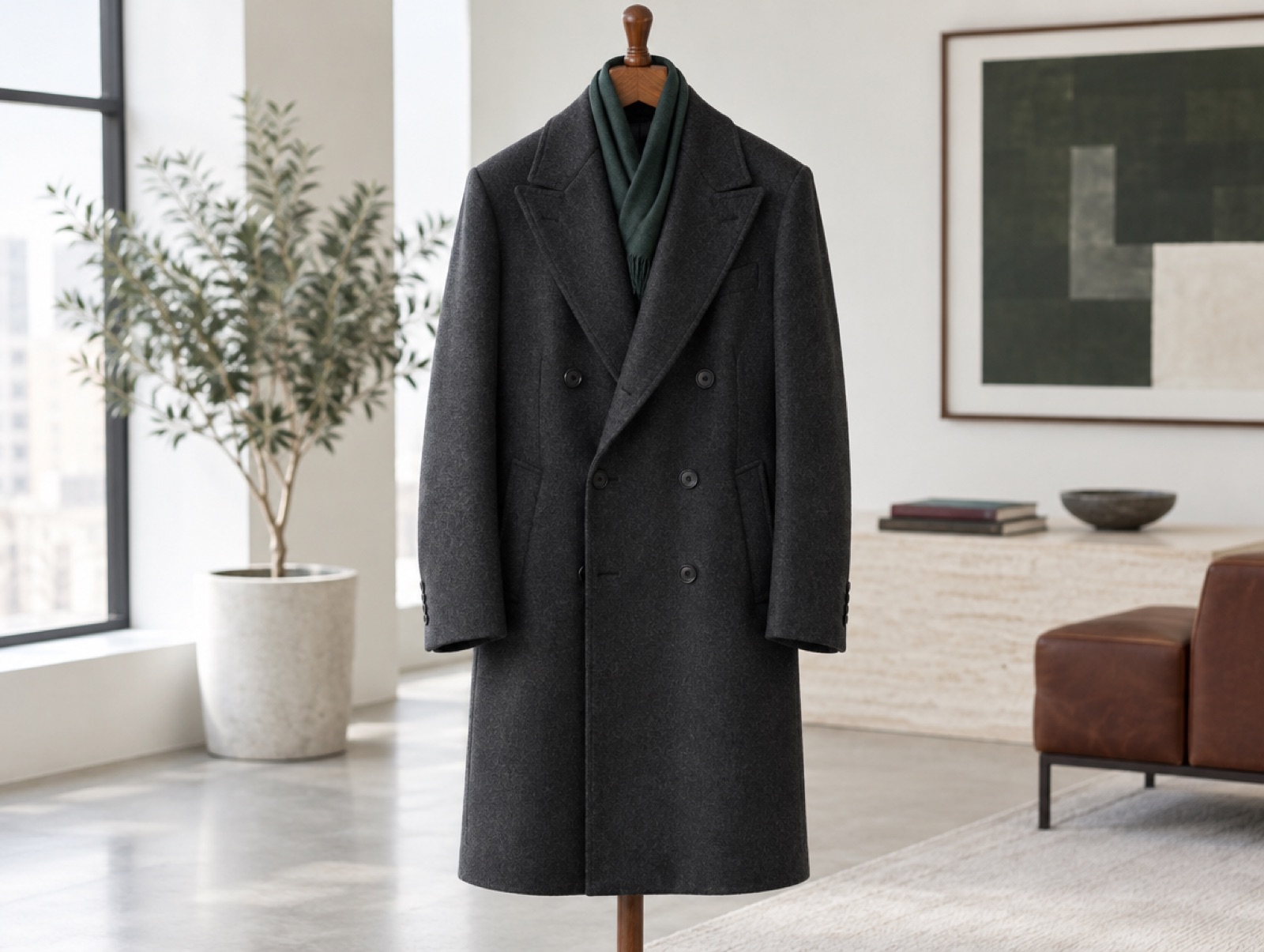
An overcoat is a long coat worn over tailoring. It must be cut large enough to go over a jacket without straining, long enough to cover the jacket's skirt, and in cloth heavy enough to hang. The distinction between an overcoat and a topcoat is weight: a topcoat is lighter, for milder weather.
The proportions
An overcoat has to accommodate a jacket, which means more room through the chest, a larger armhole and a longer sleeve than a jacket of the same nominal size. A coat that fits perfectly over a shirt does not fit over a suit, and this is the most common error in buying one.
Length should cover the jacket entirely; a jacket hem showing below a coat is the visual equivalent of a shirt showing under a waistcoat. Below the knee is the traditional position and it is also the one that looks best on most people.
The main patterns
| Coat | Character |
|---|---|
| Chesterfield | Formal, single or double breasted, often with a velvet collar; the town coat |
| Polo coat | Double breasted, belted, patch pockets, traditionally camel hair; from polo spectators' wraps |
| Ulster | Heavy, double breasted, large collar and lapel; a travelling coat |
| Covert coat | Short, fawn-coloured covert cloth, rows of stitching at hem and cuff; from riding |
| Guards coat | Double breasted, half belt at the back, military origin |
| Raglan | Sleeve cut in one piece up to the collar; roomy, easy over a jacket |
Cloth
Weight is the point. A coat cloth below about 20 ounces will not hang properly, will flap in wind and will not keep you warm. Traditional coatings run from 20 to 34 ounces, and the heavy end is genuinely warm without any technical assistance.
Cashmere overcoats are warm, light and beautiful, and they wear out. A cashmere coat is a delicate object that will pill at the collar and the sleeve where a bag strap rubs. A wool-cashmere blend is the sensible purchase; pure cashmere is a luxury with a lifespan.
At a glance
Picture credits 1
- A charcoal double-breasted overcoat: Original art · Il Sartoriale · Il Sartoriale · Il Sartoriale original art