Vêtement · Footwear
The velvet slipper
The velvet slipper, or Albert slipper, is a soft indoor shoe, often embroidered on the toe, that now turns up with informal evening dress.
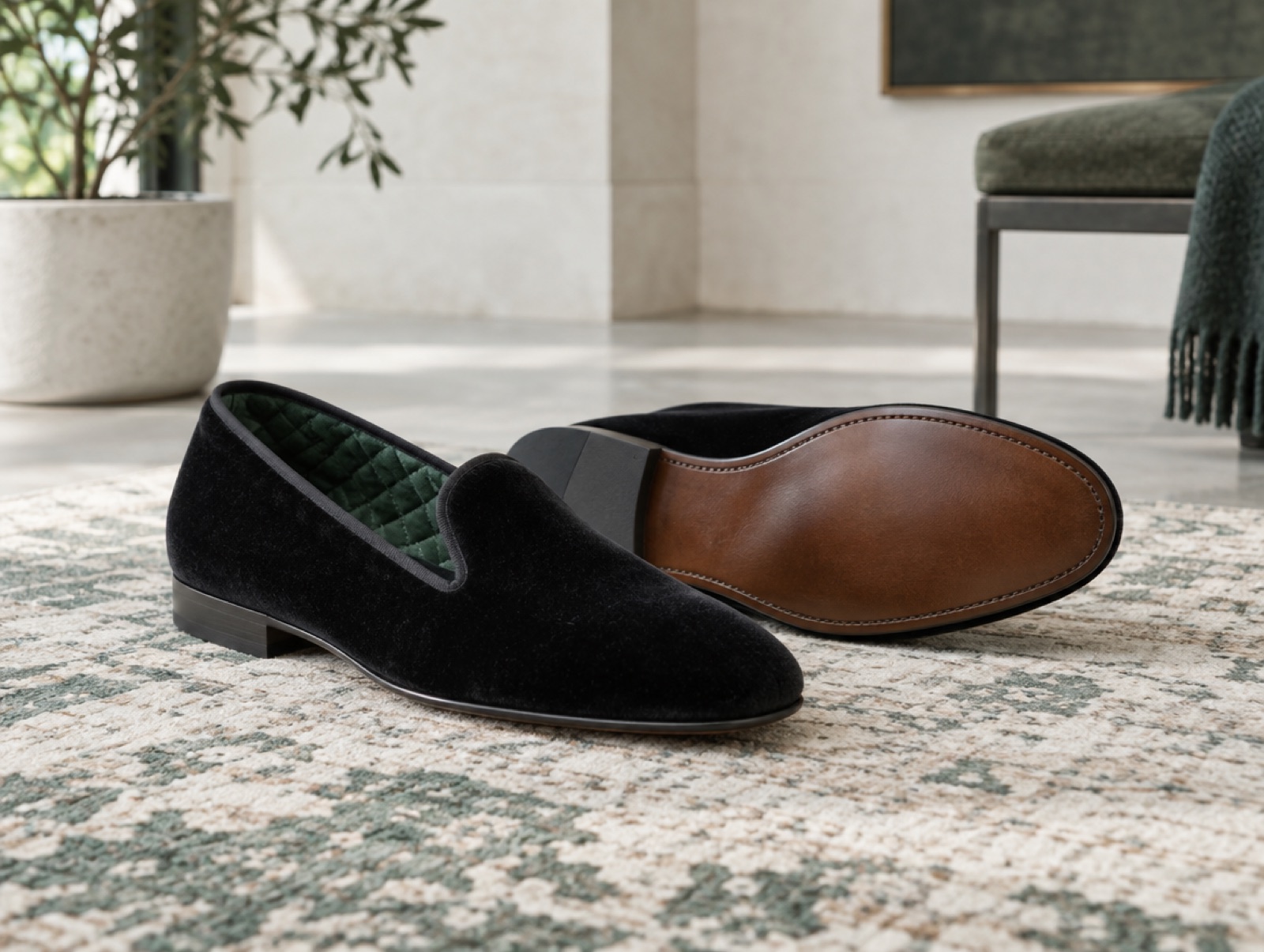
The velvet slipper, often called an Albert slipper, after Prince Albert, is a soft velvet indoor shoe with a quilted lining and frequently a hand-embroidered motif or monogram on the vamp. It began as domestic footwear and now appears at the informal end of evening dress.
Indoors, then out
Like the smoking jacket, the velvet slipper was a garment for the house: soft-soled, comfortable, and never intended to touch a pavement. It escaped indoors sometime in the twentieth century and is now worn with black tie by people who want to signal that they are not taking it entirely seriously.
Traditional makers still produce them with a thin leather sole and a hand-embroidered crest, which is a genuine craft and considerably more work than the object suggests.
Wearing them out of the house
The soles are thin and the velvet marks, so a pair worn on pavements has a short life. They are worn to informal evening occasions where the walking is from a car to a door.
Worn with black tie they read as a deliberate softening of the rules, which is what they are.
The embroidery
The traditional versions carry a hand-embroidered crest, monogram or motif worked in metal thread on the vamp. It is genuinely skilled work (goldwork embroidery is its own trade), and it is the reason a slipper can cost as much as a welted shoe.
Machine-embroidered versions exist and are considerably cheaper. The difference is visible in the density and the slight irregularity of the hand-worked thread.
En un coup d'œil
Crédits photographiques 1
- Black velvet Albert slippers: Original art · Il Sartoriale · Il Sartoriale · Il Sartoriale original art