Peça · Tailoring
The waistcoat
A waistcoat is a sleeveless layer worn between shirt and jacket, now optional, but it has rules about length and buttoning worth knowing.
A waistcoat is a sleeveless garment worn over the shirt and under the jacket. It was standard until central heating made it unnecessary, and it survives in three-piece suits, in formal dress, and as an odd garment. It has real rules about length and buttoning that are worth knowing.
Length is everything
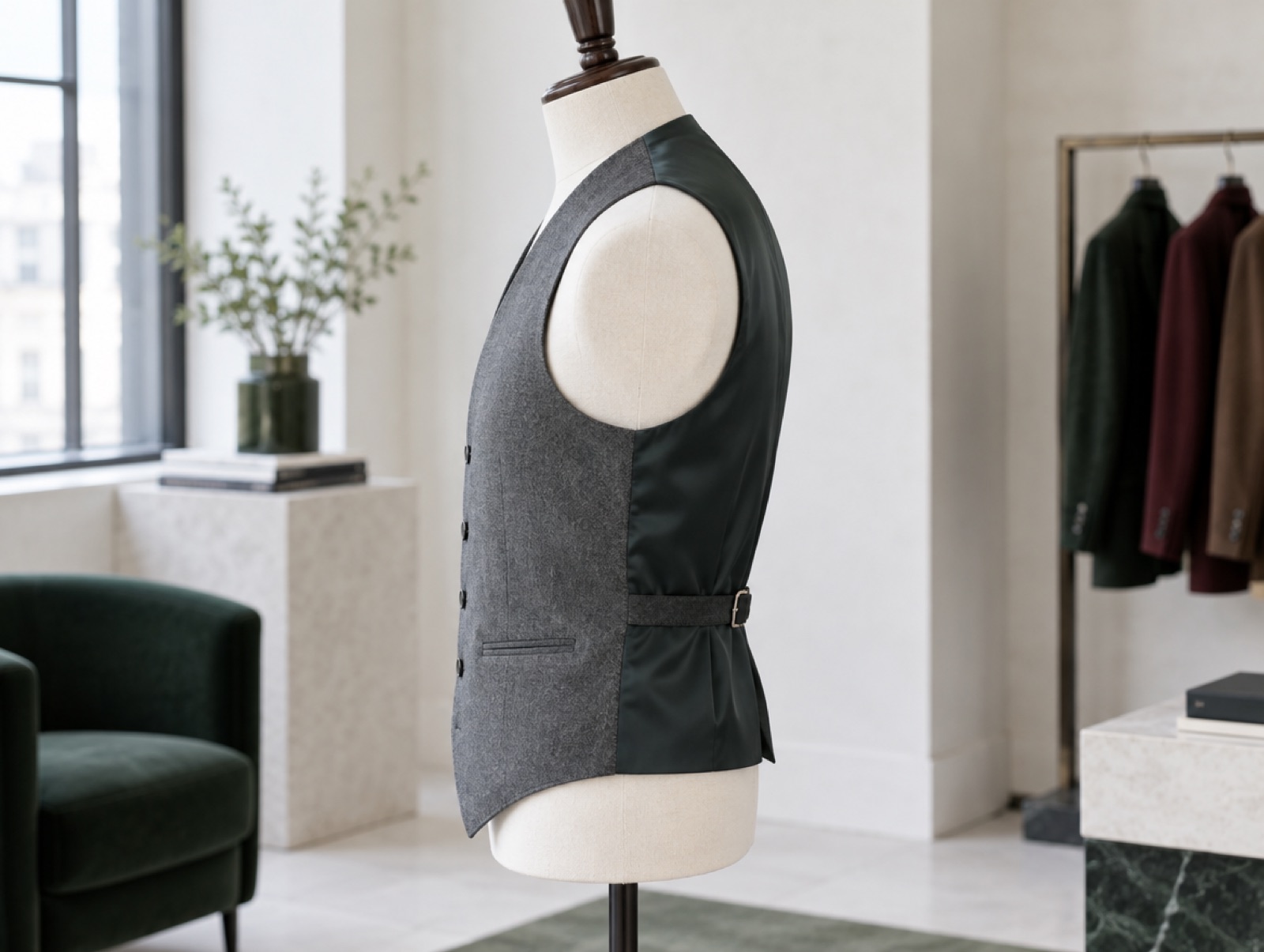
A waistcoat must be long enough that no shirt or trouser waistband is visible between its bottom and the trouser. This is not a stylistic preference; a waistcoat that shows a strip of shirt at the waist has failed at its only structural job. This is also why waistcoats and low-rise trousers are incompatible. The waistcoat was designed for a trouser worn at the natural waist, and it cannot reach a trouser worn at the hip without becoming absurdly long.
The bottom button
The bottom button of a single-breasted waistcoat is left undone. The convention is usually attributed to Edward VII, who is said to have left his open because he had grown too large to fasten it, a story that is repeated everywhere and documented nowhere.
There is a better structural explanation available: waistcoats are cut with a point at the front, and leaving the last button open lets the garment sit properly when the wearer sits down. Whichever is true, the convention is universal, and most waistcoats are now cut assuming it.
The odd waistcoat
A waistcoat in a different cloth from the suit (tweed with flannel, linen with cotton) is a legitimate and old idea, and it works when it reads as deliberate. The failure mode is a waistcoat that nearly matches, which looks like a three-piece suit that has gone wrong.
Backless waistcoats, with the back in lining and an adjuster, are a formal-wear device to reduce bulk under a tailcoat. In an ordinary suit they are a cost saving and they look it when the jacket comes off.
Imagens
Licenciamento →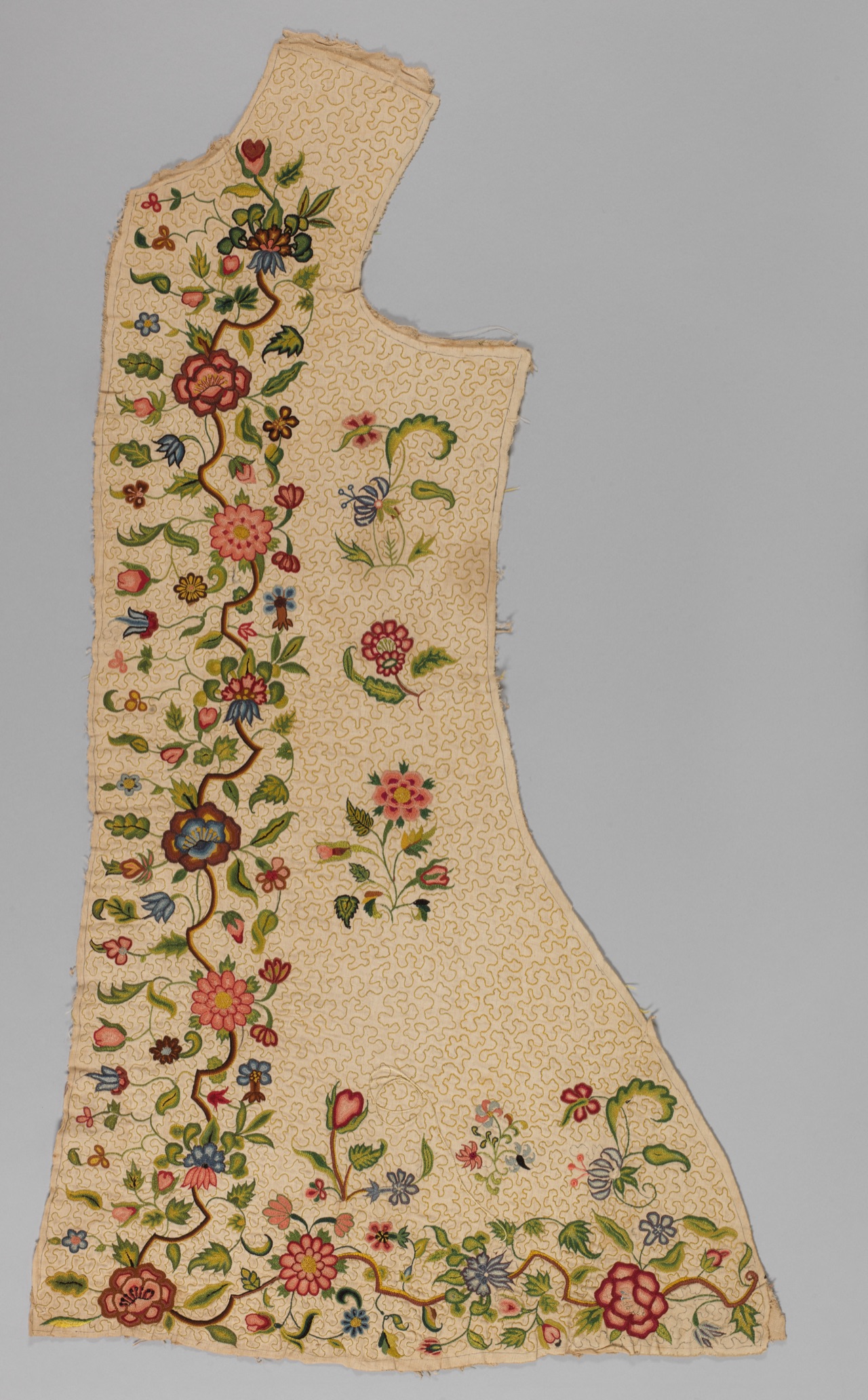
Em síntese
Como é feito
Todas as técnicas →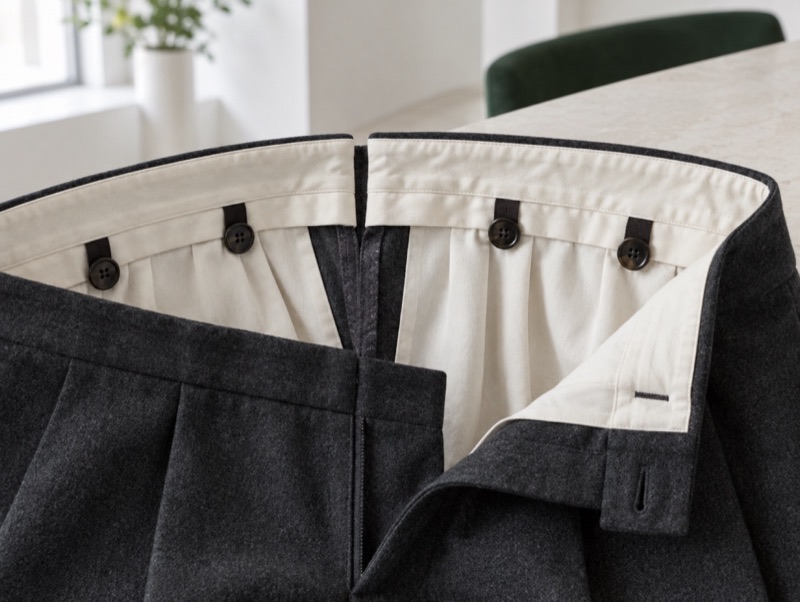
Créditos fotográficos 3
- A flannel waistcoat with a silk back: Original art · Il Sartoriale · Il Sartoriale · Il Sartoriale original art
- Panels for a waistcoat: Museum object · Unrecorded · The Metropolitan Museum of Art · CC0 1.0 (Public Domain Dedication)
- The inside of a bespoke trouser waistband: Original art · Il Sartoriale · Il Sartoriale · Il Sartoriale original art