Historical figure · People
Edward VII
The prince who asked for a shorter evening coat, and accidentally created black tie.
As Prince of Wales, Edward commissioned from Henry Poole in 1865 a short evening coat to wear at Sandringham instead of a tailcoat. According to Poole, the order is recorded in its ledgers, and the garment is usually described as the ancestor of the dinner jacket and the American tuxedo. He is also credited with several dress conventions on weaker evidence.
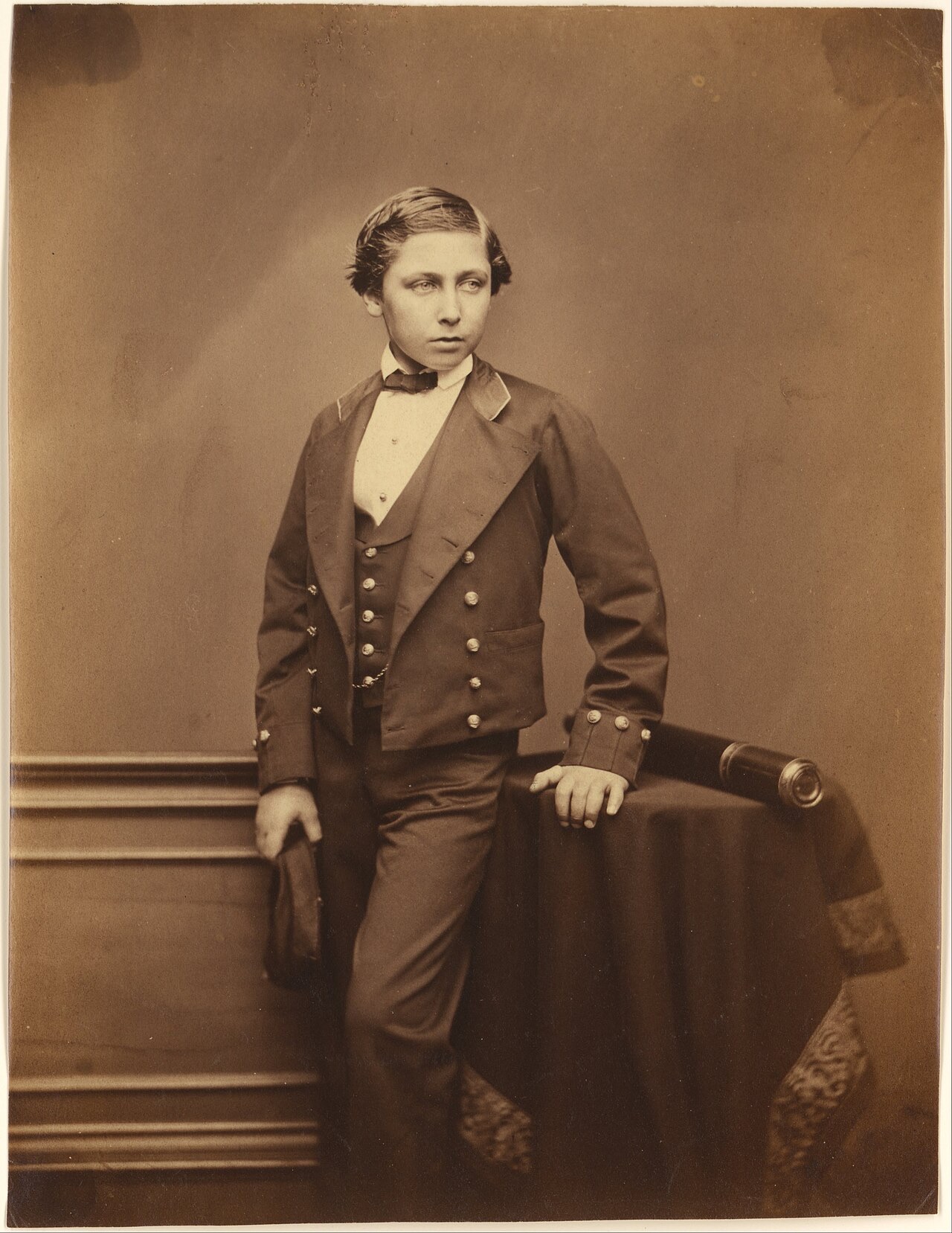
The documented contribution
According to Henry Poole, the 1865 order is recorded in its ledgers, which gives this origin story more behind it than most. The garment was a smoking jacket in form, made in a formal cloth, intended for private evening use.
It is usually said to have reached America through a guest and the Tuxedo Park club, which is why Americans use a different word for the same garment.
The attributions that are not documented
Leaving the bottom waistcoat button undone, attributed to his having grown too large to fasten it, is repeated universally and evidenced nowhere. The same applies to several other conventions credited to him.
The convention itself is real and near-universal. The story about its origin is a story.
Why so much is attributed to him
Edward was Prince of Wales for nearly sixty years, was photographed and reported on constantly, and was genuinely interested in clothes. Anything he was seen doing was copied, and anything copied and later unexplained tended to be attributed back to him. The result is a large body of confidently repeated origin stories with a single documented example among them. This site's approach is to name the documented one, record the rest as attributions, and not pretend the difference does not exist.
At a glance
Sources
- Henry Poole - Savile Row Tailors - Bespoke tailoring - Suit makers , henrypoole.com. Consulted in the November 2026 fact-check.
Where a figure is disputed or a house has not published it, the page says so rather than choosing a number.
Picture credits 1
- [The Prince of Wales (Edward VII)]: Photograph · John Jabez Edwin Mayall · Wikimedia Commons · Public domain