Guide · Guides
Where to have shoes made
Bespoke shoes, bought for fit rather than finish, are still made in London, Tokyo, Florence and Vienna, and a first pair takes up to a year.
Bespoke shoemaking survives in a small number of places. London and Tokyo are the centres of the English method; Italy has Florence and a handful of southern workshops; the Austrian and Hungarian tradition survives through Vienna, Budapest and Romania. A first pair takes six months to a year and costs several thousand.
What bespoke shoemaking actually gives you
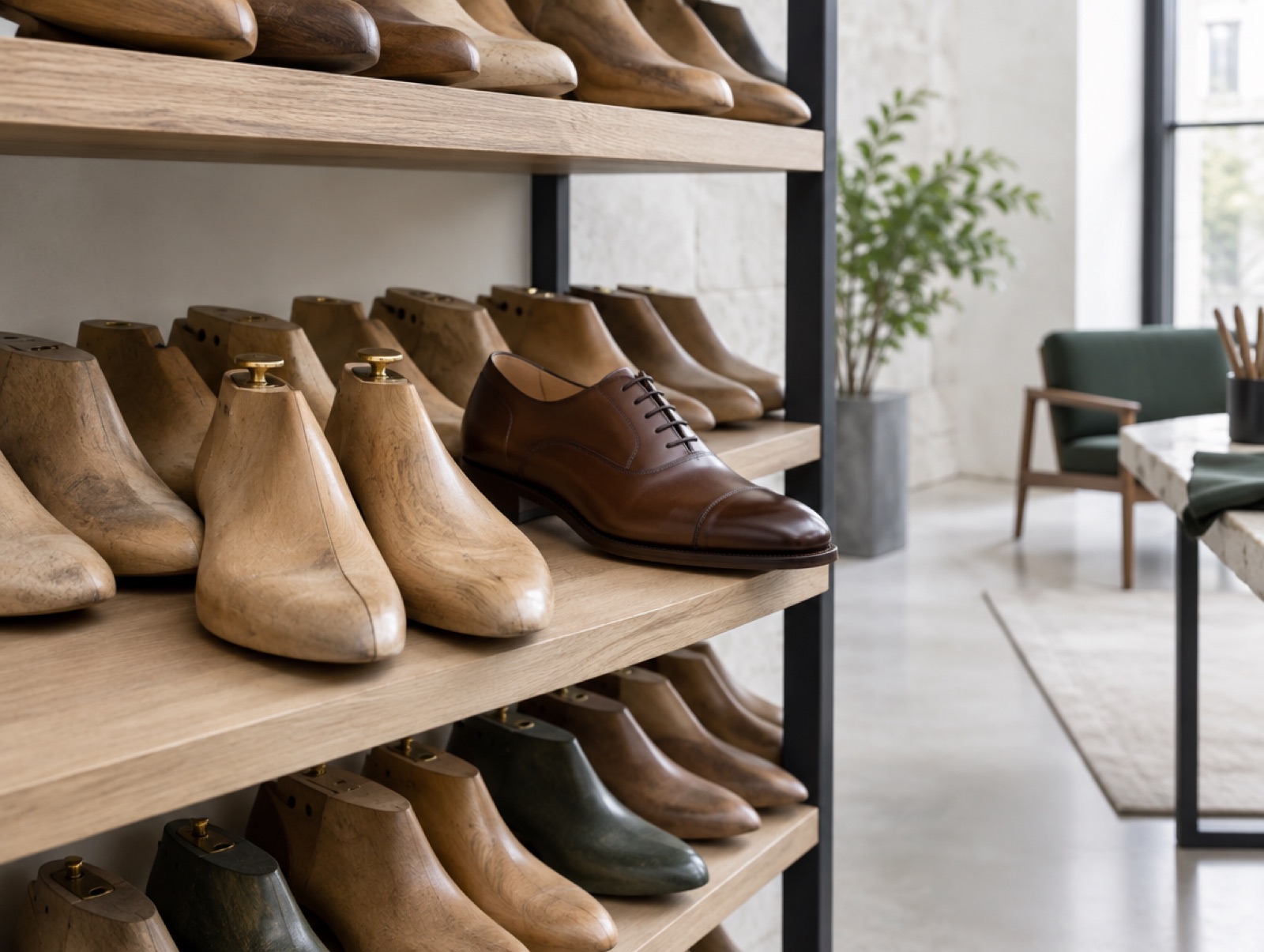
A last carved for both of your feet, which differ from each other, corrected after a trial shoe. For a foot that ready-to-wear cannot accommodate (very wide, very narrow, a high instep, a significant difference between left and right), nothing else solves the problem.
It also gives hand-welted construction, which has no glued canvas rib to fail and can be resoled as many times as the upper survives. The economics are still poor against good ready-to-wear; the fit is the argument.
Where
- London: John Lobb of St James's, George Cleverley, Gaziano & Girling. The English method at its source, and the highest prices.
- Tokyo: Yohei Fukuda, Hiro Yanagimachi and others. English method, executed with a level of finish the English trade does not attempt.
- Florence: Stefano Bemer. Italian proportions, hand welted, and a school attached.
- Central Europe: Saint Crispin's (Austrian method, made in Romania) and László Vass in Budapest. Firm, robust construction; Vass at notably lower prices.
- Campania: Antonio Meccariello, carving his own lasts, at a fraction of the London price for comparable construction.
The process
Measurement and observation of both feet standing and walking; a last carved in wood; a trial shoe made and fitted; the last adjusted; then the finished pair, clicked, closed, lasted, welted, soled and finished by several specialists.
Six months to a year for a first pair is normal, and considerably less for subsequent pairs on the same last. The last is kept by the maker.
Whether you need it
If a good ready-to-wear last fits your foot well, bespoke buys you refinement rather than function, and there is no shame in saying that a Northampton or Mallorcan shoe at a fifth of the price is the better purchase.
If it does not, and a substantial minority of feet are not served by any stock last, bespoke is the only answer there is.
Images
Licensing →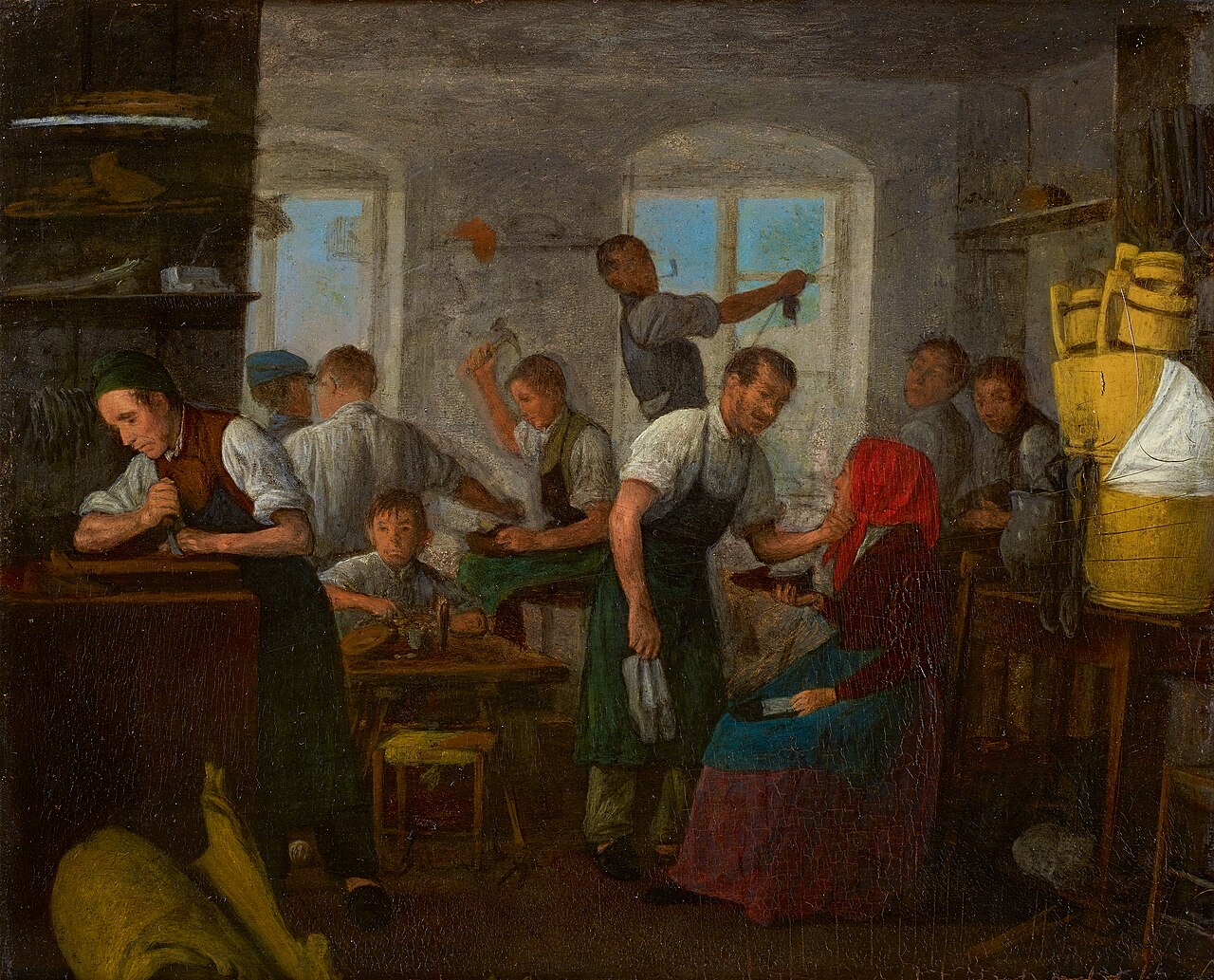
At a glance
Picture credits 2
- Shelves of lasts with a finished shoe: Original art · Il Sartoriale · Il Sartoriale · Il Sartoriale original art
- Schusterwerkstatt Shoemaker Workshop: Historical view · Johann Michael Neder · Wikimedia Commons · Public domain