Guide · Guides
Bespoke tailoring in London: Savile Row house by house
Savile Row's tailoring houses charge broadly similar prices but cut very different jackets, from Anderson & Sheppard's relaxed draped look to Huntsman's leaner, firmer cut.
Savile Row's houses are not interchangeable. Anderson & Sheppard drapes; Huntsman cuts lean and structured; Henry Poole sits between them; Edward Sexton and Chittleborough & Morgan cut the most assertive shapes in London. Prices across the street are broadly comparable, so the decision is aesthetic.
The main division
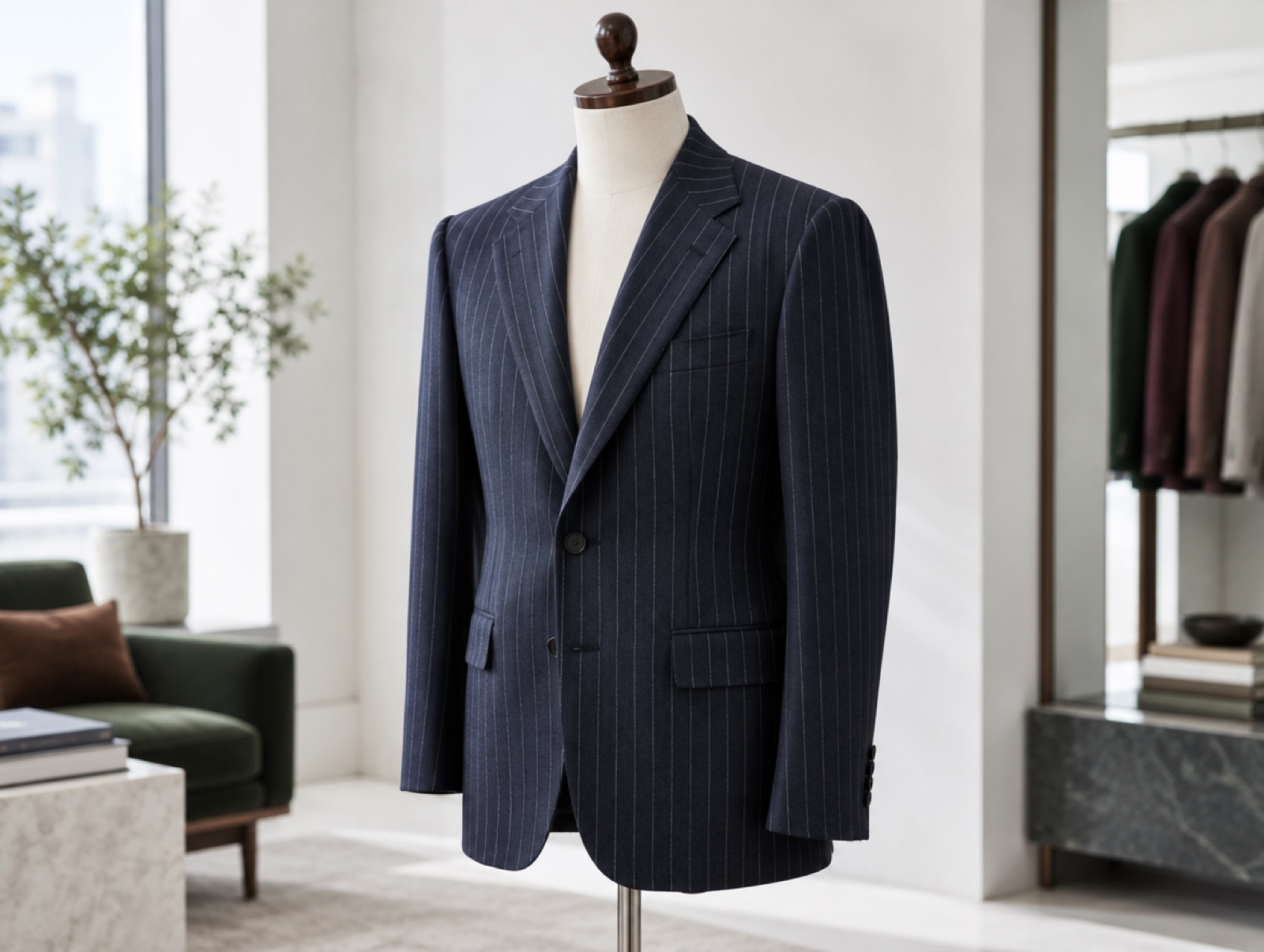
Drape against clean-cut. A draped coat carries extra cloth over the chest and blades so it hangs softly and moves with the wearer; it flatters a slim figure by suggesting a larger chest and is markedly more comfortable. A clean-cut coat is close to the body, lean through the chest, with a marked waist; it is sharper and less forgiving.
Anderson & Sheppard and Steven Hitchcock are the drape houses. Huntsman and Richard Anderson are the clean-cut ones. Henry Poole, Gieves & Hawkes and Dege & Skinner sit in between with a more conventional English coat.
The assertive end
Edward Sexton and Chittleborough & Morgan both descend from Nutters of Savile Row and both cut silhouettes designed to be noticed: wide peaked lapels, strongly built shoulders, sharply suppressed waists. They are excellent and they are not neutral, and a customer should be certain before committing.
What a commission involves
- Two to four fittings and four to six months for a first commission.
- A deposit at order, and no final figure until the cloth is chosen.
- A pattern drafted for you and kept by the house.
- The coat made by a coatmaker and the trousers by a trouser maker, generally off the premises.
- Prices at the top of the international range: Mayfair overheads and around fifty hours of London labour.
Choosing
Every house on the street will tell you it uses a full canvas, hand-padded lapels and hand-set sleeves, because every house does. Asking about construction will not distinguish them.
Look at finished coats instead. Most houses will show you work in progress and garments awaiting collection, and twenty minutes of that tells you more than any amount of reading, including this page.
Images
Licensing →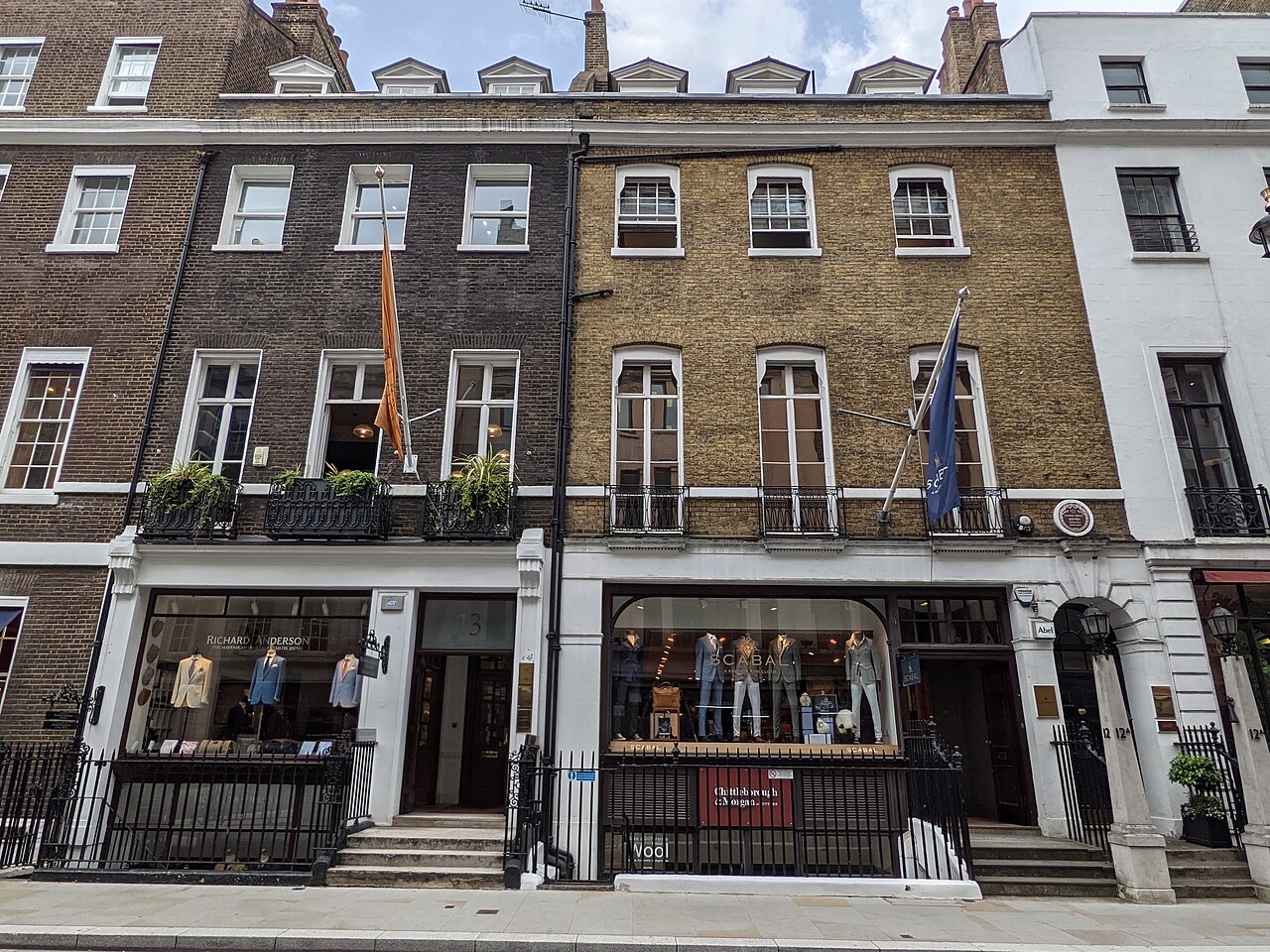
At a glance
Picture credits 2
- A structured chalk-stripe coat on a dummy: Original art · Il Sartoriale · Il Sartoriale · Il Sartoriale original art
- 12, 12A And 13, Savile Row W1: Photograph · Magnus Manske · Wikimedia Commons · CC BY-SA 3.0