Guide · Guides
What “Made in Italy” actually means
A Made in Italy label only means the last major manufacturing step happened there, so the cloth, design and cutting may have come from elsewhere.
Country-of-origin marking records where a product last underwent substantial transformation. Under EU customs rules a garment generally takes its origin from where it was made up, meaning the operations after cutting, so the cloth, the design and the cutting can all come from elsewhere. The same logic applies to every other country of origin.
What the rule is
Origin marking in the EU and elsewhere turns on where a product last underwent a substantial transformation : a real manufacturing step that changes what the product is. For clothing this is generally taken to mean the making-up, but the boundaries are argued about and the practice varies.
The consequence is that Made in Italy covers everything from a garment cut, canvassed and hand-finished in a Neapolitan workshop to one sewn in an Italian factory from cloth and cut pieces sourced abroad. Both can be lawful; they are not the same object.
Better questions
- Where is the cloth cut, and where is it sewn? These are frequently different places.
- Is the chest canvassed, and is the canvas stitched or fused?
- Is this made in your own factory or bought in?
- Who is the manufacturer? Some brands will name it; the answer is informative either way.
The honest position
A Portuguese-made shirt from a good factory is a better object than an Italian-made one from a poor factory. Country of manufacture is a much weaker signal of quality than almost any buyer assumes, and the specification and the factory are what matter.
What is objectionable is not offshore manufacturing. It is a brand asking a customer to pay for an implication it declines to state. A house that says plainly where and how a garment is made, including when the answer is unglamorous, is behaving better than one that says nothing.
At a glance
Sources
- Introductory Notes to the Table of List Rules , European Commission. Consulted in the November 2026 fact-check.
Where a figure is disputed or a house has not published it, the page says so rather than choosing a number.
Picture credits 1
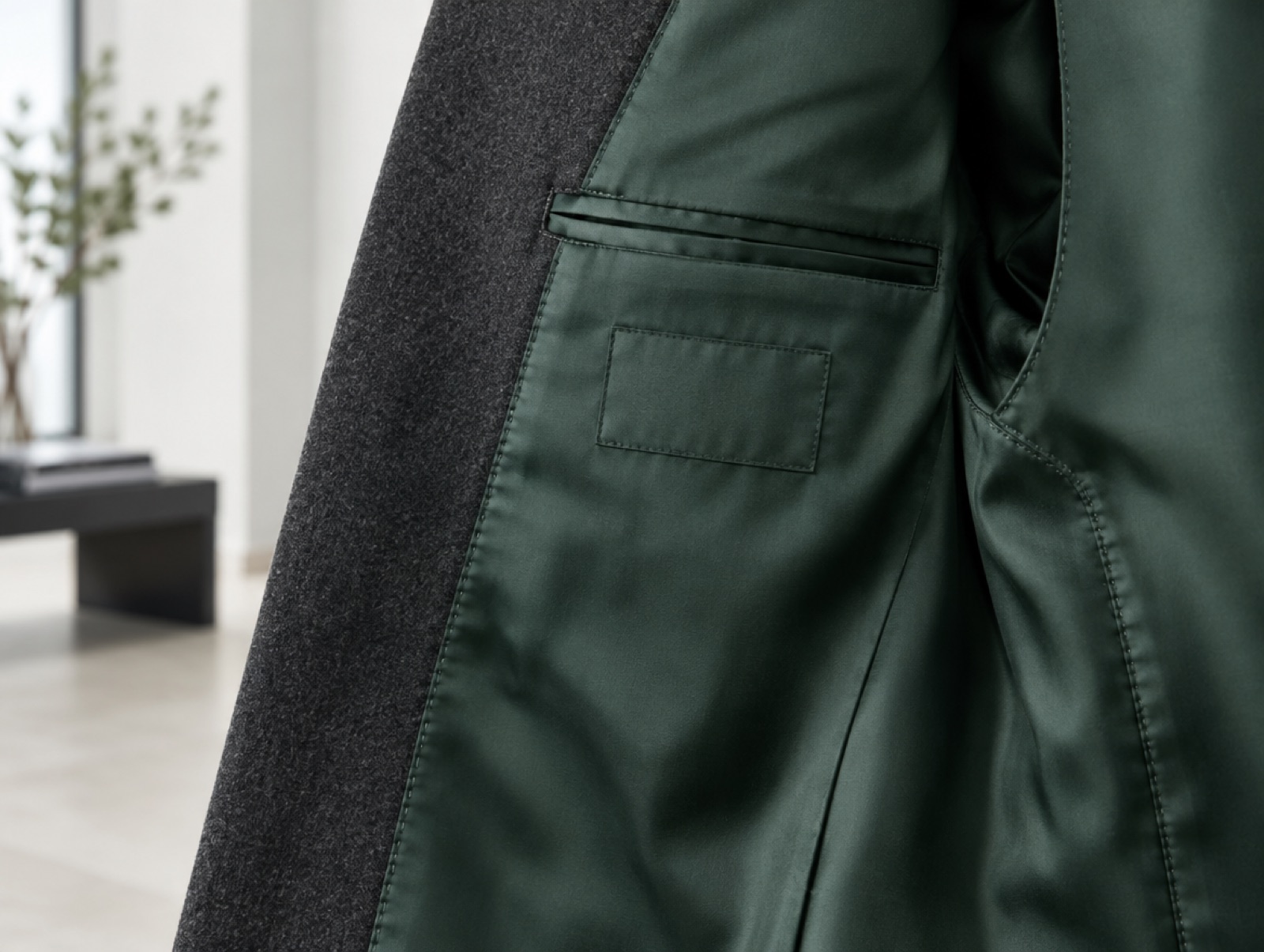
- A jacket lining with hand-felled seams: Original art · Il Sartoriale · Il Sartoriale · Il Sartoriale original art