Tissu · Fibre
Camel hair
The undercoat of a Bactrian camel, collected as it falls off, and the colour of half the polo coats ever made.
Camel hair for clothing is the soft down from the two-humped Bactrian camel of Mongolia and northern China, shed naturally each spring and gathered rather than shorn. It is warm, light, and naturally a distinctive tan, the colour of the classic polo coat. Much of what is sold as camel is a blend.
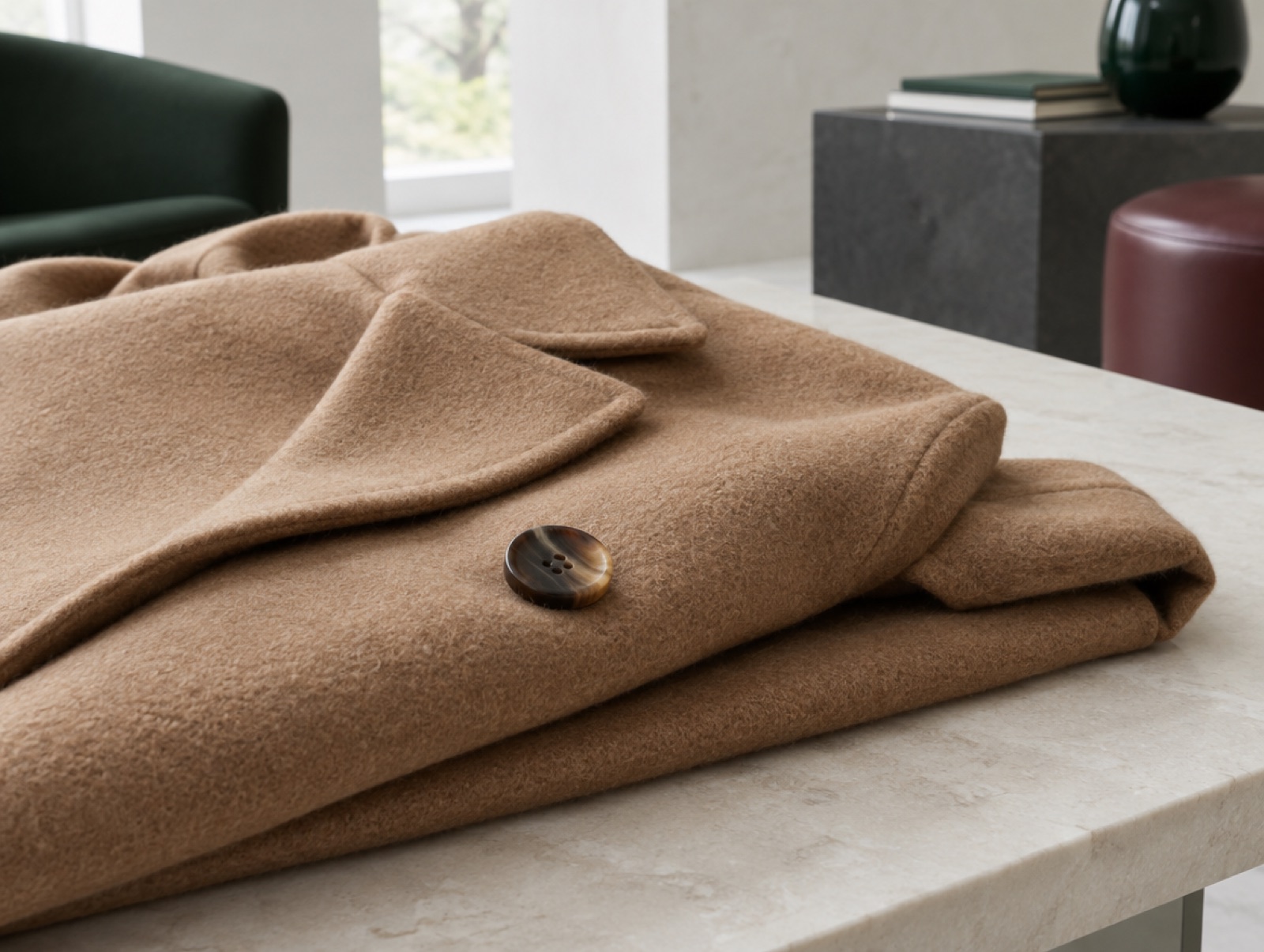
Gathered, not shorn
Bactrian camels moult in spring, shedding the fine undercoat in clumps that are collected by hand or picked up as they fall. The down is then separated from the coarse outer hair. It is one of the few luxury fibres obtained without handling the animal at all.
The fine down runs around 16 to 20 microns and is comparable to good cashmere in warmth. The coarse outer hair, at 50 microns and above, is used for industrial felts and tent cloth rather than clothing.
The colour and the coat
Undyed camel down is a warm tan, and that colour is so associated with the fibre that “camel” became a colour name. The polo coat, the double-breasted, belted, patch-pocketed overcoat that came from spectators' wraps at polo matches in the 1920s, is the garment most identified with it.
A caution about labels: a coat described as camel hair may be predominantly wool with a camel content, and a “camel coat” may contain no camel at all and simply be that colour. The composition label is the only reliable guide.
Reading the label
A garment described as camel hair may contain 100 per cent camel down, a wool-camel blend, or, in the case of a great many 'camel coats': no camel at all and simply that colour. The composition label is the only reliable guide and it is legally required, so it is worth reading.
Pure camel down is exceptionally soft and correspondingly delicate; a wool-camel blend is warmer for its durability and is the more sensible coat for regular wear.
Images
Licences →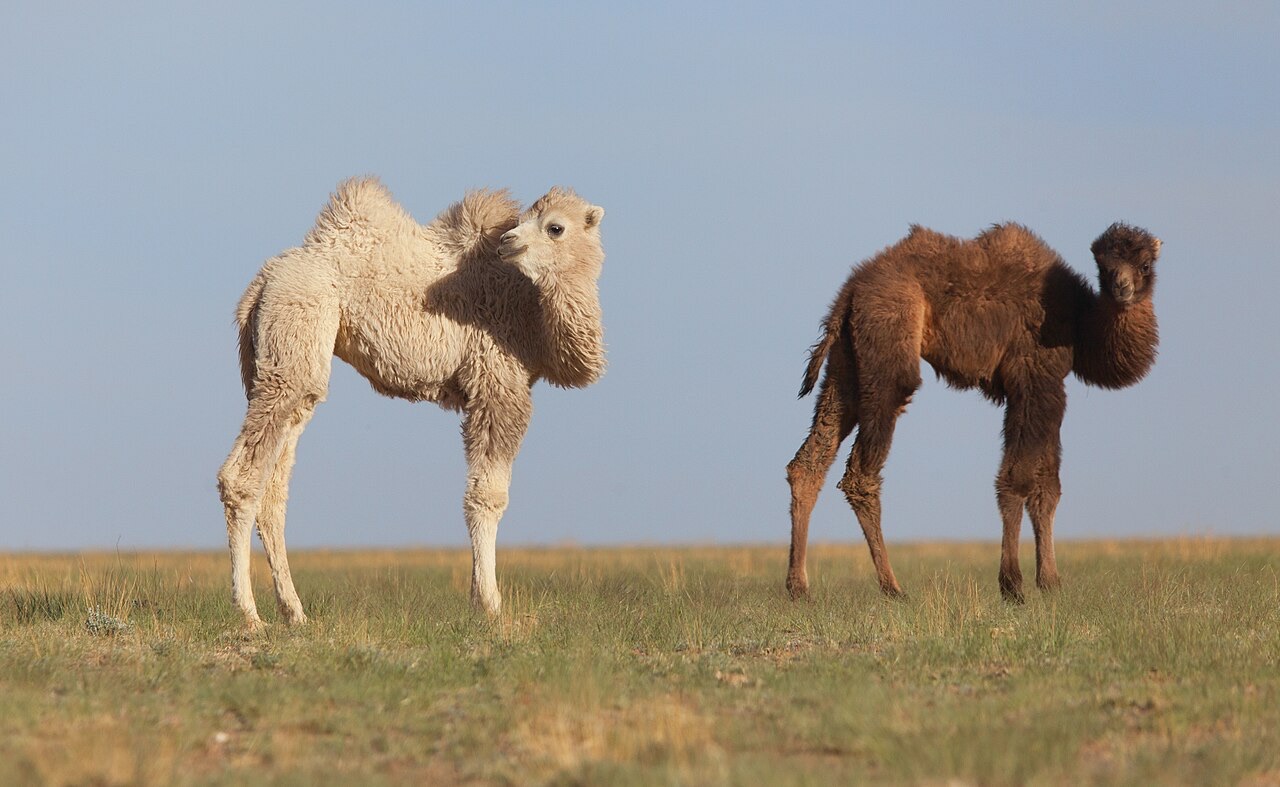
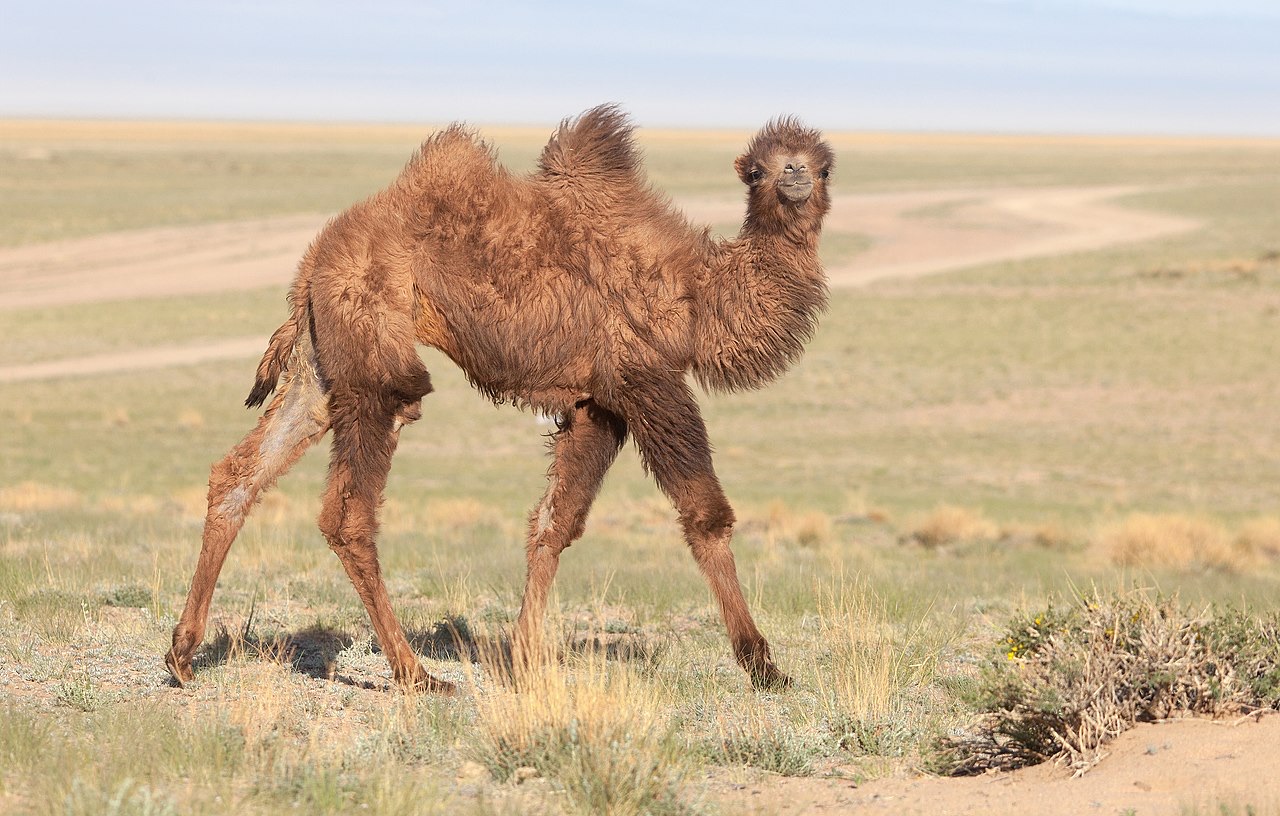
En un coup d'œil
À quoi cela sert
-
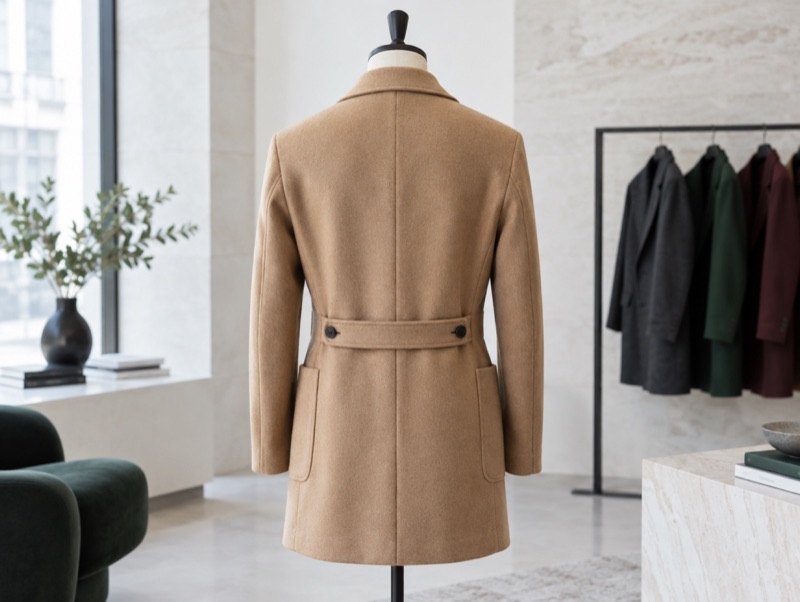 The polo coat
The polo coat is a camel-coloured, double-breasted belted overcoat with pockets sewn on the outside, first worn by polo players and spectators in the 1920s.
-
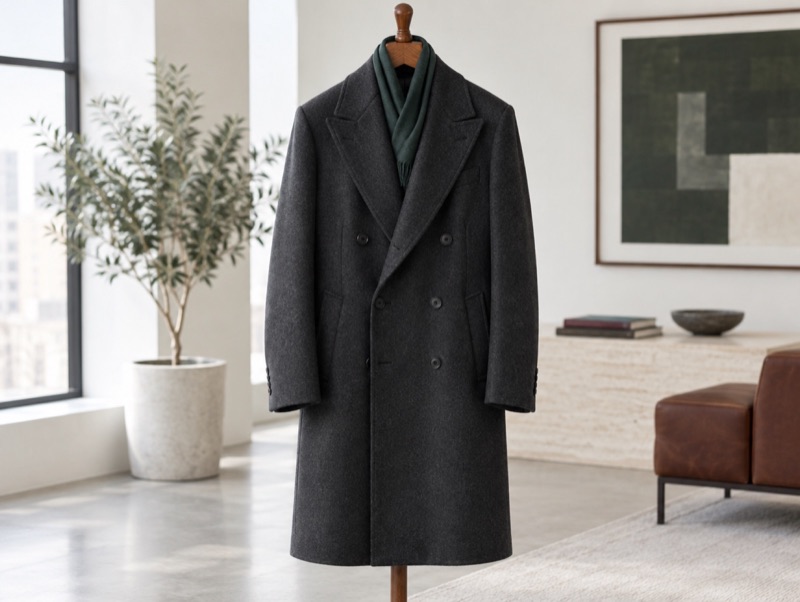 The overcoat
An overcoat is a long coat worn over a suit jacket, and it needs to be roomy, long and heavy enough to hang properly.
Crédits photographiques 5
- Camel-hair coating in natural tan: Original art · Il Sartoriale · Il Sartoriale · Il Sartoriale original art
- Camelus bactrianus in western Mongolia 03: Photograph · Alexandr frolov · Wikimedia Commons · CC BY-SA 4.0
- Camelus bactrianus in western Mongolia 06: Photograph · Alexandr frolov · Wikimedia Commons · CC BY-SA 4.0
- A camel polo coat from the back: Original art · Il Sartoriale · Il Sartoriale · Il Sartoriale original art
- A charcoal double-breasted overcoat: Original art · Il Sartoriale · Il Sartoriale · Il Sartoriale original art