Fabric · Leather
Suede
Suede is leather buffed to a soft, fuzzy surface, lighter and more breathable than smooth leather and tougher than its reputation if brushed and protected.
Suede is leather finished on the flesh side, or split from beneath the grain, and buffed to raise a soft nap. It is more breathable and lighter than grain leather, and, contrary to its reputation, reasonably robust if brushed and protected. Reversed calf is the high-grade version used in good shoes.
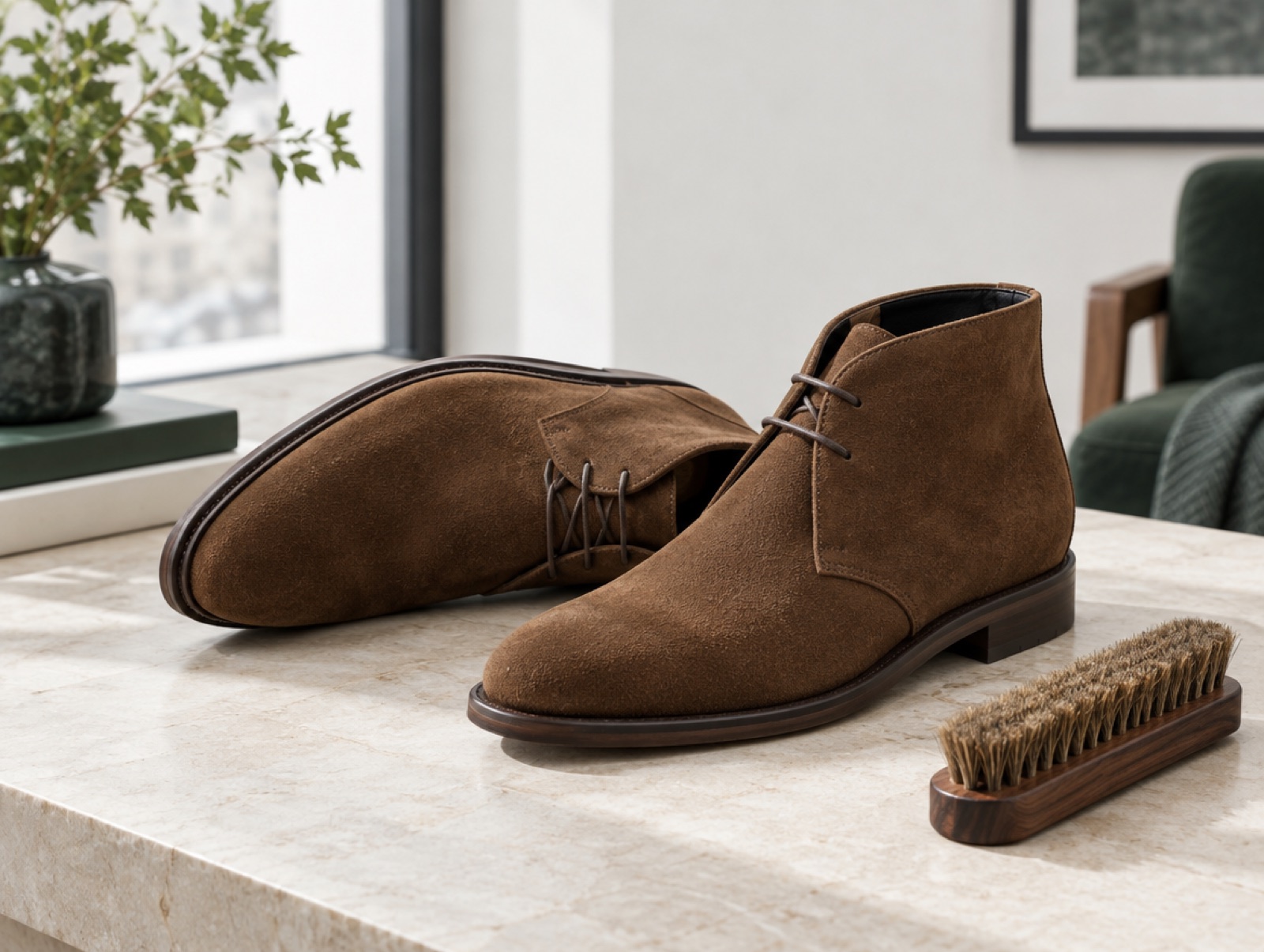
Suede and reversed calf
Ordinary suede is often a split: the layer beneath the grain, which has no grain surface and is weaker. Reversed calf is a full calf hide used with the flesh side out, so the strong grain layer is still there, facing inwards. The good shoemakers use reversed calf and say so.
Janus calf is a further refinement: a calfskin finished so it can be used either way.
Living with it
Suede's reputation for fragility is overstated. Water does not ruin it; it flattens the nap, which a brush restores once dry. Oil and grease are the real enemies, because they penetrate and darken permanently.
A rubber or crepe brush, used regularly, does most of the work. Protector sprays help against staining and reduce breathability slightly. And a suede shoe that has gone shiny at the toe from wear can often be resurrected simply by brushing it hard.
Rescuing a tired pair
Most suede that looks finished is simply flattened. A rubber or brass-bristle suede brush worked firmly over the whole shoe raises the nap and frequently restores it entirely. Shiny patches at the toe can be lifted with a suede eraser and then brushed.
Water is not the enemy: let a wet suede shoe dry naturally on a tree, then brush. Oil and grease are, and they generally cannot be removed.
At a glance
What it is used for
Picture credits 2
- Snuff suede chukka boots with a brush: Original art · Il Sartoriale · Il Sartoriale · Il Sartoriale original art
- Brown leather ankle boots: Original art · Il Sartoriale · Il Sartoriale · Il Sartoriale original art