Tessuto · Fibre
Vicuña
Dichiarato vih-KOON-ya
The finest animal fibre in commercial use, from a wild Andean camelid that was nearly hunted to extinction and is now shorn alive under licence.
Vicuña is the fleece of a small wild relative of the llama that lives above 3,500 metres in the Andes. Its fibre is the finest of any animal used commercially, around 12 to 13 microns, and a single animal yields roughly 200 grams every two years. The species was almost wiped out by poaching, recovered under legal protection, and is now shorn alive by Andean communities under a regulated system. It is the most expensive cloth in the world by a wide margin.
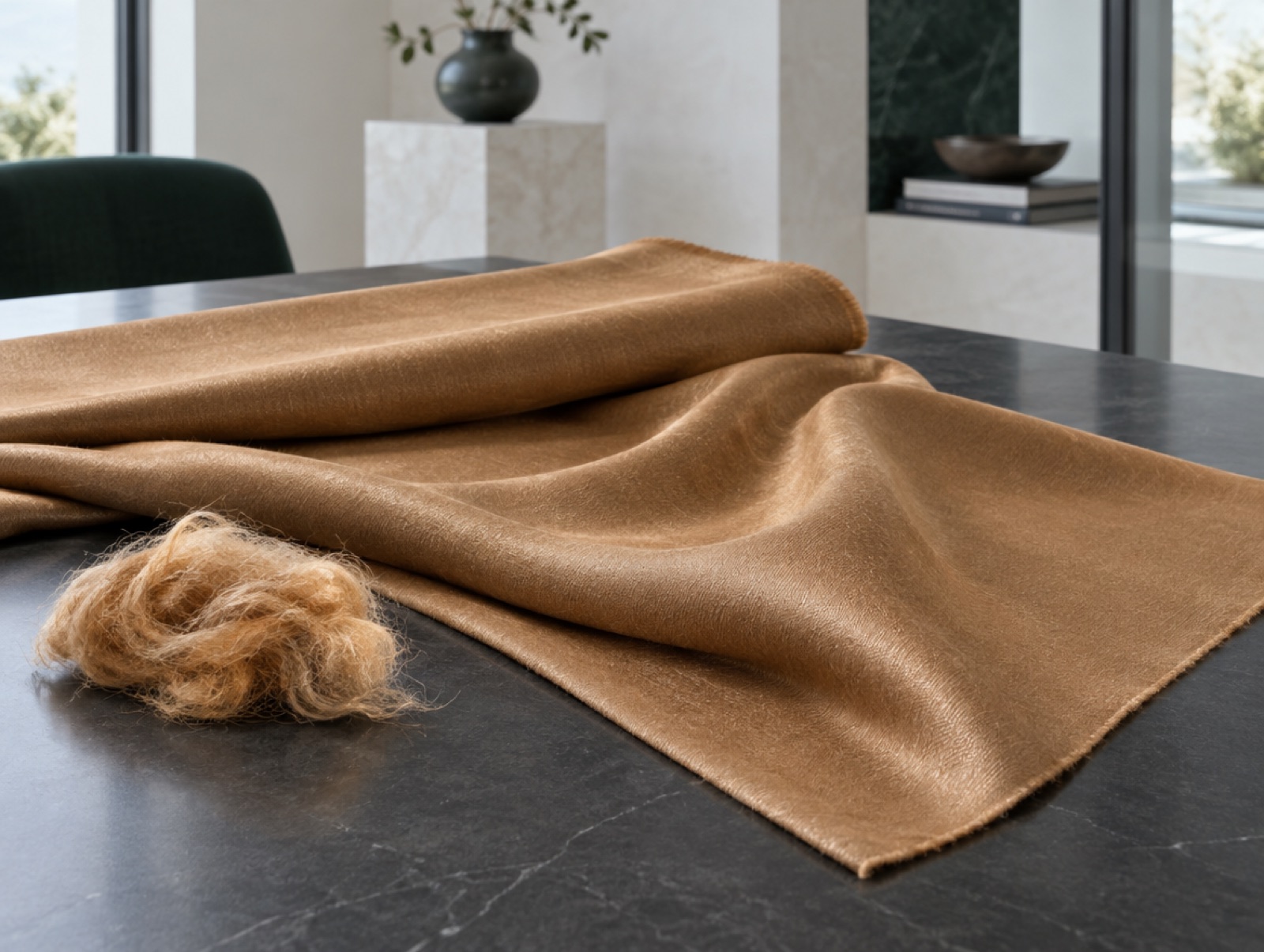
The animal
The vicuña is a camelid (the family that includes llamas, alpacas and guanacos) and the smallest of them, standing under a metre at the shoulder and weighing around 45 kilograms. It lives wild on the altiplano of Peru, Bolivia, Argentina and Chile, generally between 3,500 and 5,000 metres, where the daily temperature swing is severe.
Its fleece is the adaptation to that. The fibres are extremely fine and hollow-cored, trapping air; the coat insulates against nights well below freezing while remaining light. It is also, for the same reasons, exceptionally soft against the skin.
Why it is so scarce
Arithmetic. A vicuña carries only a few hundred grams of usable fibre and its fleece takes about two years to regrow, so an animal is shorn roughly every other year and yields in the region of 200 grams of clean fibre. A coat needs the fleece of a dozen or more animals, gathered over years.
The animals are wild. They cannot be farmed intensively in the way alpacas or goats are, they are territorial, and they live in terrain that makes gathering them a considerable undertaking. Annual world production is measured in single-figure tonnes.
Nearly extinct, then not
The Inca state reserved vicuña cloth for the ruler and his household, and managed the animals through the chaccu: a communal round-up in which vicuñas were herded, shorn and released. That system ended with the Spanish conquest, and with firearms the animals were shot for their fleece.
By the mid-1960s the population had fallen to a few thousand. Peru created the Pampa Galeras reserve in 1967, the Vicuña Convention followed among the Andean states, and the species was listed on CITES Appendix I in 1975, prohibiting commercial international trade. Populations recovered sufficiently that some have since been moved to Appendix II, which permits regulated trade in fibre shorn from live animals.
The modern system revived the chaccu. Local communities round up, shear and release the animals, and hold the rights to the fibre, the conservation argument being that a living vicuña is worth more to the people around it than a dead one. It has worked, though poaching persists and the distribution of the money is contested.
Buying it
Legally traded vicuña carries documentation, and reputable mills and brands can trace it. Fibre without a chain of custody should be assumed to be poached, and importing it is an offence in most jurisdictions.
The material's practical drawback is that it is delicate. Vicuña is usually woven or knitted in its natural colour, a distinctive warm gold-brown, because bleaching and dyeing damage such fine fibre, and a vicuña overcoat is a garment to be worn carefully rather than one that will take twenty winters of daily use.
The numbers
| Measure | Vicuña | For comparison |
|---|---|---|
| Fibre diameter | about 12–13 µm | Cashmere 14–19 µm; superfine merino 15–16 µm |
| Yield per animal | roughly 200 g, every other year | Cashmere goat 150–200 g annually |
| Shearing interval | About two years | Sheep annually |
| Habitat | Andean altiplano, 3,500–5,000 m | — |
| Regulation | CITES; Appendix I, with some populations on Appendix II | — |
Who works with it
Loro Piana is the name most associated with vicuña in modern menswear, having invested in the Peruvian supply chain and in a reserve; it holds an unusual position in the trade. A small number of other mills and houses, Kiton and a handful of Italian weavers among them, also work the fibre.
Prices are the highest in clothing. A vicuña overcoat from a luxury house runs well into five figures, and cloth is sold by the metre at a level where a tailor will normally require payment for the cloth before cutting it. See the prices section for documented figures with their dates.
In sintesi
Chi ci lavora
Case e lanifici presenti su questo sito con un legame documentato con Vicuña.
-
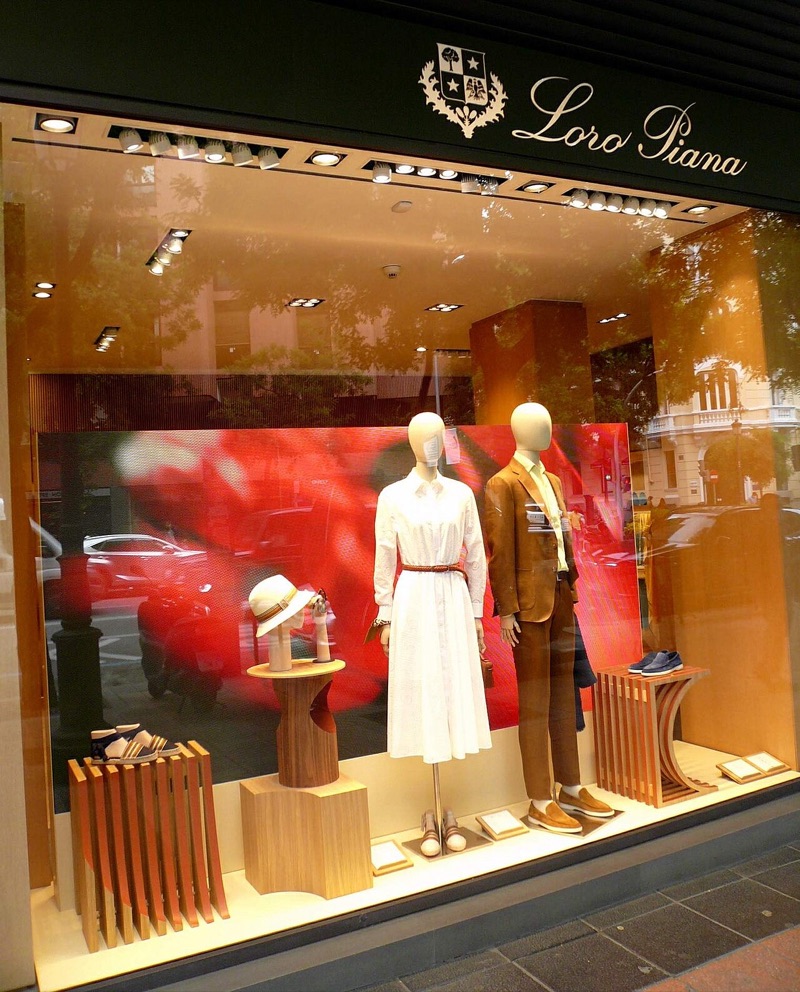 Loro Piana (clothing)
Marchio · Biella
Loro Piana (clothing)
Marchio · BiellaLoro Piana's clothing line sells knitwear, coats and soft tailoring in rare fibres like vicuña and baby cashmere, with no visible logos and very high prices.
-
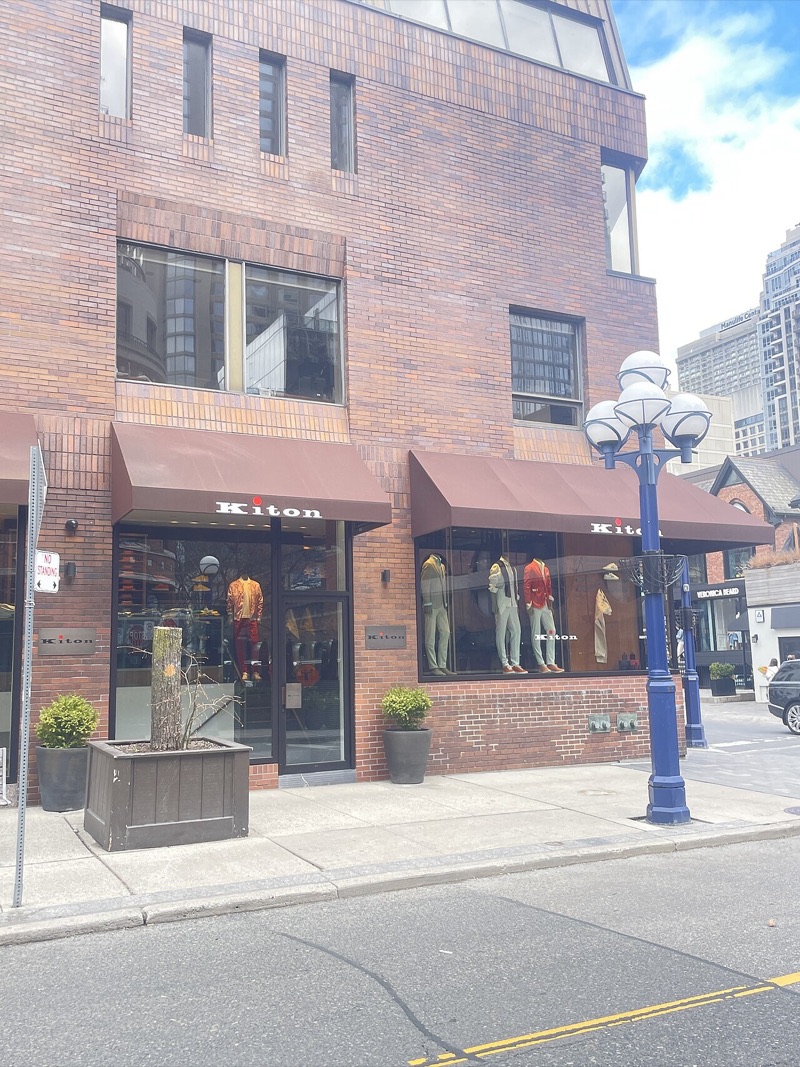 Kiton
Marchio · Naples · 1968
Kiton
Marchio · Naples · 1968Ciro Paone's answer to the question of whether Neapolitan handwork could be industrialised without being ruined.
-
Loro Piana
Produttore di tessuti · Biella · 1924
Loro Piana began as a Biella wool mill and is now a big luxury clothing house, famous for rare fibres like vicuña and baby cashmere.
-
Dormeuil
Produttore di tessuti · Paris · 1842
Dormeuil is a Paris cloth merchant founded in 1842 to sell English cloth in France, now known for rare-fibre fabrics and very expensive limited ranges.
Produttori e commercianti di tessuti
Tutti i lanifici →-
Loro Piana
Biella · 1924
Loro Piana began as a Biella wool mill and is now a big luxury clothing house, famous for rare fibres like vicuña and baby cashmere.
-
Dormeuil
Paris · 1842
Dormeuil is a Paris cloth merchant founded in 1842 to sell English cloth in France, now known for rare-fibre fabrics and very expensive limited ranges.
Rispetto a
Tutti i confronti →Fonti
- Vicugna vicugna: appendices and trade regulation , CITES.
- Vicugna vicugna , IUCN Red List of Threatened Species.
Dove una cifra è contestata o una casa non l'ha pubblicata, la pagina lo dichiara anziché scegliere un numero.
Crediti fotografici 3
- A length of vicuña cloth in its natural golden colour: Original art · Il Sartoriale · Il Sartoriale · Il Sartoriale original art
- Madrid - Loro Piana (Ortega y Gasset 16): Photograph · Zarateman · Wikimedia Commons · CC0
- IMG Kiton Toronto: Photograph · Shanmeichen · Wikimedia Commons · CC BY 4.0