Cloth maker · Mill
Carlo Barbera
Carlo Barbera was a small Biella mill whose fine wool and cashmere-blend cloths won over custom tailors, and Kiton now owns it and uses its cloth.
Carlo Barbera was a small Biella mill whose cloths, particularly its very fine wools and cashmere blends, acquired a following among bespoke tailors. It was acquired by Kiton, which continues to produce under the name and uses the cloth in its own clothing.
Reputation and ownership
Barbera's standing rests on finishing as much as fibre: tailors describe the cloth as unusually pleasant to work and unusually good in the finished garment, which is the sort of judgement that circulates in the trade without ever being measured.
Kiton acquired the mill, giving the house a controlled cloth source, an uncommon arrangement, and part of why Kiton can make claims about its supply chain that most clothing brands cannot.
Under Kiton
Kiton's acquisition gave the house a controlled cloth source, which is a rare arrangement: almost no clothing brand owns a mill. The cloth continues to be available to others as well as being used in Kiton's own garments.
It also means a Kiton suit can make supply-chain claims most brands cannot substantiate, because both ends of it are in the same ownership.
Why tailors ask for it
The reputation rests on how the cloth behaves under the iron and in the finished garment rather than on any published specification. Tailors describe it as taking shape readily and holding it, the kind of judgement that circulates in workshops and is never measured.
The mill was small and its output limited, which is part of why the name carried weight and part of why it was worth acquiring.
Small mill, large reputation
A reputation among tailors that far exceeds the mill's size is a specific and meaningful signal, because tailors handle cloth constantly and have no reason to flatter a supplier. It generally indicates consistency: cloth that behaves predictably under the iron and does what the cutter expects.
At a glance
Who works with it
Houses and mills on this site with a documented connection to Carlo Barbera.
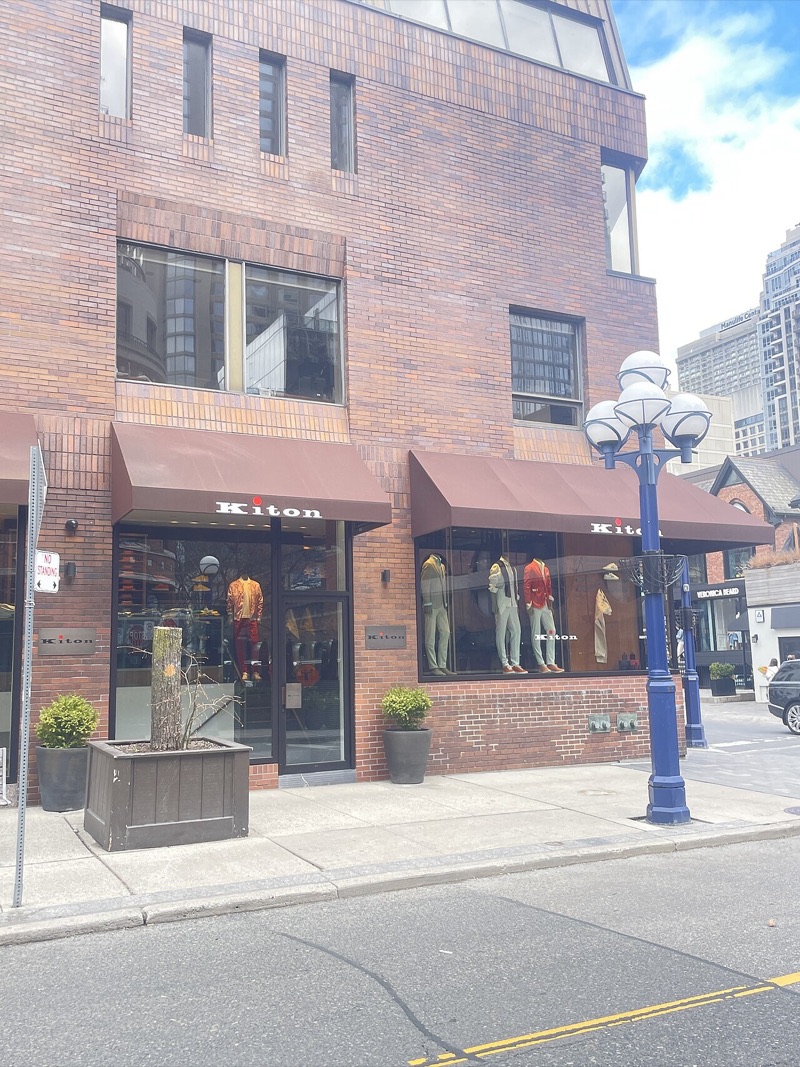
Picture credits 1
- IMG Kiton Toronto: Photograph · Shanmeichen · Wikimedia Commons · CC BY 4.0