Historische Person · People
Edward VIII, Duke of Windsor
The most consequential dresser of the twentieth century, and the customer who made the drape cut famous.
As Prince of Wales and later Duke of Windsor, Edward was photographed constantly and copied globally. His tailor Frederick Scholte cut the soft, full-chested coat that became the drape cut; he popularised the Prince of Wales check, Fair Isle knitwear, and a general softening of formality. The influence is documented and enormous.
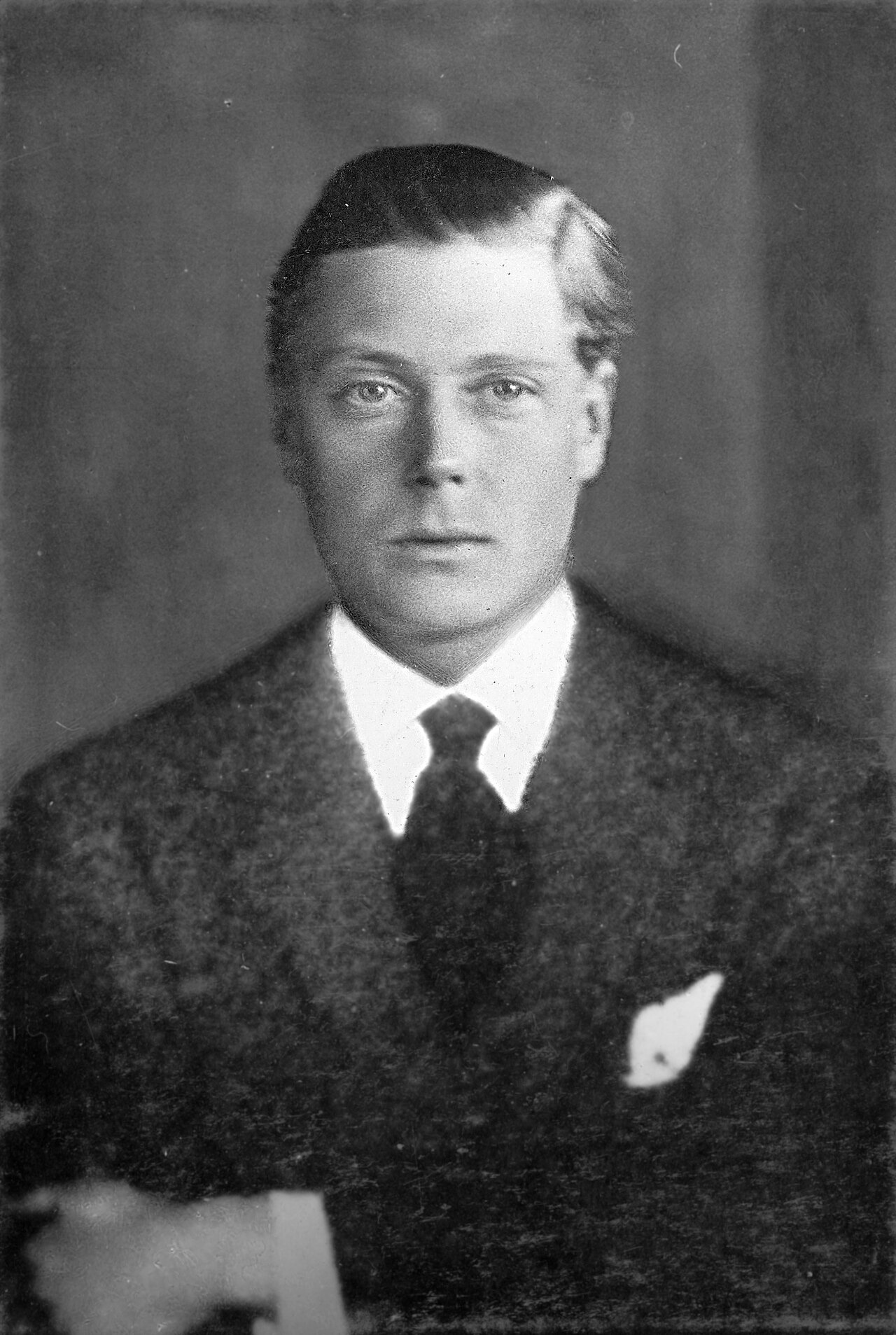
Scholte and the drape
Frederick Scholte, a Dutch-born London tailor, cut for the Prince from the 1920s. His coat carried extra cloth over the chest and shoulder blades so it hung softly and moved with the wearer: comfortable, and flattering to a slight figure, which the Prince had. That cut passed into Anderson & Sheppard, which is where the drape tradition has been most consistently maintained, and it remains one of the two poles of English tailoring.
The rest of it
He wore trousers made in New York and coats made in London because he preferred each; he popularised checked cloths, soft collars, and knitwear in contexts where they had not been worn; he wore brown suede shoes in town when that was mildly scandalous.
The Windsor knot, which bears his name, was not by his account invented or worn by him; he preferred a four-in-hand with a thick tie. The attribution is traditional rather than evidenced, and he addressed it himself in print.
The complication
Edward's political conduct (the abdication, and his and the Duchess's association with Nazi Germany including a 1937 visit to Hitler) is a matter of historical record and is not separable from him as a figure. This site's position is that his influence on clothing is a documented fact worth recording, and that recording it is not an endorsement of the man. Both things are stated rather than one being omitted.
Reading the photographs
The Duke was photographed over five decades, which makes him one of the few figures whose dress can be tracked in detail rather than asserted. The record shows a consistent set of preferences: soft construction, checked cloth, high-rise trousers, brown suede, and an aversion to anything stiff.
It also shows the limits of copying him. Almost everything he wore was cut for a small, slight frame, and the proportions that flattered him do not transfer to a large one.
Auf einen Blick
Bildnachweise 1
- Portrait of Prince Edward, Duke of Windsor (King Edward VIII) (1894–1972): Photograph · Lafayette · Wikimedia Commons · Public domain