Figura histórica · People
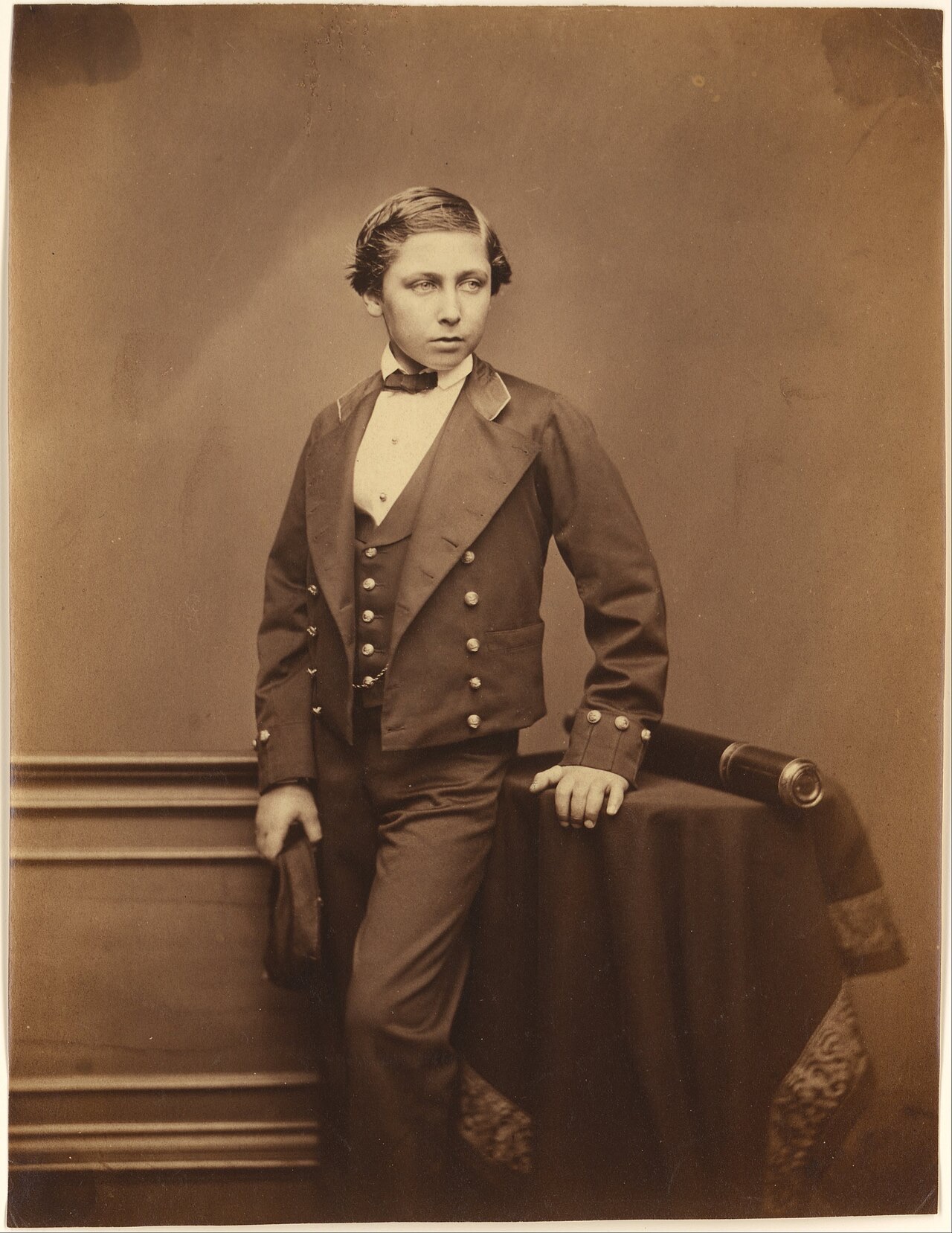
Edward VII
The prince who asked for a shorter evening coat, and accidentally created black tie.
As Prince of Wales, Edward commissioned from Henry Poole in 1865 a short evening coat to wear at Sandringham instead of a tailcoat. The order is recorded in Poole's ledgers, and the garment is the ancestor of the dinner jacket and the American tuxedo. He is also credited with several dress conventions on weaker evidence.
The documented contribution
The 1865 order at Henry Poole is recorded and is the reason this particular origin story can be told with confidence when so many cannot. The garment was a smoking jacket in form, made in a formal cloth, intended for private evening use.
It reached America through a guest and the Tuxedo Park club, which is why Americans use a different word for the same garment.
The attributions that are not documented
Leaving the bottom waistcoat button undone, attributed to his having grown too large to fasten it, is repeated universally and evidenced nowhere. The same applies to several other conventions credited to him.
The convention itself is real and near-universal. The story about its origin is a story.
Why so much is attributed to him
Edward was Prince of Wales for nearly sixty years, was photographed and reported on constantly, and was genuinely interested in clothes. Anything he was seen doing was copied, and anything copied and later unexplained tended to be attributed back to him. The result is a large body of confidently repeated origin stories with a single documented example among them. This site's approach is to name the documented one, record the rest as attributions, and not pretend the difference does not exist.
De un vistazo
Créditos fotográficos 1
- [The Prince of Wales (Edward VII)]: Photograph · John Jabez Edwin Mayall · Wikimedia Commons · Public domain